Healthcare comms is changing fast – but hold onto this principle
pharmafile | April 28, 2011 | Feature | Medical Communications | advertising, communications, digital marketing, marketing
Having spent the last forty-plus years in and around the pharma industry, it’s an understatement to say I have seen (and have played a part in) a lot of change in that time. But the most significant and far reaching changes have come in the last few years.
As the cost of providing healthcare in the West, and beyond, continues to soar, with ageing and growing populations, so the pharma industry has felt the squeeze. Payers, are struggling to balance the books and plan for the future. It looks as if this is not the recession-proof industry we perhaps thought it was. Meanwhile a wave of patent expiries are also exerting extreme pressure on the sector. It has been estimated that over the next two years, around $100 billion in sales will be lost across the industry due to loss of exclusivity. For example, Lipitor, the world’s biggest drug and soon to face patent expiry, has annual sales of around $11 billion.
Many research pipelines cannot replace these high income brands, at least in the short to medium-term, and so the pressures will continue to mount.
Reaction to these pressures among the biggest pharma companies has been to re-evaluate and adapt their business models and commercial approaches. Most research-based companies have undertaken significant headcount reductions, and many research and manufacturing sites have been closed.
The recent shock of Pfizer announcing the closure of its much-prized, research base in Sandwich, Kent, with its list of important discoveries – most famously Viagra, of course – has reverberated around the industry.
This must have been a terribly difficult decision for Pfizer’s senior management, but this is a time of ‘needs must’ for many pharma companies and for some, it might even be a case of survival.
Research priorities are generally becoming more narrowly focused, and in many cases, towards areas such as oncology and virology, where there is still such important need for therapeutic advancement. By the same token, these sectors will become even more competitive and even more price-sensitive.
It will be interesting to see the industry in ten years’ time, when surely there will be even more consolidation and globalisation.
Fewer and larger companies dominating the pharma sector will surely be the outcome, as small and medium-sized companies struggle for market share.
A golden age
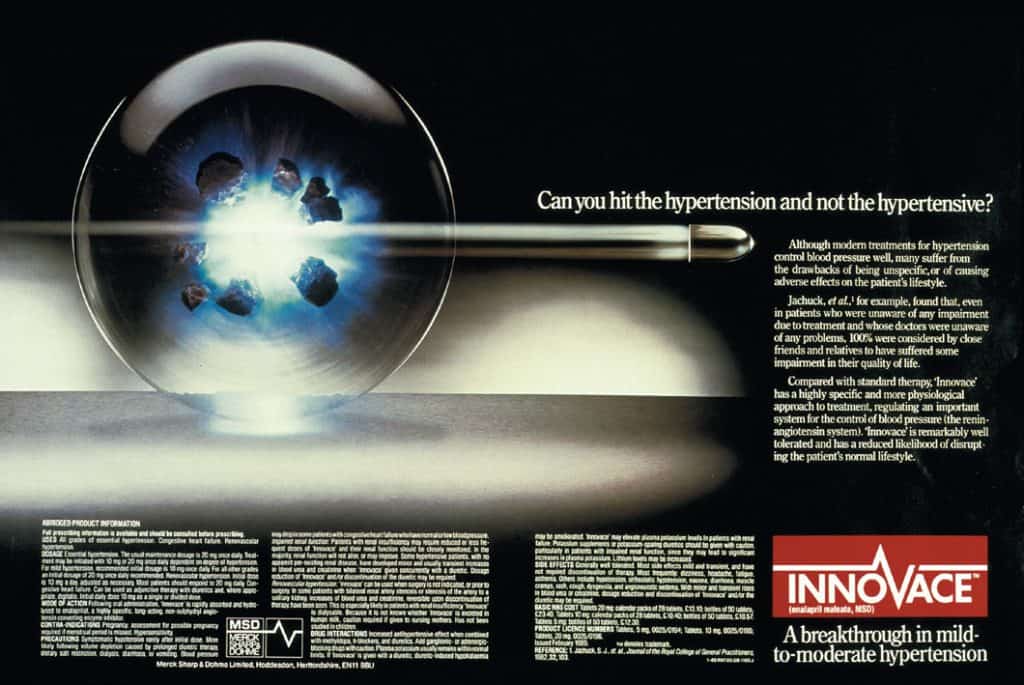
What a far cry this is from the 70’s, 80’s and even the 90’s which saw many new and exciting therapeutic breakthroughs to satisfy what were then unmet medical needs. I recall our agency working on brands like, Augmentin, Brufen, Innovace, Lipitor, Prozac, Risperdal, Seretide, Tagamet, Ventolin, Viagra, Voltarol, Zantac, Zyprexa, – all great therapeutic advances in their day. It was a time of such healthy growth for many pharma companies and their brands, leading to an array of so-called blockbusters.
It was a great leap forward for both the patient and the industry – even, perhaps, a golden age. But nothing stands still and within the pharmaceutical marketplace there are now further radical changes occurring.
The power base of critical decision-makers and influencers is shifting, and will continue to change, partly as a result of new government healthcare strategies around the world.
In many aspects they have already changed. This creates the need to understand new audiences and their beliefs, attitudes, and needs, and to understand the choice parameters that are available to them and to work out how to influence them. That’s a tall order, but nevertheless an essential goal.
The revolution in healthcare comms
Meanwhile, the revolution in how we communicate in the 21st century through digital and social media is having a profound effect on our industry. We twitter, we blog, we surf, we chat online – and so do our target audiences. Now the pharma industry has to join in this health dialogue – albeit with caution, given the regulatory issues surrounding the industry’s use of social media. But we must engage in the conversation because the internet is changing the way patients get medical information; how they interact with their doctors, families and other sufferers. At the same time, healthcare professionals are also interacting with each other via the internet.
Everyone is able to talk about a pharma brand and have a view, often a negative one, and it is vital that the industry is, at the very least, listening to that discussion even if it can’t control the dialogue.
So how has all this, and more, affected the businesses where I have spent almost all my working life – communications agencies
Well, partly as a result of some of the above, many of the traditional comms companies (including what we sometimes still call ad agencies), have subsequently experienced a change in their fortunes too.
Some have fallen by the wayside, some have merged and even more have shrunk in terms of billing and headcount. In addition, most have significantly changed their offer to the clients, with some now diversifying to try and get a foot in every service sector possible. Desperate measures in some cases, I am sure. As clients’ needs and ‘asks’ of agencies have shifted, agencies now work in very different ways. By way of example, our agency’s outputs have changed considerably in the last few years. When we did an audit of our business in 2009, only 19% of the agency’s income was derived from traditional above or below the line advertising-focused media. And that’s in an agency where a fair slug of the work is for non-prescription medicines and other consumer-lead healthcare brands too – and some people would still call us an ad agency!
Conversely, looking back, the 90’s and earlier, was a much simpler time in terms of media mix, communication channels and maintaining a degree of control.
The emphasis was on the print ad and the sales aid (and very often in that order!), plus mailings, meetings support and the like. The target audience was largely the GP and the vast majority of the ‘dialogue’ was one-way communication – from ‘us to them’. How that has changed.
My colleagues at TBWA\Paling Walters are now more likely to be working on an interactive marketing platform, tablet PC or iPad detail, an app or an interactive, online social media programme. In turn, this has led to the recruitment of a different mix of expertise by communications companies. Creatively, it means we now look for digital and online capabilities, for instance, as much as other creative skills.
From a planning perspective we have employed senior staff who can act as true strategic and comms consultants to clients and have the knowledge, experience and skills to do so. The days of the ‘Jack of all trades’ account man have long since gone.
Agencies must simply offer much more than in the past to earn their fees. The good agencies do already.
A timeless principle
In such a time of change, we must at least adhere to one timeless principle. One thing that should never change, in terms of the way the industry and its agents think and go about marketing, is the need to develop a clear, single-minded, appropriate marketing strategy, which leads to an equally clear, differentiating and effective communications strategy.
In the new environment, this must continue to be based on an understanding of the human decision-making process, using research-based planning skills to identify the truths that matter, and those which will make a difference. This will always be key to a brand’s successful approach, however it is then communicated.
So, the most appropriate communication strategy first and then the media decisions to best put it across to the appropriate targets second, whether online or offline. The media deployed must always be secondary. Nothing should be in the communications mix for the sake of it, or because it is just new and sexy.
These are indeed exciting times and we must grasp the nettle. The landscape is constantly changing, whether this is regulatory, economic, how we communicate, or to whom we must communicate in the future – and change won’t wait for us to catch up before moving on.
Mike Paling, recently retired from full-time employment at TBWA\Paling Walters, but remains non-executive chairman.
Related Content

Exscientia buys Austrian cancer cell screening company for €50 million
UK-based AI pioneers Exscientia has announced the purchase of rival AI firm Allcyte for €50 …

Deloitte acquires Iperion Life Sciences Consultancy
Deloitte have announced the acquisition of Iperion Life Sciences Consultancy, a globally-operating firm working to …

Generics could save US Medicare $1 billion per year
The United States national health insurance programme Medicare could have save $1 billion through the …