Blood sensor detects Parkinson’s-associated proteins in 40 minutes
pharmafile | October 15, 2026 | News story | | Diagnostics, Haematology, Neurological Diseases, Neurology, Parkinson’s disease, blood testing, sleep disorder
Researchers at King Abdullah University of Science and Technology (KAUST) and the University of Oxford have developed a blood-based electronic sensor capable of detecting three forms of alpha-synuclein associated with Parkinson’s disease.
The technology, described in Science Advances, uses a transistor-based sensor to amplify biological signals, allowing the three protein forms to be measured simultaneously within 40 minutes.
The approach first isolates small packages released by nerve cells into the bloodstream before analysing their protein contents. Detecting alpha-synuclein in blood is challenging because more than 95% of circulating alpha-synuclein originates from red blood cells, creating substantial background noise.
In a blinded evaluation of 59 participants from the Oxford Discovery cohort, the platform achieved 90.9% accuracy in distinguishing disease-associated profiles from healthy controls. The cohort included people with Parkinson’s disease, healthy controls and individuals with isolated REM sleep behaviour disorder (iRBD), which is associated with an increased risk of developing Parkinson’s and related neurological disorders.
The researchers found distinct patterns among the three forms of alpha-synuclein across the groups, suggesting that measuring them together could provide more diagnostic information than relying on a single marker.
Sahika Inal, Associate Professor of Bioengineering at KAUST, said detecting changes associated with Parkinson’s through a blood test remained challenging because they can occur before clinical diagnosis.
“These early results are encouraging, and the next step is to validate the technology in much larger groups of patients,” she said.
The researchers stressed that the platform is not yet a standalone clinical blood test. The study was a retrospective evaluation in an initial cohort, and larger prospective, multicentre studies will be needed to establish its predictive value before the technology could be used routinely.
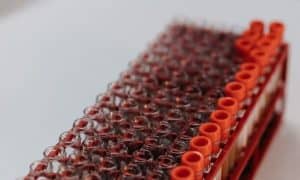
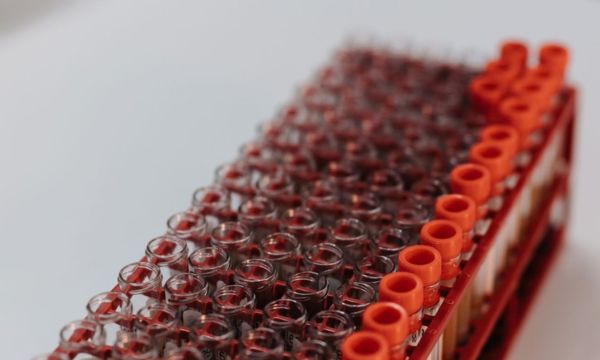
Pic: Pavel Danilyuk
Related Content

Tridem begins phase Ib trial of Parkinson’s disease vaccine
Tridem Bioscience has enrolled the first patients in a phase Ib clinical trial of TRB-001, …
THX Pharma and Exeltis announce first milestone achieved for neurological disease treatment
THX Pharma (Theranexus), a pharma company focusing on developing treatments for rare neurological disease, and …

Roche advances treatment for Parkinson’s disease
Swiss biopharma, Roche, has announced its decision to proceed with phase 3 trials of prasinezumab, …