NHS trials “world-leading” initiative to cut prostate cancer diagnoses to just days
pharmafile | March 5, 2018 | News story | Research and Development, Sales and Marketing | Cancer, MRI, NHS, pharma, prostate cancer
The NHS has revealed plans to cut the average diagnosis times for prostate cancer from six weeks to less than one week by trialling a “world-leading” approach which leverages a new, more accurate scanning method.
The method promises to bring down diagnosis times by conducting a biopsy in patients with suspicious MRI scans the same day, eliminating the need for multiple outpatient visits over a series of weeks.
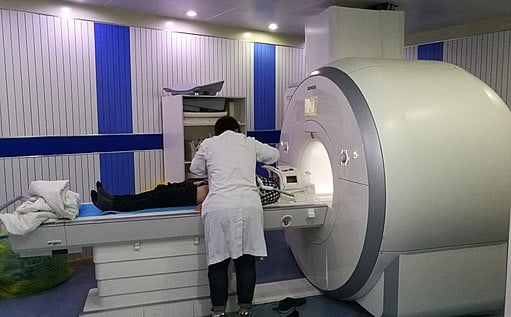
Traditionally, diagnosis relies upon an MRI scan followed by the provision of around a dozen tissue samples via biopsy, taken with a needle through the rectum to identify growths on the prostate. The new method, known as RAPID, utilises multi-parametric MRI or mpMRI to generate much higher quality imagery and means that 33-40% of patients can avoid a biopsy altogether. For those who still require a biopsy, the prostate can be comprehensively mapped by overlaying 3D MRI scans with ultrasound images, allowing for accurate targeting of suspect tissues, which can then be sampled through the perineum, which reduces the risk of infection by around 2-6%.
“Imperial College Healthcare NHS Trust has been at the forefront of innovation and for prostate cancer diagnosis, it was no different. Having helped deliver the evidence for using MRI before prostate biopsy, it only made sense for the Trust to lead on this, enabling our local population to benefit from having the best diagnostic pathway,” explained Professor Hashim Ahmed, Consultant Urologist at Imperial College Healthcare NHS Trust and new chair of NHS England’s Clinical Expert Group for Prostate Cancer. “We have achieved quicker time to diagnosis of prostate cancer and quicker times to treatment than ever before. Our results show by using this new pathway we are doing fewer biopsies. In fact, the men that do need biopsies are having state-of-the-art precise biopsies that are finding aggressive cancers earlier and we believe this will lead to better outcomes following treatment.”
The trial is being carried out at London’s Charing Cross Hospital, Epsom Hospital and Queen Mary’s Hospital in Roehampton by West London Cancer Alliance RM Partners, scanning an estimated 5,000 men over the course of two years.
Matt Fellows
Related Content

“That gap between innovation and delivery was what stood out to me most”
Pharmafile chats with Camunda’s Natosha McNeal about the vital role of delivery, onboarding AI and …

Fortysomethings’ non-attendance at NHS Health Checks raises concerns, says study
People in their forties account for almost three-quarters of those who do not attend NHS …

NIHR chief scientific adviser visits Huddersfield health innovation campus
Professor Lucy Chappell, Chief Scientific Adviser to the Department of Health and Social Care and …