Desktop device synthesising lidocaine could revolutionise pharma manufacturing
pharmafile | October 6, 2015 | News story | Manufacturing and Production | lidocaine
A novel device with the ability to produce one of the most in-demand anaesthetics in any location may set the scene in revolutionising mass-production methods in the pharmaceutical manufacturing business.
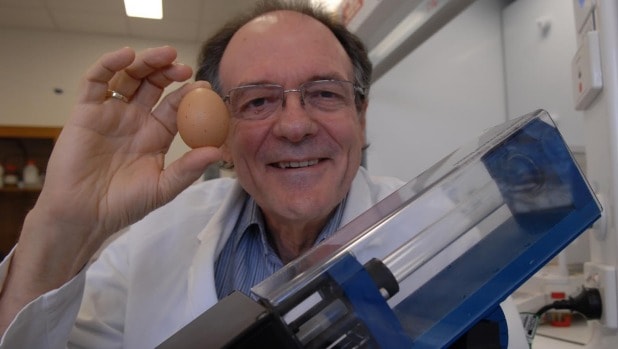
Colin Raston, professor and inventor of Flinders University in Australia, has successfully synthesised lidocaine using a desktop device, calling it a Vortex Fluidic Device (VFD). Recently, Raston and the VFD attracted global attention for unboiling an egg, which won him an Ig Nobel Prize.
Lidocaine, also known as xylocaine and lignocaine, is a medication used to numb tissue in specific areas and to treat ventricular tachycardia. It can also be used for nerve blocks.
Raston says: “The VFD uniquely controls how drug molecules can be made, and this is under continuous flow, such that research in making drug molecules can be readily translated into industry, avoiding conventional scale up problems and large reaction vessels.” He adds: “Just leave the VFD running to make as much as you need.”
Raston claims the VFD easily produces lidocaine and can be used in remote areas, with basic instruction, in less than an hour. He said the ability to produce the aesthetic, which the World Health Organization considers important to a basic healthcare system in developing countries and war zones, represents a paradigm shift in pharmaceutical manufacturing.
Development of the VFD was funded by the National Health and Medical Research Council, the Australian Research Council and the Government of South Australia.
Yasmita Kumar