App could crack fake antimalarial drugs market
pharmafile | November 6, 2014 | News story | Medical Communications, Sales and Marketing | Apple, antimalarial, app, colourassist, malaria, talanta
A cheap iPhone app developed last year has demonstrated high-level effectiveness towards identifying bogus antimalarial treatments.
A recent study published in the scientific journal Talanta, revealed how ‘ColorAssist’ can reach the same results as that of a US Centers for Disease Control and Prevention lab test.
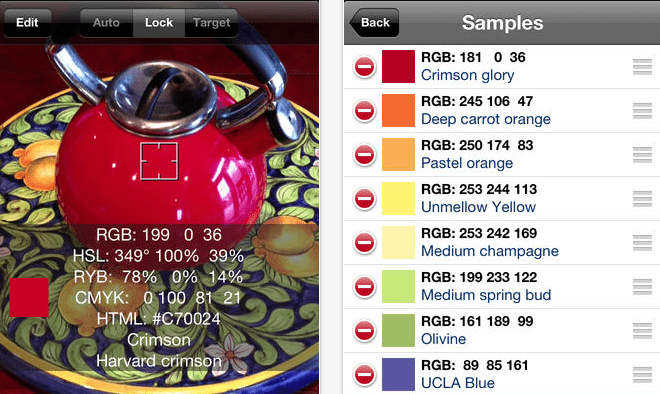
The simple app was released in October 2013 and is available on iTunes for less than a £1. Using the iPhone’s camera the app captures RGB values in real-time and converts them to the closest colour it can find from a library of almost 900 colours.
Researchers use the app by dissolving treatment in a sodium hydroxide solution before placing it onto a test paper. Through the resulting colour matching process users are able to tell if a drug has a low level of concentration – and therefore identifying it as a likely counterfeit.
At the moment the study doesn’t include any actual data and it is impossible to determine how accurate the test truly is. But without the app the results need to be compared manually using a colour strip, which can introduce human error.
20% of malaria deaths are caused by counterfeit antimalarial drugs according to findings by the World Health Organisation.
Replica drugs have become increasingly arduous to differentiate from the genuine thing; some bogus treatments even contain a small amount of the real active ingredient which can cheat authenticity tests.
Apps fighting diseases
This is not the first smartphone app used to fight diseases and aid the healthcare industry. Engineers and doctors at the University of Washington (UW) have recently been developing an app that could help detect signs of jaundice in newborn babies.
It serves as a screening tool to determine whether a baby needs a blood test – the standard for detecting high levels of billrubin, a chemical that if not rejected could lead to severe jaundice. The app works much in the same way as ColorAssist by using a colour calibration card.
Developed earlier this year, Athelas, is an app which allows users to take a picture of their blood using a lens attachment and then send it to the app’s servers. The results are sent directly back to a smartphone.
Winning a prize at a coding event held by the start-up hub Y Combinator back in July, the designers say that the app means that a malaria test requires no expertise, takes a few seconds, and costs next to nothing. “All on a smartphone – holding the potential to save thousands of lives.”
Mobile phone apps are changing the way doctors and patients approach healthcare, and some estimates predict 500 million smartphone users worldwide will be using a healthcare app by 2015.
But experts still warn of the difficulty and potential dangers of reproducing the quality of proper medical lab results using a smartphone.
Tom Robinson
Related Content
First malaria medicine for infants under 4.5kg receives approval
Coartem (artemether-lumefantrine) Baby, or Riamet, has been approved by Swissmedic as the first malaria medicine …

FDA approves Roche’s test for malaria in blood donors
Roche has announced that the US Food and Drug Administration (FDA) has approved its cobas …

WHO recommends new vaccine for prevention of malaria in children
The World Health Organization (WHO) has announced that it has recommended a new vaccine, R21/Matrix-M, …