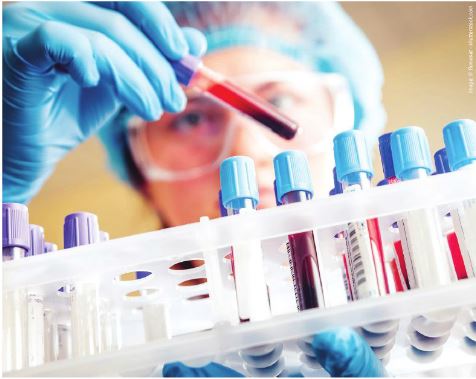
“Extremely promising” blood test for autism impresses with 88% accuracy
pharmafile | June 20, 2018 | News story | Research and Development | autism, pharma
A blood test designed to support the clinical determination of whether a child is on the autistic spectrum has been proven to be highly successful and could allow for earlier diagnosis, just one year after the original research was published.
In the original study, the team examined data from 149 children, approximately half of which were already diagnosed with ASD, and investigated the 24 metabolites related to the methionine cycle and the transsulfuration pathway in each participant. After omitting data from one of the children, the team analysed the remaining dataset in order to generate a predictive algorithm, which was then used to make a prediction on the omitted participant’s data. This process was repeated to ascertain whether the algorithm could correctly predict the data for all 149 children, finding that it was correct in 96.1% of cases related to typically developing participants and in 97.6% of the ASD cohort.
The team has since tried to replicate this success in existing independent datasets. Those studies which included the same metabolites examined in their first investigation were identified in order to circumvent the necessity for a lengthy clinical trial process; three studies conducted by researchers at the Arkansas Children’s Research Institute were chosen, covering 154 children in total and 22 of the 24 metabolites.
They then set out to recreate the original algorithm using the 22 metabolites and the original group of 149, applying the resulting algorithm to the new group.
“We looked at groups of children with ASD independent from our previous study and had similar success. We are able to predict with 88% accuracy whether children have autism,” said Professor Juergen Hahn, lead author and head of the Rensselaer Polytechnic Institute Department of Biomedical Engineering, and member of the Rensselaer Center for Biotechnology and Interdisciplinary Studies (CBIS), adding: “This is extremely promising.”
“The most meaningful result is the high degree of accuracy we are able to obtain using this approach on data collected years apart from the original dataset. This is an approach that we would like to see move forward into clinical trials and ultimately into a commercially available test.”
It is estimated that around 1.7% of children are diagnosed with autism spectrum disorder (ASD), a condition described by the Centers for Disease Control and Prevention as “a developmental disability caused by differences in the brain”. Earlier diagnosis has been associated with better outcomes of intervention services, and while ASD can be identified as early as around 18-24 months of age, clinical diagnosis does not often occur until after around four years of the child’s life due to the necessity of professional observation in order to make a solid judgement. The effectiveness shown so far of this physiological test could mean that this necessity is lessened, and children can be diagnosed earlier and therefore engage with interventions at a younger age.
Matt Fellows
Related Content
LGC Group opens $100M Organic Chemistry Synthesis Centre of Excellence
LGC Group, a life sciences company, has opened its new Organic Chemistry Synthesis Centre of …
Johnson & Johnson announces successful results from trial for myeloma treatment
Global healthcare company, Johnson & Johnson, announced that analysis of its Darzalex (daratumumab) therapy showed …
Bend Bioscience adds commercial spray drying facility to Georgia site
Bend Bioscience has announced the addition of a commercial-scale spray dryer and a Gerteis dry …