Twitter useful for tracking HIV outbreaks
pharmafile | March 5, 2014 | News story | Medical Communications, Sales and Marketing | AIDS, HIV, Twitter, digital, flu, ucla, virus, wells
A study by UCLA researchers has shown that Twitter and social media can be used as a practical real-time tool for locating HIV outbreaks.
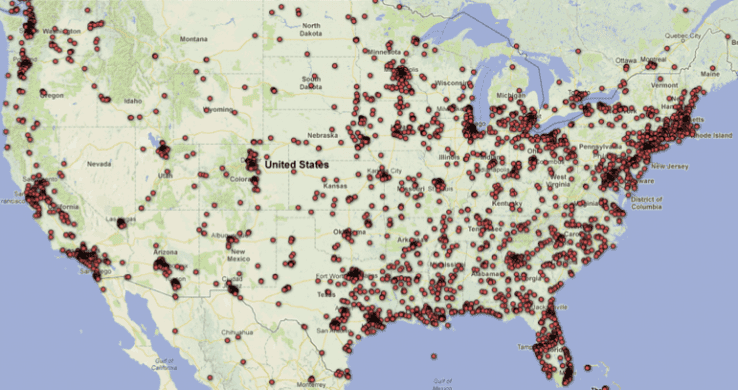
Published in the journal Preventive Medicine and conducted through the Center for Digital Behavior at UCLA, the research involved collecting 553,186,061 tweets and then mapping their locations visually.
The authors set out to ascertain if the availability of ‘big data’ might be used to study whether – and how – risky sexual behaviour is communicated on real-time social networking sites, and if data might inform HIV prevention and detection.
Developing an algorithm to find phrases including words such as ‘get high’ and ‘sex’, they then plotted the said tweets geographically to check if the locations matched regions where HIV cases had been reported.
The UCLA team concluded: “[The] results suggest the feasibility of using social networking data as a method for evaluating and detecting HIV risk behaviours and outcomes.”
They add that they found “a significant positive county-level relationship between HIV tweets and HIV prevalence”.
The findings also showed for example that New York, California, Texas and Florida were the states with the largest overall proportion of HIV risk-related tweets in the US. Washington DC, Delaware, Louisiana and South Carolina had the highest per capita rate of HIV risk-related tweets.
The study is not the first to take advantage of using online information to track viruses and disease. Google has since 2008 been providing up-to-date estimates of influenza activity for more than 25 countries via its ‘Flu Trends’ offering.
Whilst the UCLA study is encouraging some observers have pointed out its limitations, as the findings are naturally restricted to areas only where social media itself is prevalent.
Also unreported HIV cases will be missed using such methodology, as it may not be good at finding the prevalence of HIV or diseases that no one knows about.
Brett Wells
Related Content

European Commission approves HIV prevention injection
The European Commission (EC) has granted marketing authorisation for Gilead Science’s Yeytuo (lenacapavir), the first …

HIV vaccine candidate successfully optimised for industrial production
Sumagen Canada Inc, a biotech company based in both South Korea and Canada has partnered …

ViiV Healthcare shares data for two-drug regimen for HIV-1 maintenance therapy
GSK has announced that ViiV Healthcare, a specialist HIV company predominantly owned by GSK with …