Trials reveal two strong vaccine candidates for Ebola
pharmafile | October 16, 2017 | News story | Research and Development, Sales and Marketing | Ebola, biotech, drugs, pharma, pharmaceutical
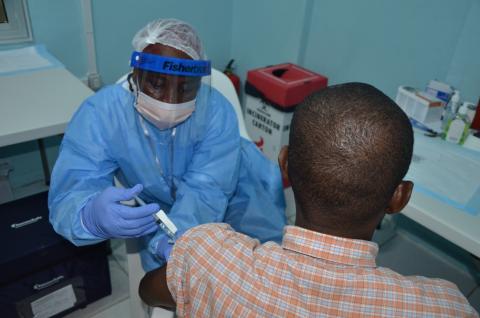
Two clinical-stage vaccine candidates for Ebola have produced stunning results, not least because an unexpected protection emerged. The two therapies have been separately developed by GSK and MSD (known as Merck in North America), and were trialled in Liberia.
The trial, known as PREVAIL, began in 2014, at the height of the Ebola crisis, and the results have finally been revealed. It showed that both vaccines produced a high-level of antibody response, which was durable in the long-term.
cAd3-EBOZ was co-developed by GSK and the National Institute of Allergy and Infectious Diseases (NIAID) and rVSV-ZEBOB was discovered and then licensed to MSD. The former candidate managed to develop an antibody response in 71% of patients while 84% was managed in the latter – this compared favourably to the 3% response in the placebo group.
The results were sustained when individuals were tested a year later. Levels of antibody response fell in both groups, but not by a significant amount – with a 64% and 80% response in the respective groups.
In another bonus for the trial, reported side-effects were minimal, with only mild to moderate symptoms noted.
“This clinical trial has yielded valuable information that is essential for the continued development of these two Ebola vaccine candidates and also demonstrates that well-designed, ethically sound clinical research can be conducted during an epidemic,” said NIAID Director Anthony S. Fauci. “A safe and effective vaccine would be a critically important addition to classical public health measures in controlling inevitable future Ebola outbreaks.”
MSD’s vaccine candidate had the more durable response of the two vaccines and, when researchers continued the study over the year, it was found that those receiving rVSV-ZEBOB were less likely to develop malaria than those receiving placebo. This was also found in GSK’s vaccine, but to a lower level.
The further insight offers up the possibility to study the vaccines to determine whether there is a cross-reactive immunity.
Ben Hargreaves
Related Content

Cellbyte raises $2.75m to fund pharma drug launch platform
Cellbyte has announced that it has raised $2.75m in seed funding for the streamlining of …

Lilly opens fourth US Gateway Labs site
Eli Lilly has opened its newest Lilly Gateway Labs (LGL) site in San Diego, California, …

LGC Group opens $100M Organic Chemistry Synthesis Centre of Excellence
LGC Group, a life sciences company, has opened its new Organic Chemistry Synthesis Centre of …