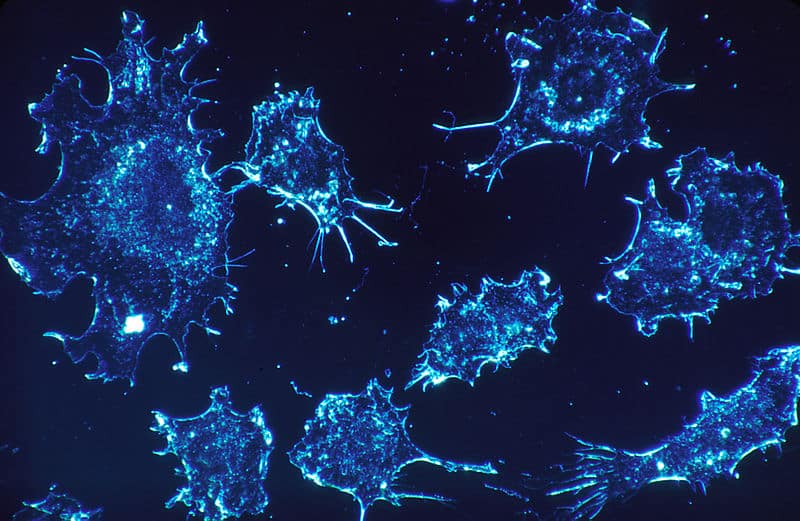
Researchers identify key protein in cancer drug resistance
pharmafile | April 5, 2017 | News story | Research and Development | Cancer, university of salford
A University of Salford research team has identified a gene which they believe is one of the leading causes of resistance to tamoxifen, the world’s most commonly-used cancer drug.
Throughout treatment, around half of patients administered with tamoxifen, which blocks oestrogen receptors as part of its mechanism of action, become resistant to its effects. The researchers believed this could be related to energy-generating mitochondria within cancer cells; by comparing cells resistant to tamoxifen against those which were still sensitive, they discovered that the key difference was mitochondrial power.
Through a process of genetics, metabolism and protein profiling, the team singled out protein NQ01 as the driving force in this resistance to the drug, noting that by chemically inhibiting it, tamoxifen-resistant cells could be resensitised.
“In simple terms, the process of poisoning the cell (with tamoxifen) actually has the opposite effect, stimulating the cancer cells to respond by revving their engines in order to survive.” Michael P Lisanti, Professor of Translational Medicine in the Biomedical Research Centre at the University of Salford, explained. “This is the first evidence that tamoxifen resistance is related to a specific metabolic behaviour, i.e. increased mitochondrial power, which is important because this is not related to tamoxifen’s effect on the oestrogen receptor. It also confirms that tamoxifen resistance is not a mechanism related to oestrogen.”
Co-author Dr Marco Fiorillo added: “Now that we have identified the target, this will allow us and others to design new drugs to overcome tamoxifen resistance. There are already existing experimental drugs for targeting NQO1 and GCLC, for other reasons, so making inhibitors to target these enzymes is a practical reality.”
Matt Fellows
Related Content

Central nervous system cancer metastases – the evolution of diagnostics and treatment
The current forms of immunotherapy, how T cell therapy works and what the future holds
BioMed X and Servier launch Europe’s first XSeed Labs to advance AI-powered antibody design
BioMed X and Servier have announced the launch of Europe’s first XSeed Labs research project, …
T-cell therapy – the evolution of cancer treatments
The current forms of immunotherapy, how T cell therapy works and what the future holds