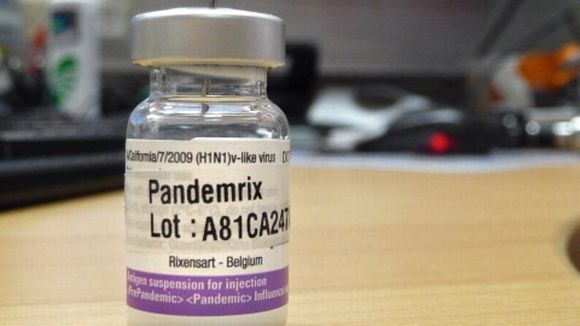
Pandemrix narcolepsy U-turn by government
pharmafile | September 24, 2013 | News story | Sales and Marketing | GSK, Pandemrix, flu vaccine, government
The government has acknowledged that a GSK flu vaccine administered during the swine flu breakout could have caused children to develop narcolepsy.
Pandemrix was the UK’s most commonly administered vaccine during the 2009-10 health scare. Around six million people (one million of whom were children) received the jab.
A few months later, concerns began to arise concerning possible links with narcolepsy, prompting the European Medicines Agency (EMA) to launch a review of the vaccine.
The use of the drug among people under 20 was subsequently restricted throughout the region. However, it remains authorised for use by the EMA.
Narcolepsy is a chronic sleep disorder associated with debilitating drowsiness and sudden sleep onset. In severe cases, the condition can prevent individuals from maintaining conventional daily routines and holding down employment.
Whitehall’s new admission is based on research published in BMJ earlier this year, which identified a one in 52,000 chance of children developing the disorder following vaccination.
The BBC quotes a spokesperson for the Department for Works and Pensions (DWP) who said: “We cannot comment on the specifics of individual cases but can confirm that once this new information was taken into account it was decided, on balance of probability, in some cases that causation was proved.”
Charity Narcolepsy UK welcomes the decision, describing it as a ‘huge step forward’ for affected families.
Previously, the government dismissed compensation claims based on a lack of evidence. Its changed stance means that families which can prove ‘severe disability’ resulted from the vaccination, may now be able to claim £120,000 in statutory compensation.
The Guardian reports that around 100 people are eligible and that a group action currently in the works may push for up to £1 million per claimant, plus legal fees.
The newspaper also indicates that GSK will not lose out financially due to a clause in its government contract to provide the drug, meaning taxpayers will ultimately foot the compensation bill.
In a statement released earlier this year, the British company claimed that it is ‘committed to pursuing additional research’ into the link between its vaccine and narcolepsy.
Hugh McCafferty
Related Content

GSK’s Exdensur receives MHRA approval for asthma and rhinosinusitis
GSK’s Exdensur (depemokimab), a twice-yearly biological medicine, has received approval from the UK Medicines and …

Multiple myeloma treatment approved in Japan
GSK’s Blenrep (belantamab mafodotin) combinations have been approved by Japan’s Ministry of Health, Labour and …

US FDA expands Jemperli (dostarlimab-gxly) plus chemotherapy approval to all adult patients with primary advanced or recurrent endometrial cancer as the first and only immuno-oncology-based treatment to show an overall survival benefit
PHILADELPHIA–GSK plc today announced the US Food and Drug Administration (FDA) has approved Jemperli (dostarlimab-gxly) in combination …