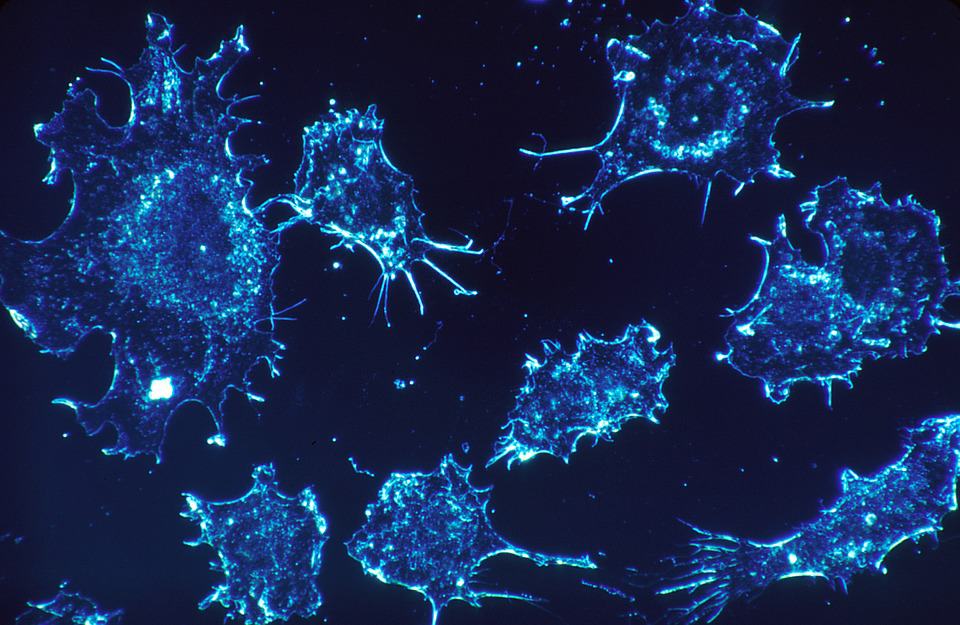
New research reveals how cancer cells grow and spread through body
pharmafile | January 6, 2017 | News story | Medical Communications | Cancer, Cancer Research UK, ICR, Institute of Cancer Research, cancer research, cell movement
Research conducted by The Institute of Cancer Research (ICR), co-funded by Cancer Research UK, has discovered how cancer cells are able to spread through the human body, despite the physical restraints that usually stop this occurring. Cancer cells that are able to spread the body were found to be activating a molecule called YAP, which allows them to move around cell tissue.
The release from the ICR refers to the cancer cells having a ‘broken switch’ that means that the molecule YAP, which acts as a ‘mechano-sensor’ to allow cell movement, is permanently turned on – meaning that the molecule is produced continually. In normal cell functions, cell movement is inhibited by contact with other cells but YAP allows the cell in which it is activated to bypass the usual bodily control.
The researchers found that another molecule was importantly linked to the production of the YAP molecule, a molecule called Beta-PIX. They experimented by disabling the pathway of the beta-PIX molecule and found that YAP activity was reduced as a result.
Study leader Dr Chris Bakal, leader of the Dynamical Cell Systems Team at the ICR, said: “Our research shows how cancer cells that have become invasive are able overcome the normal constraints on cell movement. Cancer cells that have spread around the body have a switch which is jammed on – allowing them to produce a molecule called YAP all the time. This allows them to keep growing and spreading throughout the body, ignoring the physical controls that would normally stop this happening. Understanding more about the physical processes which constrain and control the growth and movement of cells can open up exciting new avenues for cancer treatment, which may have been missed until now.”
Dr Bakal’s closing comments will be of most interest to further research as it allows new avenues for cancer treatment by finding a treatment that is able to block this movement of cancer cells. The ICR commented that further research will be needed to ascertain whether the process can stop the spread of cancer but, regardless, the research still deepens the understanding of how cancer is able to spread throughout the body.
Ben Hargreaves
Related Content

Central nervous system cancer metastases – the evolution of diagnostics and treatment
The current forms of immunotherapy, how T cell therapy works and what the future holds
BioMed X and Servier launch Europe’s first XSeed Labs to advance AI-powered antibody design
BioMed X and Servier have announced the launch of Europe’s first XSeed Labs research project, …
T-cell therapy – the evolution of cancer treatments
The current forms of immunotherapy, how T cell therapy works and what the future holds