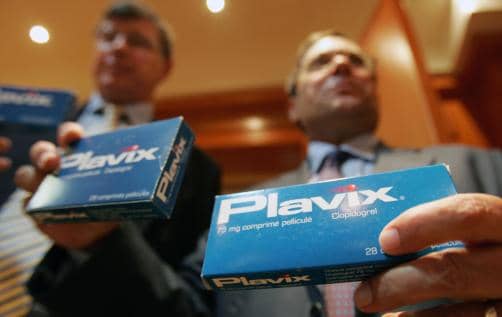
Europe votes in new anti-counterfeit law
pharmafile | February 21, 2011 | News story | Manufacturing and Production | EFPIA, counterfeits, supply chain
The European Parliament has voted in favour of the Falsified Medicines Directive to help stop the flow of counterfeit medicines in Europe.
The Directive will allow for the introduction of several measures to secure pharma supply chains in Europe as medicines move from manufacturer to dispensing pharmacy.
The vote follows months of intensive negotiations between the European Parliament and Member States.
The next step will be for the European Council to formally approve the final text before it can come into force.
Once in place, pharma firms will have just one year to implement the Directive.
Brian Ager, head of European industry association EFPIA said: “This vote clears the way for concrete measures to help protect patients in Europe from counterfeit medicines.
“As counterfeit medicines endanger the health and lives of patients, we now urge that these measures are implemented as rapidly as possible so that citizens benefit from these added safety provisions.”
Ager said that the implementation of the new Directive will require the involvement of all stakeholders – manufacturers, pharmacists and wholesalers, but also patients – to ensure success.
“With their involvement in the design,” he said, “implementation and running of systems, we can deliver the highest possible level of patient safety, the fastest roll-out in Member States at the optimal possible cost.”
One key element of the directive is the introduction a pan-European system to provide unique serial numbers (such as two-dimensional bar codes) on each genuine medicine pack.
This will allow pharmacists to check whether a pack with that serial number has previously been dispensed, alerting them to any risk of counterfeiting.
The Directive also sets out provisions covering internet sales – with measures planned to help protect patients purchasing online in those countries where it is legal.
It will also aim to better inform consumers about the dangers of purchasing from illegal online sources.
However, EFPIA said it remains convinced that a more comprehensive approach to illegal online sales of medicines is needed, and wants further work in this area from the European Commission.
Non-prescription drugs won’t need additional safety measures
The Association of the European Self-Medication Industry (AESGP), the official representative of manufacturers of non-prescription medicines, said the new Directive showed that “a good compromise has been found in the spirit of smart regulation”.
It had been suggested in previous debates that non-prescription medicines could also receive additional safety features to help guard against counterfeiting.
But AESGP director general Hubertus Cranz said the new Directive acknowledged that the “particularities of non-prescription medicines” mean they do not normally need any additional safety features.
“A systematic inclusion of non-prescription medicines [in the scope of the Directive] would have meant considerable additional costs to be paid at the end by the European citizens without any gain from a public health perspective,” he added.
Ben Adams
Related Content

Medicines recalled after FMD alert
The MHRA has warned patients that batches of drugs for Parkinson’s, epilepsy and blood clots …

No-deal Brexit could cause shortages and higher prices, healthcare distributors warn
The Healthcare Distribution Association (HDA) has warned MPs that Britain could face shortages of medicines …

The missing link: Blockchain in clinical data management
Louis Goss explores the potential uses for the much-hyped technology blockchain as a tool to …