Conservative government would ‘protect’ NHS
pharmafile | October 2, 2014 | News story | Medical Communications, Sales and Marketing | Conservatives, Labour, Miliband, NHS, burnham, david cameron, lib dems
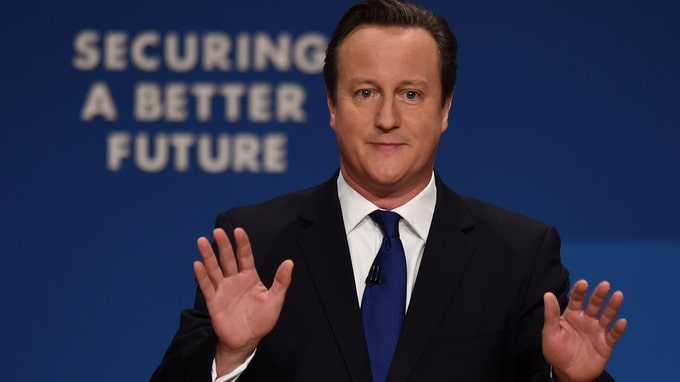
A majority Conservative government would protect the English NHS budget in real terms from 2015 to 2020, the British prime minister David Cameron has announced.
Speaking at the end of the Conservative Party’s annual conference in Birmingham last night, Cameron attempted to reconnect with the British electorate on NHS issues.
“The next Conservative government will protect the NHS budget and continue to invest more,” he said. Many other areas such as the benefits bill, will be cut however, he added.
Mindful of the general election in May next year, the Conservatives who are currently in a coalition government with the Liberal Democrats, are seeking an outright majority for the next Parliament.
A key issue has been its handling of the NHS. In 2010 Cameron, led by his then health secretary Andrew Lansley, began an ambitious but controversial reform of the NHS which many healthcare professionals believed was aimed at slowly privatising the state-run health service.
A watered-down version of the reform, known as the Health and Social Care Act 2012 came into force last April and has seen a new bureaucratic central hub running the health service in the form of the NHS England (formerly the NHS Commissioning Board) and the abolition of Primary Care Trusts, that were replaced with hundreds of doctor-led Clinical Commissioning Groups (CCGs).
The plans cost Lansley his job in 2012 when he was replaced by the inexperienced Jeremy Hunt, formerly a Conservative Cabinet minister for culture, sports and media, who has been quieter on the NHS than his predecessor.
The Conservatives will need to do much to convince both voters and NHS staff that they are committed to the future of a state-run health service, or risk losing the next general election.
Plugging the gap
But economists and healthcare think-tanks such as the King’s Find, do not believe that a real terms increase will be enough to fill the ever-growing hole in the health service’s finances.
During the coalition government NHS spending has grown in real terms – but only by the smallest of margins: 0.1% every year of the current Parliament, making the total NHS budget around £110 billion last year.
Just how much Cameron would actually invest into the NHS has not been announced, but the coalition’s existing pledge means that the English health service will have received £12.7 billion more in cash terms over the current Parliament, meaning a similar sum could be likely applied over the next five years.
Labour is trying to take the lead on the NHS and is keen to remind the electorate that it was the party that actually created the health service in the 1940s – and its current leader Ed Miliband has pledged to invest an £2.5 billion a year into the NHS, should his party win come May, and inject an extra 20,000 nurses and 8,000 GPs.
Labour has also said that it would repeal the Health and Social Care Act, although this could prove too difficult in practical terms to pull off, despite likely being warmly welcomed by many in the NHS.
Labour’s shadow health secretary Andy Burnham was the star of the Labour party conference last week when he gave an impassioned speech about the NHS, although his plans on merging health and social care remain flaky to economists, and the spectre of Mid Staffs still hangs over his first tenure as Labour’s health secretary.
But despite the rhetoric, neither party’s plans will be enough to plug the gap in Britain’s healthcare system.
Former Liberal Democrat health minister Norman Lamb has said that the NHS will be in a £30 billion deficit by the end of the decade because of the rising costs of an ageing population, and the strain on services needed to help them.
Economists are also concerned that by investing heavily in one area will inevitably mean having to tax more and spend less on other areas.
Cameron has already said that his party would cut the benefits bill, which is currently the largest level of spending in the UK in front of the NHS, whilst Miliband would look to increase tax on the wealthy – both plans being very much in-line with their political leanings.
Labour currently holds a 30-point lead over the Conservatives as the party with the best policies on healthcare, according to polling by IPSOS-MORI published in September.
Labour too is also seen as leading the Conservatives in the overall political polls, and is expected to be the winning party next year, although there are still many months of electioneering to go.
‘Breaking point’
Responding to Cameron’s speech Dr Mark Porter, chair of BMA Council says: “The NHS is going through its tightest spending period in 50 years. Even with a protected budget, patient demand and costs are rising faster than investment which is why the NHS is facing a gap in funding of £30 billion by 2020, and services are stretched to breaking point.
“Daily, we’re seeing the effects of an NHS under extreme pressure – patients are having to wait longer to see their GP, A&E waiting times are the worst they’ve been in a decade and a winter crisis which has spilled over into spring, summer and autumn. Front-line staff are under extreme pressure, with unmanageable workloads often preventing them from being able to deliver the high quality care they want to for their patients.
“Guarantees on investment are only good enough if they can truly keep up with rising demand, and if the NHS is to survive we need an evidenced, long-term solution to the funding crisis facing the health service. Without this, our NHS – which is the best health care system in the world – simply won’t be able to cope, the quality of services will be compromised and crucially, patients will suffer.”
Ben Adams
Related Content

Under-Secretary of State for Health Innovation and Safety visits new building on University of Huddersfield’s NHIC
Dr Zubir Ahmed MP, the Under-Secretary of State for Health Innovation and Safety, has visited …

Digital mental health technologies – a valuable tool in supporting people with depression and anxiety
The potential benefits of digital mental health technology for managing depression, anxiety and stress, together …

A community-first future: which pathways will get us there?
In the final Gateway to Local Adoption article of 2025, Visions4Health caught up with Julian …