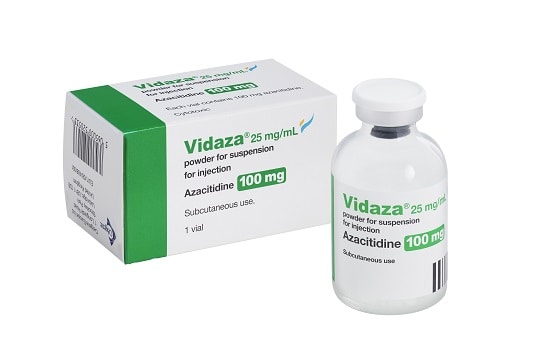
Celgene’s Vidaza earns wider approval
pharmafile | November 2, 2015 | News story | Sales and Marketing | Celgene, European Commission, Vidaza, acute myeloid leukaemia, azacitidine, leukaemia
Swiss firm Celgene has been given approval by the European Commission to extend its marketing authorisation for the cancer treatment Vidaza, to include older patients with acute myeloid leukaemia.
The EC signed-off the application to broaden Celgene’s licence for Vidaza, (azacitidine for injection), for the treatment of adult patients aged 65 years or older with acute myeloid leukaemia (AML) who are not eligible for haematopoietic stem cell transplantation (HSCT).
The additional patient group covers people who have >30% myeloblast cells according to the WHO classification; previously, the indication covered AML patients with <30% of these cells.
In people with AML white blood cells called myeloblasts are disrupted. This results in abnormal levels of non-functioning white cells, which can potentially interfere with the body’s ability to control infections and lead to anaemia and haemorrhages.
In Europe, more than 14,000 people have AML. As an acute leukaemia, AML progresses rapidly and is typically fatal within a year if stem cell transplantation, which is potentially curative, is not an option. In patients older than 65 years, statistics show overall survival with AML has not improved in more than 40 years, and there is a clear need for treatments that can support this patient population.
Tuomo Pätsi, president of Celgene in Europe, Middle East and Africa, says: “Celgene is committed to bringing innovative medicines to patients with haematological diseases including AML. The approval of Vidaza in this segment of AML patients now gives us a new opportunity to help these patients and underscores our commitment to delivering medicines that can have a significant impact on patients with severe and debilitating diseases. Our next step will be to work with each of the member countries to provide access to Vidaza in this indication, ensuring that patients who can benefit from its use have the opportunity to do so.”
And Dr Hervé Dombret, chief of the leukaemia unit at, University Hospital Saint-Louis in Paris, says: “Today’s announcement brings hope to patients with AML, particularly elderly and frail patients who cannot undergo intensive therapies such as stem cell transplantation. Azacitidine has demonstrated a median overall survival of 10.4 months in these patients, which is a clinically relevant benefit and gives us a new treatment option in a previously underserved group of patients.”
Lilian Anekwe
Related Content

Sobi’s Aspaveli receives European Commission approval for treatment of two rare kidney diseases
Sobi has announced that its Aspaveli (pegcetacoplan) has received approval from the European Commission (EC) …

European Commission approves HIV prevention injection
The European Commission (EC) has granted marketing authorisation for Gilead Science’s Yeytuo (lenacapavir), the first …

Sanofi’s Sarclisa gains EU approval for multiple myeloma treatment
Sanofi has received approval from the European Commission for the use of Sarclisa (isatuximab) in …