Breast cancer treatment market booming
pharmafile | March 19, 2015 | News story | Research and Development, Sales and Marketing | Frost, Herceptin, Kadcyla, Roche, breast cancer, oncology, targeted, tykerb
The increased use of combined targeted therapies for breast cancer is set to lift the market and improve progression-free disease as well as survival rates according to a new study.
Findings by analysts Frost & Sullivan in its ‘A competitive analysis of the global breast cancer therapeutics market’ report, note that the market earned revenues of around $10 billion in 2014, but that this is now set reach $13.38 billion in 2018.
“The emergence of a new class of targeted therapies is likely to redefine the survival rates of patients with triple-negative cancers,” says F&S healthcare senior research analyst Sriram Radhakrishnan.
“Poly-adenosine diphosphate ribose polymerase or PARP-based targeted therapies are under development and are expected to effectively treat breast cancers.”
Despite the availability of around 25 drugs for breast cancer treatment currently out there, the unmet need in the global market is said to be vast. To address this the study notes pharma has seemingly established a fairly robust pipeline with around 52 drugs in development.
Chemotherapy still remains the most important class of drugs for breast cancer management, but the trend toward targeted drugs is on the rise it says – with the lack of effective therapies especially for triple negative breast cancer, being another challenge.
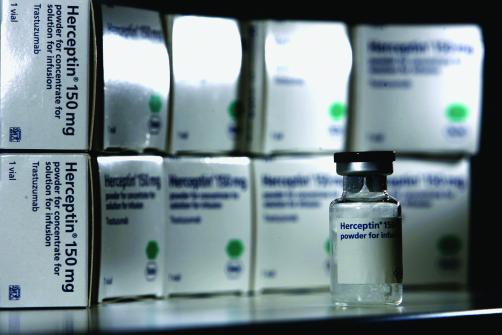
Roche’s top performing Herceptin (trastuzumab) and GSK’s flailing Tykerb (lapatinib) are the only targeted therapeutics available for the disease. Recently approved Kadcyla (trastuzumab emtansine) and Perjeta (pertuzumab) that are also doing well for Roche, will clearly bolster the portfolio of targeted drugs.
Frost & Sullivan says the key treatments to watch between 2015 and 2017 are:
ABT-888 (Abbvie)
NeuVax (Galena Biopharma)
Palbociclib (Pfizer)
NKTR-102 (Nektar Therapeutics)
CT-P6 (Celltrion)
Radhakrishnan adds: “Focus has shifted to combination therapeutic modalities that have displayed the potential to improve progression-free survival rates. The combination of therapeutic modalities – targeted therapies along with chemotherapy – could also make treatment affordable for patients.”
Brett Wells
Related Content

BMS’ Opdivo/Yervoy combination accepted by Scottish Medicines Consortium for colorectal cancer
Bristol Myers Squibb (BMS) has announced that its Opdivo (nivolumab) has been accepted, in combination …

Astellas Pharma’s Vyloy accepted by Scottish Medicines Consortium for gastric cancer
Astellas Pharma, a pharmaceutical company creating medicines to address unmet medical needs, has announced that …

Bio-Sourcing and Zerion Pharma receive 1.3m euros in funding for joint breast cancer project
Bio-Sourcing and Zerion Pharma have announced that their collaboration to develop an oral form of …