The new paradigm in oncology drug marketing
pharmafile | October 21, 2013 | Feature | Manufacturing and Production, Medical Communications, Research and Development, Sales and Marketing | Cancer, Herceptin, Roche, marketing, oncology
Twenty years ago drugs to treat cancer were made up of chemotherapy agents which are essentially ‘blunt tools’ against the disease.
Chemotherapy is a good tool for killing rapidly dividing cancer cells, but unfortunately most chemotherapy also attacks healthy cells. It is in addition highly toxic, with most regimens delivered just below the level that could kill a patient.
But newer medicines have become more targeted – or ‘personalised’ – as they are designed to stop genetic sub-types of tumours, rather than killing groups of cells. And a result of this research, cancer is now recognised not as a single disease but as a selection of cancers, each with their own mutations and potential treatments.
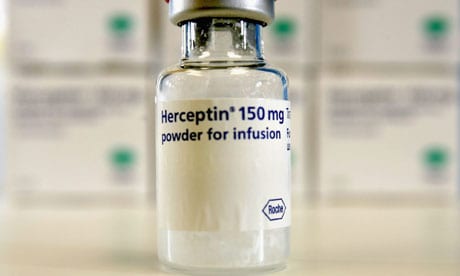
Drugs like Roche’s breast cancer treatment Herceptin, Pfizer’s lung cancer drug Xalkori and the next-generation cancer vaccines like Bristol-Myers Squibb’s melanoma medicine Yervoy, have all helped revolutionise cancer care, with many also having fewer serious side effects. But with these new treatments have come new challenges for pharma to market these medicines.
Mike Birtwistle, a health policy consultant and formerly head of the health policy team at MHP communications, told Pharmafile: “Cancer has seen huge clinical progress, but step changes in outcomes remain frustratingly rare. With new discoveries comes hope, but also hype.
“The challenge for any communicator is to manage these. Given the ongoing controversy about the costs and benefits of new cancer medicines, overhyping will win you few friends and create problems with the cancer community. This does not mean being shy about the benefits a new treatment can bring, but it does mean getting the context right. Hope does not have to mean hype.”
Analysts at IMS Health say that whilst new drugs are bringing new benefits, commercial success with an oncology launch is becoming more elusive. But it adds that it is well worth pursuing – provided that marketers understand the new ‘rules of the game’.
And pharma knows this is a lucrative market: according to data from analysts EvaluatePharma, the cancer drug business was worth just over $68 billion in 2012 and by 2018, it is set to be worth $114.4 billion, with oncology specialist Roche unsurprisingly enjoying the highest proportion of the market.
So why is success elusive if sales are expected to jump? Because with new medicines comes a need to understanding the benefits of these drugs – which may not always focus around survival – and the need to use the digital space effectively. These are the ‘new rules’ IMS Health speaks of.
Birtwistle says: “The mind-set for personalised medicine is very different and some pharma marketeers have had to learn this the hard way. A point of differentiation comes from having a clear group of patients who can benefit.
“This generates clinical excitement in a way which having a less effective product for a larger group of patients will not. For marketeers used to seeking to maximise the size of the population who might benefit from a treatment this can be a different way of working.”
Simon Doyle, brand director of oncology at Astellas, says that from a medical communications perspective, oncology is a complex disease area. “Not only is the science itself very complicated, but the sheer volume of information being published makes it a challenge to keep abreast of developments – it’s an ever changing picture.”
He’s also found that external customers seem to have much higher expectations and expect pharma companies to run more studies for cancer than they would in other disease areas, in order to fully understand the science and the mechanism behind their medicines.
But whilst the oncology market is ‘noisy, crowded and highly competitive’, most pharma firms are either involved in, or keen to be involved in the oncology market.
“One of the greatest challenges we face is to crystallise the huge amount of information into clear messages that tell a compelling story for our brands and to convey those messages in a highly impactful and differentiated way,” Doyle explains.
Digital marketing
One new way of working is the use of digital marketing to help communicate how these new drugs work, and why they are worth such a high cost. Ian Walker, vice president of international at cancer profiling firm Caris Life Sciences, told Pharmafile: “We have so far seen digital skills as something that we can buy in – and that model tends to be overly budget-oriented.
“You can do anything and everything in digital marketing. What it allows you to do is get a clearer message out there. It allows you to operate on multiple formats.”
He cites some of the firm’s best working as coming from the US, specifically with websites such as carismolecularintelligence.com and mycancer.com. The second site is set up as a portal for all stages of cancer treatment – from first diagnosis to patients who have been treated heavily, and offers advice throughout this pathway.
It is aimed as an educational tool for patients and carers, but comes with clear Claris Life Sciences logos and has some detailed pages on biomarkers and diagnostics, as well as its own services. This shows how the firm can market itself and its treatments indirectly, whilst also educating patients and carers about the disease.
Disease awareness campaigns
There is a key difference between marketing these medicines in the US – where direct to consumer (DTC) advertising is allowed – and in Europe, where it is not. In the US this makes the job of the marketer arguably more simply as they can extoll the virtues of a treatment or service directly to the public.
But in Europe marketers must be indirect with their advertising to stay within the law, and this has given birth to the disease awareness campaign. These campaigns, which are increasingly being used in a digital space, will communicate to or educate patients about a particular disease area, with small logos of the firms involved usually attached to the campaign.
Perhaps the most widely known is Eli Lilly’s ‘40 over 40’ TV and internet promotion that discusses the problems around erectile dysfunction. It is followed by Lilly’s logo at the end of the advert, but makes no direct mention of its ED drug Cialis, although the point of the campaign for Lilly is to have more men go to their doctors and thus increase the prescriptions numbers for its drug.
In cancer, however, there is a need to be more emotive in the kinds of campaigns whilst also having a detailed understanding of those you are talking to.
Dr Andrew Hingle, who heads up the marketing team for Sanofi’s oncology division in the UK, told Pharmafile: “With any awareness campaign you need to make sure you fully understand the market before investing what can be a significant part of your budget. Research, research, and research some more is the only way to ensure an effective investment.
“Also, bear in mind there’s a huge amount of responsibility when undertaking any awareness campaign as you are trying to communicate directly with the public. Cancer is a very dynamic, emotional subject and we need to ensure people are not scared unnecessarily.
“I would always advise any marketing team to really listen to your key stakeholders and work closely with patient groups as both of these groups have the insight into how patients think, feel and act when faced with a cancer diagnosis, and the needs of the patient should be at the heart of any awareness raising campaign.
“Finally – be authentic – your actions must support your words so internal alignment and commitment are as important as anything else.” Hingle says that one of the campaigns he most enjoyed working on was the ‘7 out of 10’ prostate cancer awareness campaign, which was created in conjunction with the Prostate Cancer Charity.
“It had a simple message that 7 out of 10 men with advanced prostate cancer don’t receive chemotherapy despite being eligible for treatment and generated significant coverage and debate on the issue,” he says.
But whilst digital is becoming important, this does not mean it is an end in itself. Hingle explains: “I believe that digital innovation should never be the ultimate aim of any marketing campaign; rather it should be seen as an important, integrated tool to help marketers achieve their communication objectives with target customers.
“Clinicians have less time available to take on board positioning messages delivered through traditional channels and they increasingly like to access information in a variety of ways. So digital is important to help reach those clinicians whom traditional marketing methods don’t reach but it should never be deployed as standalone activity.”
Dr Hingle adds that he ‘would always challenge’ on the type of digital media used according to position on the adoption ladder. “One way communication platforms work better earlier in the ladder – so more interactive digital platforms are needed later,” he says.
Being heard over the noise
But whilst these campaigns make their creators proud, one of the biggest problems for marketing cancer drugs and services is the sheer noise of the market, which is getting louder as more firms begin to developer more cancer medicines.
Walker says finding a way through this is difficult, but to help a marketer make their product stand out: “You must understand what the customer’s point of view is to shape your offering. It’s about creating a unique, compelling communication around a product. It must be based on customer insight, but not necessarily on what they think they want. You really need an ongoing dialogue.”
Laura Chambers, director at Just:: Health Communications, echoed this sentiment, telling Pharmafile: “From a communications perspective, new products entering the oncology space have to compete for a share of voice against products in other therapy areas that may save lives, not just prolong them in some cases.
“Pharma has to demonstrate the value of incremental benefit on previous therapies, defend high prices and often negotiate difficult questions around risk/benefit profiles.
“When competing for noise with other oncology products, the ‘Holy Grail’ is quality of life. Journalists realise that this is a precious commodity and are more likely to be receptive to a product that has some convincing data in this area.”
Internal versus outsourced marketing
The choice of who undertakes the marketing of the drug appears to come down to company culture: some are happy to outsource to firms whilst others prefer to do things in-house.
Walker is very much of the latter variety and says: “If you have a constant need for a particular function, establish it in-house. If a need is intermediate, outsource it.
“Outsourced firms work with many clients, tend to think more independently and have more new ideas. Working that way can be discontinuous, however, and external firms don’t have to live with consequences of their actions in the same way that in-house departments do.
“At the moment, we are outsourcing our digital work, but I would like to move it in-house. It’s a great way to communicate with the market and I would much prefer to have somebody here that I could sit beside and work with closely.”
Walker says that one of the problems with outsourcing is that you don’t have that consistent contact with customers. “I insist that all management of our staff maintain direct contact with customers to help improve their understanding of the market and improve our decision making as an organisation,” he adds.
But whilst some firms prefer to do things in- house, many medical communication firms are offering their services when it comes to disease awareness campaigns around specific cancers.
And Just::Health Communications is one of these firms who believe they have the experience and the understanding to help pharma in this new marketing arena.
Jon Spiers, head of political relations at the firm, who has also worked for Cancer Research UK, told us: “As marketeers, PRs and public affairs practitioners, we have a vital role in communicating the immediate impact and the longer-term implications of this transformative change to oncology medicine.
“Perhaps the greatest oncology challenge for healthcare communicators is only now becoming apparent: the impact of personalised medicine on pharma marketing, PR, public affairs and patient advocacy.”
He went on: “Many new treatments only work in a small proportion of patients but can often deliver superb results within that tiny population. It’s becoming clear from tumour profiling that the same biomarkers and pathways exist in many cancers, so it’s not inconceivable that one treatment could work in a small percentage of patients across many tumour types.”
Spiers adds that this has ‘enormous implications’ for the current trial model as well as for pricing, for launching new drugs, for access and for how information is provided to patients.
In many cases, the patient populations who will benefit from a new drug across multiple tumour types will be too small to do a standard clinical trial, so researchers will need to carefully consider whether our healthcare systems are prepared for far more near- and off-label prescribing, gathering information on new agents as usage spreads.
Doyle says: “My view is that in-house marketing is essential – we champion our brand internally for which we are accountable. However, all members of a brand team are experts in their fields and each play a crucial role: it makes no difference to me if they are internal or external.
“The more you involve agencies, the more you share your thinking, the more you get out of them and the more benefit you get for your brand. My personal belief is that the team must be led in-house but external expertise is often critical.”
Conclusion
The rise of new personalised cancer medicines is creating a new paradigm for pharma marketers who must juggle the need to explain complicated information whilst still managing to engage with both patients and doctors.
The strategic use of disease awareness campaigns and digital have combined to create a new way of communicating, but the fundamental aspects of marketing: research, knowing your audience and being clear on benefits remains the key elements to a successful campaign.
Ben Adams and Hugh McCafferty
Related Content

Roche adds 2,176 NVIDIA Blackwell GPUs to its hybrid-cloud AI factory
Roche has expanded its global AI infrastructure with a NVIDIA AI factory, adding 2,176 high-performance …

BMS’ Opdivo/Yervoy combination accepted by Scottish Medicines Consortium for colorectal cancer
Bristol Myers Squibb (BMS) has announced that its Opdivo (nivolumab) has been accepted, in combination …

Astellas Pharma’s Vyloy accepted by Scottish Medicines Consortium for gastric cancer
Astellas Pharma, a pharmaceutical company creating medicines to address unmet medical needs, has announced that …