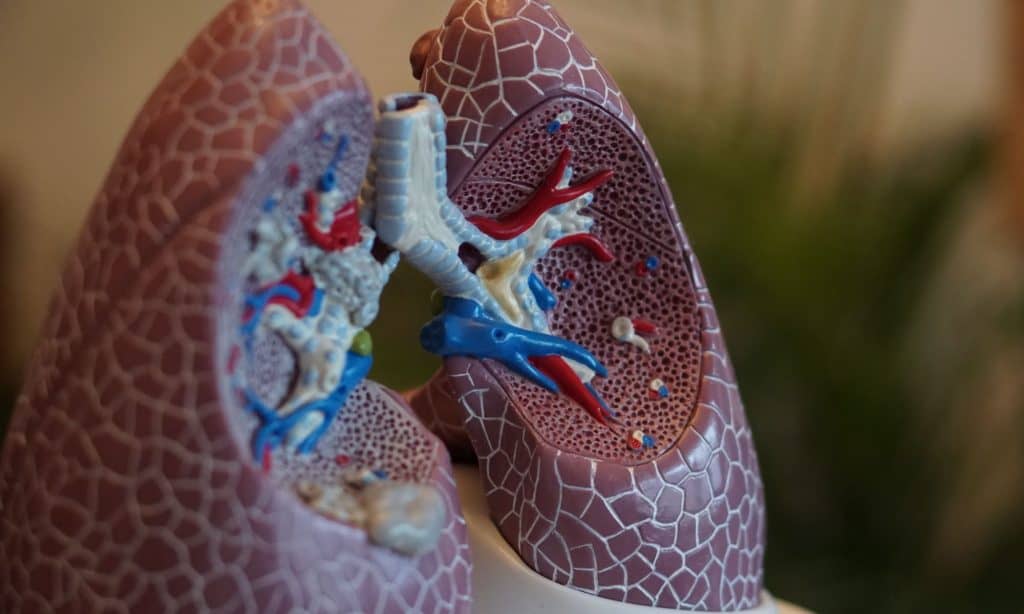
Functional lung imaging offers new possibilities for respiratory care
pharmafile | August 9, 2026 | Feature | Data Capture | Asthma & COPD, Computed tomography, Diagnostics, digital technologies, medical imaging
Advances in computed tomography (CT) technology are helping to reshape the diagnosis and management of chronic respiratory disease, with new approaches offering clinicians a more detailed picture of lung function while reducing the need for more invasive imaging techniques.
As healthcare systems continue to modernise their imaging capabilities, attention is increasingly turning to technologies that move beyond traditional anatomical scans to provide functional information about how the lungs are performing. Such developments could improve the assessment of conditions where understanding changes in lung function is central to diagnosis, monitoring disease progression and evaluating treatment response.
The growing importance of respiratory imaging is reflected in wider investment across healthcare systems. According to GlobalData, Australia accounted for around 4% of the Asia-Pacific CT systems market in 2025, with continued growth expected as providers upgrade imaging infrastructure and adopt technologies capable of supporting more sophisticated lung assessment.
One recent development is the approval in Australia of 4DMedical’s CT-VQ technology, which enables clinicians to assess regional lung ventilation and perfusion using routine, non-contrast chest CT scans. Unlike conventional ventilation-perfusion imaging, the approach does not require contrast agents, radiotracers or dedicated nuclear medicine facilities, potentially broadening access to functional lung assessment in routine clinical settings.
The ability to evaluate both ventilation and blood flow without additional procedures could prove particularly valuable for patients who are unsuitable for contrast-based imaging while also simplifying clinical workflows.
Priyanka Chakraborty, Medical Devices Analyst at GlobalData, believes the approval represents an important step in expanding the clinical role of functional lung imaging.
“Using a non-contrast method to evaluate ventilation and perfusion could be especially valuable for patients who may not be suitable for contrast-based imaging,” she says. “It also has the potential to broaden the clinical utility of advanced functional lung imaging in day-to-day respiratory care.”
Such developments reflect a broader trend within respiratory medicine towards earlier diagnosis, more precise disease characterisation and improved long-term monitoring. In chronic respiratory conditions such as chronic obstructive pulmonary disease (COPD), where symptoms and disease progression can vary significantly between patients, access to more detailed functional information may help clinicians make more informed treatment decisions while supporting research into disease mechanisms and therapeutic response.
The move also mirrors wider developments across medical imaging, where digital technologies, artificial intelligence and advanced image analysis are extending the clinical value of established imaging modalities. Rather than simply identifying structural abnormalities, newer approaches increasingly seek to quantify physiological changes that may provide earlier or more sensitive indicators of disease.
For healthcare providers, technologies that can deliver additional clinical information without significantly increasing patient burden are attracting growing interest. Reducing reliance on contrast agents or specialist imaging infrastructure may also improve efficiency while making advanced diagnostic capabilities more widely available.
Looking ahead, the continued integration of functional CT imaging with digital analysis tools and AI-assisted interpretation could further strengthen its role in respiratory medicine. As these technologies mature, they may support more personalised approaches to diagnosis, patient monitoring and clinical research, reinforcing the importance of imaging as part of the evolving respiratory care pathway.
While widespread clinical adoption will depend on further evidence and continued evaluation, recent developments suggest that functional lung imaging is becoming an increasingly important component of the diagnostic toolkit for chronic respiratory disease. Pic: Robina Weermeijer

This article featured in: August 2026 – The Pharmafile Brief
Related Content

Data integrity: the keystone for AI adoption, patient safety and organisational reputation
By Gurdip Singh Artificial intelligence is rapidly moving from future aspiration to operational reality across …

Digital mental health technologies – a valuable tool in supporting people with depression and anxiety
The potential benefits of digital mental health technology for managing depression, anxiety and stress, together …

InnotiveDx gets £1m grant to advance UTI diagnostics system
InnotiveDx has announced that it has received a £1m grant from Pathways to Antimicrobial Clinical …