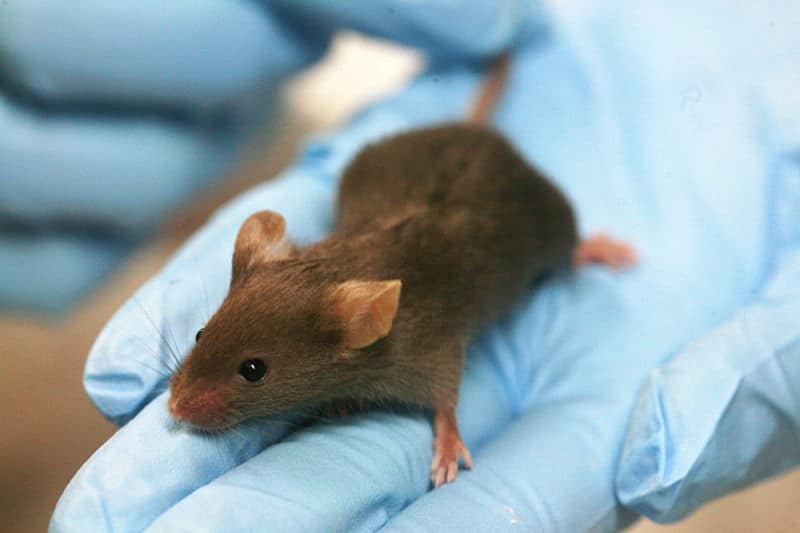
Number of UK animal testing procedures falls to lowest level since 2007
pharmafile | July 19, 2019 | News story | Medical Communications, Research and Development | Animal testing, UK, drug development, pharma, rresearch
A report from the Home Office of the UK Government has revealed that the prevalence of animal testing in the UK has fallen to its lowest level in just over a decade.
The report ‘Statistics of scientific procedures on living animals, Great Britain: 2018’ stated that, in total, there were 3.52 million procedures conducted on living animals across England, Scotland and Wales in 2018. While this represents a 7% fall in the number of cases compared to the previous year, bringing rates down to their lowest level since 2007, it does not reveal how many animals were actually involved in said procedures.
Procedures on mice, fish and rats accounted for 93% of this total, though the overall use of rats fell by 27% while the use of birds rose from 130,000 cases to 147,000.
Under rules dating back to 2014, the Home Office assessed these total cases by the degree of suffering they are thought to cause to the animals involved, with 40.2% of cases deemed to be ‘sub-threshold’, or less painful than the prick of a needle; 38.9% of cases were ‘mild, while 14.7% were ‘moderate’ and 3.6% were ‘severe’.
“Since the publication of the Concordat on Openness on Animal Research in the UK in 2014, organisations that carry out research using animals have been increasingly transparent,” explained Wendy Jarrett, Chief Executive of Understanding Animal Research. “These organisations are providing an unprecedented level of information about how and why they conduct medical, veterinary and scientific research using animals. Facts, figures, case studies, and photos about the use of animals in research are now provided directly by the organisations that carry out the research, so that it has never been easier for members of the public to find out why those animals were used in research.”
Dr Martin Vinnell, the University of Cambridge’s Establishment Licence Holder, who oversees the organisation’s animal research, also commented: “While the use of animals plays an important role in biomedical research, we should always be looking at ways to refine this work, find replacements and ultimately reduce the number of animals used.
“Nor should we see this kind of research as a right – it’s essential that we are open about our work and ensure the public is well informed of both what we do, and why we do it, whether or not they support this type of research. This is why it is important that institutions such as Cambridge and its peers release information about their animal research.”
Matt Fellows
Related Content

Pharma sees climate disruption as growing supply-chain risk
Nine in ten pharmaceutical companies across the UK and G7 countries expect climate-related disruption to …
AI in pharma: From lab development to patient impact
In the decade to 2025, AI use in vaccine development has increased markedly but is …

Custom Pharmaceuticals launches new company for drug product development
Customs Pharmaceuticals, a full-service contract development and manufacturing organisation (CDMO), has launched Centrix Pharma Solutions, …