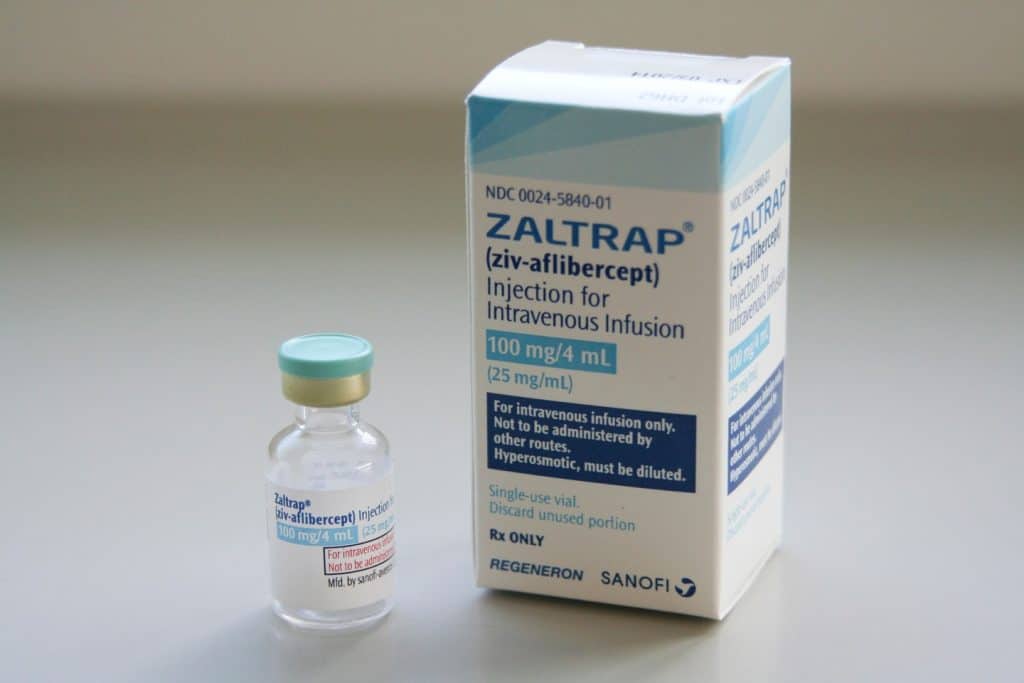
Zaltrap ‘no’ from NICE
pharmafile | June 21, 2013 | News story | Sales and Marketing | NICE, Sanofi, Zaltrap
NICE is preparing to discard Sanofi’s Zaltrap as an NHS option for treating metastatic colorectal cancer (mCRC) that is resistant to, or has progressed after, an oxaliplatin-containing regimen.
The proposed rejection is a blow to Sanofi, which launched Zaltrap (aflibercept) in the UK earlier this year and claimed the drug would fulfil an unmet need.
NICE has not been swayed by arguments over the bowel cancer drug’s novel action and points out that it has already recommended six other treatments for various stages of the disease.
In essence, the pricing body is not convinced that Zaltrap offers value for money for the NHS when compared to its other approved options, which include oxaliplatin, Roche’s Xeloda (capecitabine) and Bristol-Myers Squibb/Merck Serono’s Erbitux (cetuximab).
In the Phase III VELOUR study, Zaltrap in combination with irinotecan and fluorouracil-based therapy (FOLFIRI) extended overall survival by a median of 1.44 months when compared to placebo.
Progression-free survival (PFS) also improved, from 4.67 months to 6.9 months, while the overall response rate in the Zaltrap plus FOLFIRI arm was 19.8% versus 11.1% for Folfiri alone.
“[We] are disappointed not to be able to add aflibercept to the list of treatments for this stage of the disease,” said NICE chief executive Sir Andrew Dillon. “However, we have to be confident that the benefits that drugs offer patients really do justify what the NHS will have to pay for them.”
Metastatic colorectal cancer is when the primary cancer has spread from the colon or rectum to other parts of the body, such as the liver – and while NICE does not doubt that Zaltrap is clinically effective, it simply costs too much, even with a patient access scheme.
NICE believes the ‘most plausible’ cost per Quality Adjusted Life Year (QALY) ranged from £62,900 per QALY gained to £66,500 per QALY gained, depending on whether the treatment benefits of Zaltrap plus FOLFIRI and FOLFIRI alone became the same after 30 or 36 months of starting treatment.
Colorectal is the most common cancer in both men and women in Europe and the second leading cause of cancer mortality: in 2008, there were 436,000 new cases diagnosed and 212,000 deaths.
Zaltrap’s novel mode of action binds to angiogenic factors VEGF-A as well as uniquely targeting VEGF-B and placental growth factor (PIGF).
It works by preventing the formation of new blood vessels within and around a tumour, thus stopping or slowing the spread of cancer – and it is the first drug to have shown improved survival in this patient group.
But although Zaltrap is predicted to make peak annual sales of up to $400 million, it is later to market than its rivals and has failed in studies for prostate, lung and pancreatic cancer, and colorectal cancer, making further indications less likely.
And it faces stiff competition in mCRC from more established treatments such as Roche’s Avastin, Bayer’s Stivarga, and Amgen’s Vectibix.
NICE’s decision is not yet final: there will be a consultation period during which the manufacturer and others can have their say before the next draft guidance is issued.
Adam Hill
Related Content

Digital mental health technologies – a valuable tool in supporting people with depression and anxiety
The potential benefits of digital mental health technology for managing depression, anxiety and stress, together …

Sanofi and Regeneron’s Dupixent receives CHMP recommendation for chronic spontaneous urticaria
Sanofi and Regeneron have received a positive opinion from the European Medicines Agency’s (EMA) Committee …

Combination treatments: Takeda’s Implementation Framework and the broader landscape
Pharmafile talks to Emma Roffe, Oncology Country Head (UK & Ireland) about the combination treatment …