Working Life: Novartis’ Filiberto de Cal
pharmafile | March 25, 2011 | News story | Business Services, Sales and Marketing | Novartis, Working Life, recruitment
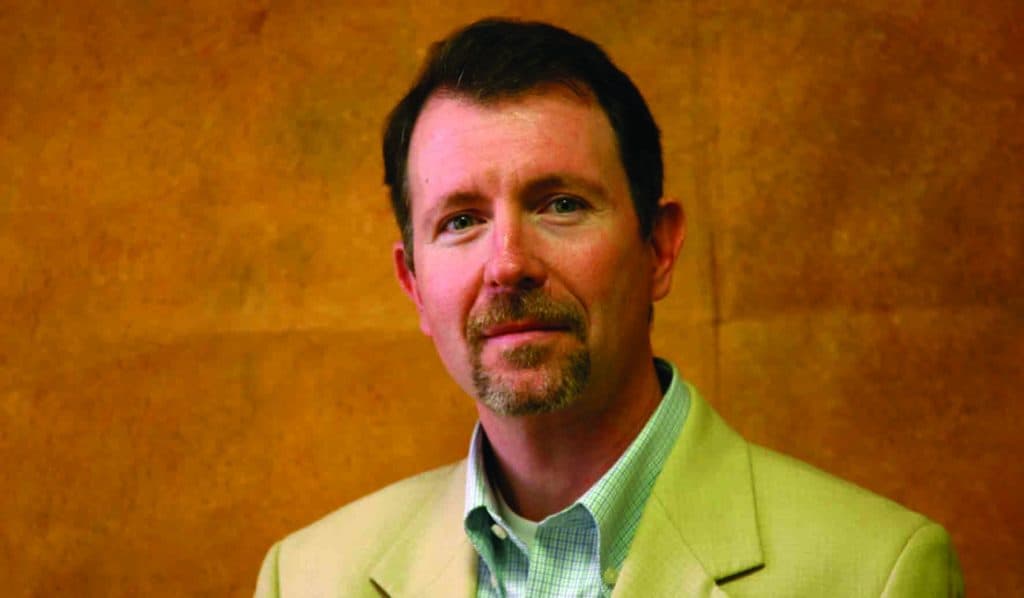
Filiberto de Cal is director of global marketing – new products at Novartis Diagnostics.
Here he outlines his route into pharma marketing, how his field is changing and some common misconceptions about diagnostics.
How did you find your way into your current role?
I grew up in Europe studying biology, and planned for a career in academia. However, destiny had other plans in mind, and I moved into a corporate role.
My first job was to help develop and market assays based on a new technology: Polymerase Chain Reaction. This was during the 1980s, and molecular biology revolutionised our world. The molecular biology space was fuelled by passion and a drive to invent new scientific solutions.
I loved being part of this burgeoning field and helping to transform ideas into concepts, and then into products that had the potential to save people’s lives. Best of all, that passion has followed me through the years, and still represents the reason why I go to work every day.
At Novartis, I’m surrounded by people who share the same passion, and it keeps us focused on fostering innovation in many different areas, starting with blood screening and beyond.
How is your field changing?
I see the field changing in two different ways and at two different speeds. On the one hand, there is an ongoing trend of consistent evolution at a steady pace that has improved blood screening and helped secure the safety of the blood supply. Novartis Diagnostics has been involved with all areas of these improvements from full automation of the blood screening process and speedy access to results, to enhanced data access and management and higher sensitivity across assays.
The second change is intriguing, and is happening at an unpredictable pace.
As science itself advances, we start to see more disruptions in business as usual with brand new technologies that change the way we think and the directions that we can take our business. For example, next generation sequencing, combined with pharma companies’ move into diagnostics, has opened up a rich new frontier of information embedded in genetic profiles.
The fact that we now have access to personalised information through these technological advancements encourages us as a company, to find ways to put the information to use to help patients and their caregivers understand disease progression and predisposition. That’s why there’s no time for complacency in this market.
We always must think about what’s next.
What are the most enjoyable things about your role?
There are several very enjoyable things about my role. To begin with, I’m blessed to be able to work with so many talented associates: our interactions are extremely productive, and there is a deep sense of learning and accomplishment that drives our efforts.
In addition, I’m constantly exposed to new initiatives, projects and concepts. The ability to be part of such a strong and committed team, and help Novartis Diagnostics shape our future, is simply priceless.
And the least enjoyable?
The least enjoyable thing is represented by the acute notion that information today is overwhelming, ubiquitous, and constantly evolving.
It is humanly impossible to be at the forefront of all that’s happening without striking an unsatisfactory compromise between breadth of information vs the depth of it – and hence, the feeling that something will pass by unnoticed, or not be properly analysed.
What are the most common misconceptions about your field and the people who work within it?
One of the most common misconceptions is the belief that all diagnostic assays are substantially equal, and price makes the difference. I’ve seen too many decisions based solely on price turn out to be big nightmares for the lab, the hospital, the payers and – above all – the patient.
I strongly support considering tangible and intangible benefits for each test, instrument and platform, and consider the entire value chain, not just within your immediate area of concern. Quality has an enormous monetary value that is too often underestimated.
Is there someone in your field who has inspired you or from whom you have learnt a lot?
That would be too long of a list to write.
I have never stopped learning. That’s what keeps my level of interest in my job so high. One key learning that always inspires me is captured by this simple sentence:
“All answers already exist. The problem is to ask the right questions.”
Similarly, is there someone (or something) outside your field who has been a big inspiration for you?
I would say my family. I discuss my successes and my concerns with my wife: she has a unique way of putting things in perspective, to make me see nuances I did not consider.
My kids inspire me everyday. They teach me lessons about the important things in life, and which principles should never be compromised.
What is the secret to a happy working life?
My father had a way of expressing his secret to a working life, which, by the way, I immediately made mine too: “Carefully pick your job, for it will be your everlasting entertainment.”
The moment you stop having fun at what you do, you had better quit. That’s so true.
If you had advice for anyone starting out in your field now, what would it be?
Inaction, not fearing to err, is the biggest mistake to avoid.
CAREER SUMMARY
Novartis Diagnostics. Emeryville, CA – USA
• Director, Global Marketing – New Products (March 2010 – current)
Roche Molecular Systems, Inc. Pleasanton, CA – USA
• Sr. international marketing manager, Genomics and Oncology (2005 – March 2010)
• Sr. business development manager, Genomics and Oncology (2001 – 2005)
Roche Diagnostics S.p.A. Milan – Italy
• Head of marketing, Diagnostics Division (1997 – 2001)
• Business unit head, Sales and Marketing, Molecular Diagnostics (1992 – 1996)
• Product manager, Microbiology (1989 – 1991).
Related Content
Scotland starts newborn screening for SMA
As part of a two-year evaluation funded by the Scottish government and Novartis, Scotland will …

Novartis receives SMC approval for early breast cancer treatment
Novartis has announced that its treatment for early breast cancer, Kisqali (ribociclib), has received approval …

Novartis candidate for Sjögren’s disease presents positive results
Novartis has reported positive results from two phase 3 clinical trials – NEPTUNUS-1 and NEPTUNUS-2 …