Wales Assembly facing questions over cancer
pharmafile | November 5, 2014 | News story | Research and Development, Sales and Marketing | CDF, Cancer, NHS, Wales, Welsh, assembly, drugs fund, oncology
The state of cancer services in Wales has come under increased scrutiny this week as the country’s ability to provide treatments for patients was called into question.
Almost 100,000 people have signed a petition calling for an equivalent to England’s Cancer Drugs Fund (CDF) to be set up in Wales.
The £280 million CDF allows patients to get access to drugs NICE deems too expensive for normal funding on the NHS. This means that several new cancer treatments are available in England but not in Wales.
Julie McGowan from Usk in Wales started the petition when one of her friends was refused Roche’s Avastin (bevacizumab), which is available on the Cancer Drugs Fund.
“People believe that having paid into a UK National Health Service all their lives they are going to get equal treatment when they really need it,” she tells ITV News, “and then are shocked to discover that it’s not the case”.
But the CDF itself has also been criticised for being unfair by favouring cancer over other serious diseases. This position is currently taken by the Welsh government, which has indicated it will not be changing its policy on cancer funding.
“We don’t have a cancer drugs fund because, as the best research says, it is ethically dubious, clinically contentious and unpopular with patients,” Mark Drakeford, health minister for Wales, tells Sky News.
The CDF’s resources are also under increasing pressure as the prices of oncology treatments soar. This year its budget was increased and for the first time the Fund has begun assessing drugs based on their cost, and axing less effective treatments to save money.
This has caused the charity Breakthrough Breast Cancer to call out the Fund for merely “papering over the cracks of a bigger issue”.
Welsh patients can apply to an Individual Patient Funding Request (IPFR) panel to get access to unavailable drugs, but these only approve patients deemed to be ‘clinically exceptional’.
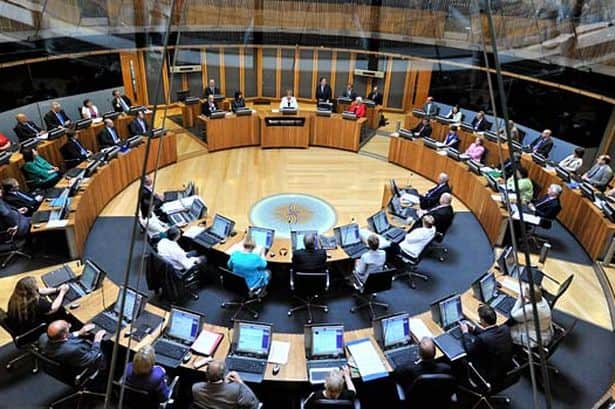
The petition has been presented to the Welsh Assembly in Cardiff ahead of a debate around the issue.
Urology cancer services under pressure
In another attack on Wales’s cancer care, the director of the North Wales Cancer Network, Damian Heron, has said that bladder cancer patients in North Wales should not be treated in the area as the service there is under increasing pressure and not ‘fit for purpose’.
At a meeting of Wales health officials, Heron said that there are “hundreds of bladder cancer cases awaiting an appointment date”, and that it was not possible to recruit the required number of surgeons locally.
Heron, adding that the ‘grip’ on the issue was insufficient in current plans – has suggested an alliance with Arrowe Park Hospital in Wirral, Merseyside, to help ease pressure on the service.
Morag Olsen, health board chief operating officer, says: “We recognise that the urology service is under pressure and we are taking a number of steps to improve access for cancer patients by increasing productivity and creating further capacity.
“This includes increasing our outpatient clinics, providing more diagnostic services and recruiting two additional consultants. However, these measures alone will not be sufficient to provide sustainable services.
“We are therefore also working closely with Christies, the Wirral University Teaching Hospital and our own staff to develop a sustainable network of urology services within north Wales.”
Welsh men more depressed than woman
Meanwhile, research by the charity Tenovus has suggested that men in Wales find it harder than women to come to terms with having cancer.
The charity says that men are more anxious, depressed and have greater feelings of hopelessness upon receiving a diagnosis – but only one in five seek counselling. However, 88% of those that do receive support show a significant improvement in their state of mind.
The chief executive of Tenovus, Claudia McVie, says: “It’s understandable that many men try to maintain a stiff upper lip when they’re affected by cancer, but our research shows that talking problems through with a trained professional can make an enormous difference to their quality of life.
The research will be presented to the National Cancer Research Institute (NCRI) annual conference.
George Underwood
Related Content

BMS’ Opdivo/Yervoy combination accepted by Scottish Medicines Consortium for colorectal cancer
Bristol Myers Squibb (BMS) has announced that its Opdivo (nivolumab) has been accepted, in combination …

Astellas Pharma’s Vyloy accepted by Scottish Medicines Consortium for gastric cancer
Astellas Pharma, a pharmaceutical company creating medicines to address unmet medical needs, has announced that …

Digital mental health technologies – a valuable tool in supporting people with depression and anxiety
The potential benefits of digital mental health technology for managing depression, anxiety and stress, together …