‘Three-person’ IVF consultation
pharmafile | June 28, 2013 | News story | Research and Development, Sales and Marketing | DoH, HFEA, IVF
The Department of Health is to publish draft guidelines later this year on a controversial IVF-based technique which would lead to babies who have DNA from three people.
The advantage is that it would allow women carrying mitochondrial diseases – which include heart disease, liver disease and muscular dystrophy – to have healthy children and not pass their conditions on.
If approved, the UK would be the first country in the world to offer this option: one in 6,500 babies are born with mitochondrial disorder and around 12,000 people in the UK live with these conditions.
Mitochondria give energy to nearly every cell of the body and defects can result in muscle weakness, blindness, heart failure and even death in infants.
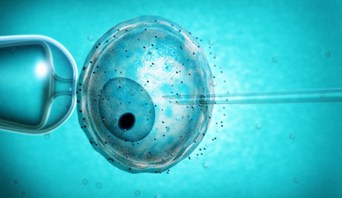
The procedure under discussion involves taking nuclear genetic material from a mother’s egg or embryo, and putting it into a donor egg or embryo that has had its nuclear DNA removed.
At the moment only unaltered sperms and eggs can be used in assisted reproduction such as IVF, and the government intends to introduce a final version of the draft regulations for debate in Parliament in 2014.
But there are concerns that this is moving further down the road towards ‘designer babies’, with critics suggesting carriers of mitochondrial diseases could use donor eggs in IVF procedures or adopt children.
Such a cutting-edge technique – which, it is estimated, would save around ten lives each year – is squarely at the intersection between scientific progress and ethical concerns.
“Scientists have developed ground-breaking new procedures which could stop these diseases being passed on, bringing hope to many families seeking to prevent their future children inheriting them,” said chief medical officer Professor Dame Sally Davies.
“It’s only right that we look to introduce this life-saving treatment as soon as we can,” she added.
The Human Fertilisation and Embryology Authority (HFEA) consulted on this issue between June and December last year and says that there is public support for mitochondria replacement – as long as it is “subject to strict safeguards and careful regulation”.
The HFEA carried out an assessment of the safety and efficacy of the procedure in 2011 – and three years before that Parliament passed an amendment to the Human Fertilisation and Embryology Act to enable it to be introduced if the technology became available.
Adam Hill
Related Content

Could targeting the molecular causes of infertility finally transform IVF success rates?
By Dr Jordan Abdi Over the past two decades, demand for IVF has risen sharply …

Ferring strengthens evidence for flexible dosing of follitropin delta in IVF
Ferring Pharmaceuticals has reported that a conventional 15µg/day starting dose of follitropin delta (Rekovelle) provides …

Abu Dhabi’s Department of Health, M42 and AbbVie enter strategic partnership
Abu Dhabi’s Department of Health (DoH) has signed a Memorandum of Understanding (MoU) with AbbVie …