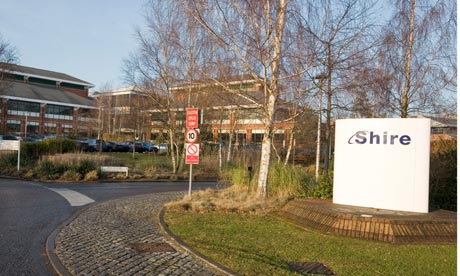
Shire sheds Dermagraft at $650m loss
pharmafile | January 20, 2014 | News story | Sales and Marketing | Organogenesis, Shire, dermagraft
Shire has offloaded its Dermagraft business to Organogenesis just three years after purchasing the company.
Given the sale has come so swiftly after its original purchase and that Dermagraft has been making a loss in that time – Shire is expected to take a large financial hit as a result.
Under the terms of the deal Shire receives no upfront payment for the firm, although it could receive up to $300 million if certain annual sales targets are met.
However, Dermagraft is valued on Shire’s books at $683 million – the company said that it would take an impairment hit of its balance sheet of $650 million as a result.
Although the sale meant that Shire would have suffered a loss, analysts said that the exit was worth it and would free the group to pursue more profitable product lines.
Société Générale analysts said: “Given that Dermagraft was loss-making, in our view any price for the divestment is better than Shire retaining a non-core, loss-making product. As such, we view the divestment as a positive move that should allow Shire to focus on higher-growth, profitable products elsewhere in the portfolio.”
Dermagraft is a living skin substitute indicated for use in the treatment of full-thickness diabetic foot ulcers and is approved for use in the US and Canada.
Massachusetts, US-based wound specialist Organogenesis will now assume all financial and management responsibility for Dermagraft.
Shire bought the company in 2011 when it acquired BioHealing for $750 million. The Irish firm hoped that Dermagraft would be key in its portfolio of regenerative medicinal products.
But it suffered an almost immediate setback a few months after the deal was struck when Dermagraft failed a Phase III study for its potential use in the treatment of leg ulcers.
It was also hit in 2013 by a criminal investigation in the US which saw Shire take a $199 million write-down on its investment in Dermagraft amid plunging profits.
Flemming Ornskov, chief executive of Shire, said: “Following the new strategy we outlined during the first half of last year, Shire has had a renewed focus on operational discipline.
“As such, we have been prioritising investments that are of the greatest strategic, clinical and commercial value to our company.”
He said that Dermagraft ‘no longer meets these criteria’ and this divestment would allow the firm to focus its resources on other projects.
Ornskov added that the US market had deteriorated even further after a ruling that the government would pay less for services provided to poor and older people on Medicaid and Medicare benefits, meaning it would not get the reimbursement for Dermagraft that it would have expected.
Ben Adams
Related Content
Takeda plans to vacate all 1,000 staff from US HQ by the year’s end
Takeda has announced its plans to vacate all staff from its US headquarters in Deerfield, …
Novartis buys dry eye treatment Xiidra in deal worth $5.3 billion
Japanese multinational Takeda Pharmaceutical has agreed to sell its dry eye drug Xiidra to Swiss …

Top Ten most popular articles on Pharmafile.com this week!
With the completion of Takeda’s £46 billion acquisition of Shire finally done, another even bigger …