Roche’s Zelboraf rejected by NICE
pharmafile | June 15, 2012 | News story | Sales and Marketing | Cancer, Dillon, NICE, Roche, Zelboraf, melanoma
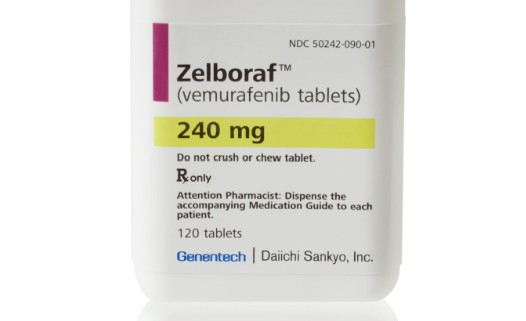
NICE is not recommending Roche’s targeted melanoma pill Zelboraf because of its high cost and uncertainties over its survival benefit.
The watchdog said in its first round of draft guidance that it could not recommend Zelboraf (vemurafenib) for the treatment of unresectable locally advanced or metastatic melanoma patients with the V600e mutation.
This mutation is present in around half of all melanoma patients and the drug is aimed at extending life for the most advanced cases, which amounts to around 1,000 people in the UK.
The drug costs £1,750 per week. For an average treatment of seven months the drug would cost the NHS £52,000, making it one of the most expensive treatments ever to be assessed by NICE.
Because of the small number of patients the drug can treat, it did meet NICE’s end of life criteria which means the watchdog has a higher QALY threshold to work with.
NICE usually can only recommend a drug with a maximum of £30,000 per QALY gained, but for Zelboraf this was extended to £50,000.
Roche has offered a confidential discount to the drug’s list price, but NICE said even with this, the best QALY case was still over double the £50,000 threshold.
The watchdog added that even Roche did not believe its drug could fall within the £50,000 range, with the firm saying in its submission that it expected a best case QALY of £56,400.
Because of this, and uncertainties over the longer-term survival effect of the drug, NICE said it could not recommend the drug.
Sir Andrew Dillon, chief executive of NICE, said: “Vemurafenib is an expensive drug and its long-term benefits are difficult to quantify.
“When assessing the cost effectiveness of a treatment, NICE appraisal committees will take numerous factors into account.
“These include how effective the drug is, its side effects, the effect it can have on the patient’s quality of life and also the financial cost.
“This enables them to determine the cost of using the drug to provide a year of the best quality of life available or quality adjusted life year (QALY).”
Sir Andrew said that Roche: “has the opportunity to submit a further patient access scheme if they wish,” implying that a further price cut may just sway the watchdog.
Last year NICE rejected Bristol-Myers Squibb’s melanoma vaccine Yervoy (ipilimumab) in draft guidance, again because of its high cost.
The watchdog estimated that Yervoy would cost £80,000 per patient, but did not believe the increase in survival merited such a high price tag.
Patient group attacks decision
NICE has been criticised for its recent decision on these drugs by Factor 50, a patient support group.
Gill Nuttall, chief executive of Factor 50, said: “This is another truly devastating blow to all melanoma patients and their families, many of whom are very young and with young families.”
She said that standard treatments that have been available since the 1970s, which includes the chemotherapy agent dacarbazine, were ‘ineffective’, adding that: “To deny this drug to patients, is tantamount to passing them a death sentence”.
“I am astonished and deeply worried that NICE has not given approval to yet another drug which will significantly alter the lives of melanoma patients.
“The patients I represent have vowed that again, they will not take this decision lightly.”
Ben Adams
Related Content

Digital mental health technologies – a valuable tool in supporting people with depression and anxiety
The potential benefits of digital mental health technology for managing depression, anxiety and stress, together …

Combination treatments: Takeda’s Implementation Framework and the broader landscape
Pharmafile talks to Emma Roffe, Oncology Country Head (UK & Ireland) about the combination treatment …

Central nervous system cancer metastases – the evolution of diagnostics and treatment
The current forms of immunotherapy, how T cell therapy works and what the future holds