Roche’s melanoma pill launched in UK
pharmafile | March 14, 2012 | News story | Sales and Marketing | BMS, CDF, NICE, Roche, Yervoy, Zelboraf
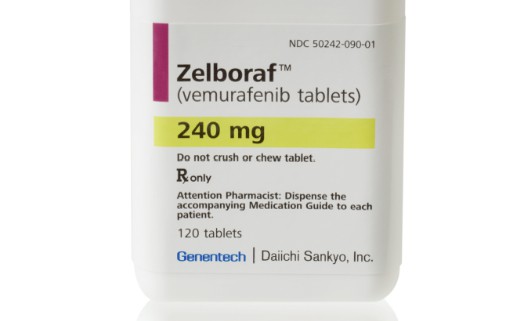
Roche’s Zelboraf has been launched in the UK to treat the deadliest form of skin cancer.
Zelboraf (vemurafenib) is the first targeted melanoma treatment to reach the UK, and has proven in clinical trials to increase survival in late-stage patients.
The drug will cost £7,000 per patient, per month, making it an expensive treatment.
It will now have to face a NICE appraisal to test its cost effectiveness, with final guidance expected in October this year.
Expensive cancer treatments have struggled to come through the NICE process in recent years, and Zelboraf could face an uphill struggle given its price tag.
But whilst the watchdog is appraising the drug, it will become available through the government’s Cancer Drugs Fund.
But as the Fund is allocated regionally, some areas may not decide to add Zelboraf to its approved drug list.
This risks a postcode lottery for access to the treatment, meaning both Roche and the Charity would much rather see it recommended by NICE.
The drug targets the BRAF V600 mutation, which is present in around half of all melanoma patients.
A test is also available to identify the presence of the BRAF V600 predictive biomarker in patients, and therefore their suitability to the treatment.
Zelboraf does not have the UK market to itself and will be competing with Bristol-Myers Squibb’s immunotherapy treatment Yervoy (ipilimumab), which has the potential to treat all melanoma patients.
The drug was recently rejected by NICE in a preliminary review, with the watchdog stating that its £80,000 price tag was too much for the NHS to pay.
Zelboraf was approved by the European Commission in February, and was based on impressive Phase III results.
Its most recent data showed Zelboraf improved progression-free survival by about 4 months (5.3 months for vemurafenib compared to 1.6 months for chemotherapy agent dacarbazine).
It also increased overall survival by about 3 months (13.2 months for Zelboraf compared to 9.9 months for dacarbazine), in patients who tested positive for BRAF V600 mutations.
Dr James Larkin, consultant medical oncologist at The Royal Marsden, where the drug was tested, said Zelboraf was a ‘turning point’ for late-stage melanoma patients.
“With a personalised medicine now available, all people given the diagnosis of metastatic melanoma can be tested for the BRAF V600 gene mutation to help determine the best options for treatment.”
Malignant melanoma disproportionately affects younger people, and is now the second most common cancer in people aged 15-34 in the UK.
Rates of malignant melanoma in Britain have risen faster than any other common cancer, with an around 2,000 people dying from the disease each year in the UK.
The incidence of the disease is expected to grow; making treatments that can increase overall survival more important.
Ben Adams
Related Content

BMS’ Opdivo/Yervoy combination accepted by Scottish Medicines Consortium for colorectal cancer
Bristol Myers Squibb (BMS) has announced that its Opdivo (nivolumab) has been accepted, in combination …

Digital mental health technologies – a valuable tool in supporting people with depression and anxiety
The potential benefits of digital mental health technology for managing depression, anxiety and stress, together …

Combination treatments: Takeda’s Implementation Framework and the broader landscape
Pharmafile talks to Emma Roffe, Oncology Country Head (UK & Ireland) about the combination treatment …