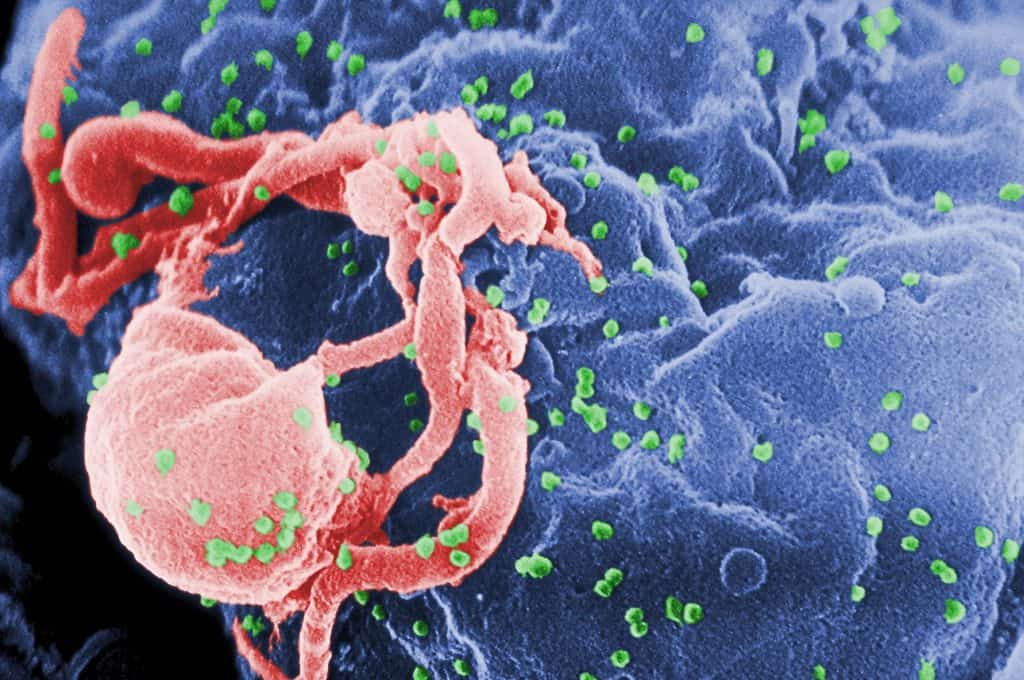
Researchers use gene-editing tool CRISPR to cure mice of HIV
pharmafile | July 3, 2019 | News story | Research and Development | AIDS, HIV, Nature Communications, crispr, mice, pharma
American scientists have been able to combine a new form of antiretroviral therapy (ART) with gene editing tool CRISPR/Cas9 to cure mice with HIV.
The interdisciplinary team of researchers were able to flush out HIV in humanised mice infected with the virus that causes AIDS.
“Our study shows that treatment to suppress HIV replication and gene editing therapy, when given sequentially, can eliminate HIV from cells and organs of infected animals” said lead author Dr Kamel Khalili.
The study, published in the journal Nature Communications, shows that “permanent viral elimination is possible” in animals with HIV.
While antiretroviral therapies are currently able to supress HIV replication, the virus lies dormant beyond the reach of ART, meaning the virus returns if patients stop using ART. Current treatments thus focus on managing and supressing the virus rather than eliminating HIV.
However in seeking the fully eliminate HIV the researchers used a new form of antiretroviral therapy ‘long-acting slow-effective release’ (LASER) ART which maintains HIV replication at low levels for extended period of time.
They combined the treatment with a method developed by Dr Kamel Khalili, which uses CRISPR/Cas9 technology to remove HIV DNA from genomes harbouring the virus.
While both methods on their own are able to have a significant impact on HIV, neither can entirely eliminate the virus. The researchers therefore combined the treatments in an attempt to entirely eliminate HIV.
“We wanted to see whether LASER ART could suppress HIV replication long enough for CRISPR-Cas9 to completely rid cells of viral DNA,” Dr Khalili said.
The treatment was successful in eliminating HIV in about one-third of those mice infected with HIV.
“The big message of this work is that it takes both CRISPR-Cas9 and virus suppression through a method such as LASER ART, administered together, to produce a cure for HIV infection,” Dr Khalili said.
“We now have a clear path to move ahead to trials in non-human primates and possibly clinical trials in human patients within the year.”
Louis Goss
Related Content
LGC Group opens $100M Organic Chemistry Synthesis Centre of Excellence
LGC Group, a life sciences company, has opened its new Organic Chemistry Synthesis Centre of …

European Commission approves HIV prevention injection
The European Commission (EC) has granted marketing authorisation for Gilead Science’s Yeytuo (lenacapavir), the first …
Johnson & Johnson announces successful results from trial for myeloma treatment
Global healthcare company, Johnson & Johnson, announced that analysis of its Darzalex (daratumumab) therapy showed …