Researchers find new type of cell membrane which causes cancer cells to explode
pharmafile | February 13, 2019 | News story | Research and Development | Cancer, FTY720, cell membranes, molecules, oncology
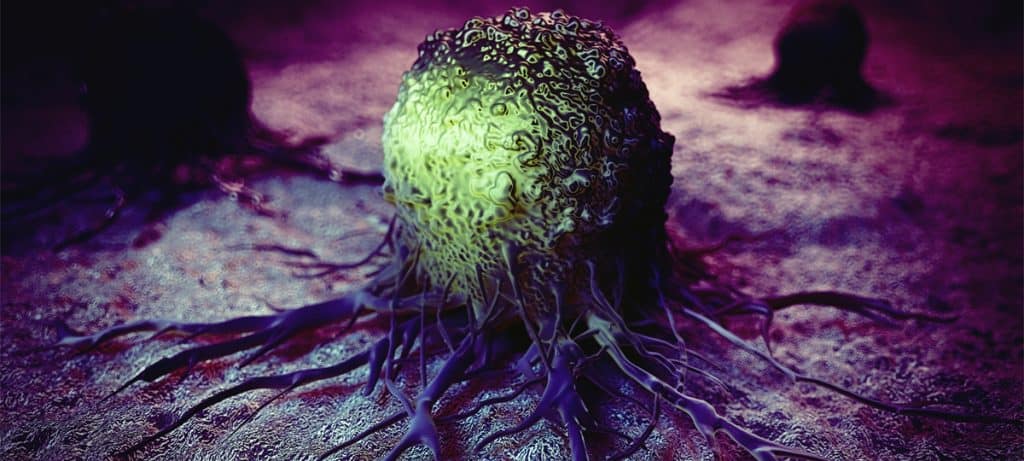
Researchers at the Medical University of South Carolina (MUSC) have discovered a new type of cell membrane complex which causes cells to explode. The cell membrane complexes may be a useful target for those developing drugs that kill cancer cells.
The newly discovered cell membrane complexes, called ceramidosomes, are large membrane pores that cause the cell to ripple. The rippled cell is thus weakened and as such the cell explodes.
Put more simply, a cell could be thought of as being like an egg. Meanwhile the cell membrane is like the egg shell. Cell membranes have thousands of tiny pores. Ceramides are structural elements in the cell membrane.
Ceramides have an important function in controlling cell death. The team discovered that ceramides could come together with other molecules to form a new type of cell membrane pore, which the team called ceramidosomes.
The team made their discovery after figuring out the unexpected cancer cell-killing activity of an FDA approved multiple sclerosis drug FTY720 (Gilenya, Novartis). The team thus found that FTY720 could kill cancer cells by activating molecules that induce cancer suppression.
Louis Goss
Related Content

BMS’ Opdivo/Yervoy combination accepted by Scottish Medicines Consortium for colorectal cancer
Bristol Myers Squibb (BMS) has announced that its Opdivo (nivolumab) has been accepted, in combination …

Astellas Pharma’s Vyloy accepted by Scottish Medicines Consortium for gastric cancer
Astellas Pharma, a pharmaceutical company creating medicines to address unmet medical needs, has announced that …

Rethinking oncology trial endpoints with generalised pairwise comparisons
For decades, oncology trials have been anchored to a familiar set of endpoints. Overall survival …