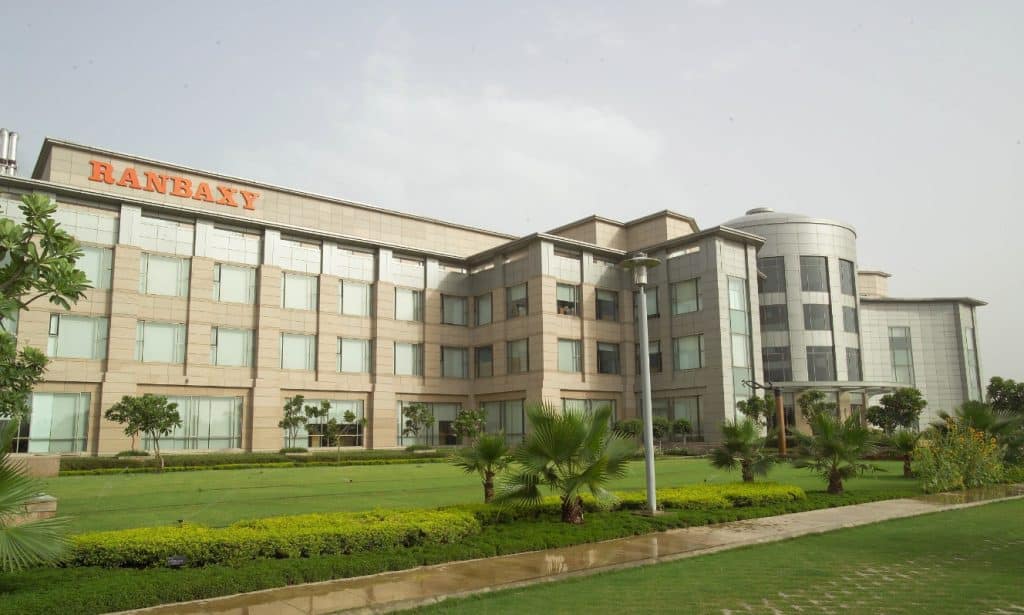
Ranbaxy quality issues hit sixth plant; seeks Diovan workaround
pharmafile | January 20, 2014 | News story | Manufacturing and Production | FDA, Ranbaxy, fines, manufacturing
Yet another plant operated by India’s Ranbaxy has been held up by US Food and Drug Administration over quality deficiencies, indicating the company’s manufacturing problems are far from over.
Following an FDA inspection, the drugmaker has been sent a Form 483 for its active pharmaceutical ingredient (API) facility in Toansa, Punja, which makes around three-quarters of all the actives used in its generic products.
The plant had previously been sent a Form 483 at the end of 2012, and the issuance of a second negative report adds to the difficulties Ranbaxy is facing in supplying overseas markets like the US.
“The company is assessing the observations, and will respond to the US FDA in accordance with the agency’s procedure to resolve the concerns at the earliest,” said Ranbaxy in a prepared statement.
All told, six of Ranbaxy’s facilities have been found to have problems meeting Good Manufacturing Practice (GMP) standards in the last few years. At four of these the deficiencies have been bad enough to cause the FDA to take direct enforcement action, with imports of drugs made at Ranbaxy’s plants in Mohali, Dewas, Paonta Sahib and Batamandi still restricted and consent decrees imposed to try to force them back into compliance.
Ranbaxy’s reduced ability to supply the US market – which accounts for around 40% of its turnover – has already had a material impact on its finances. The company was forced by the US government to pay $500 million in fines and penalties in May 2013 to settle criminal and civil charges related to charges of selling adulterated drugs.
Meanwhile sales in the first nine months of 2013 were down 23% year-on-year, although some of the decline was caused by the loss of first-to-file exclusivity to generic atorvastatin in the US as other suppliers entered the market. North American sales fell 52% compared to the same period of 2012.
In more positive news for the company, a US plant in New Brunswick – called Ohm Laboratories – recently set its house in order and was given a green light by the FDA, giving Ranbaxy a conduit to supply drugs to the US market.
Diovan delay
Access to the US market is particularly important at the moment because Ranbaxy has marketing exclusivity for the first generic version of Novartis’ big-selling high blood pressure drug Diovan (valsartan). Novartis’ patent on Diovan expired in 2012, but Ranbaxy was unable to capitalise because its generic was made at Mohali – and so subject to the recently-imposed import restrictions.
Efforts by other generic drugmakers to break Ranbaxy’s exclusivity have so far been unsuccessful, so Novartis has been enjoying some lucrative additional months of exclusive Diovan sales.
Now, a report in the Business Standard suggests Ranbaxy is trying to convince the FDA to let it manufacture generic valsartan at the Ohm Labs facility, using API from a third-party supplier. If that workaround allows it to secure full FDA approval the company could grab a piece of the estimated $1.5 billion market for valsartan in the US.
Phil Taylor
Related Content

MRM Health’s ulcerative colitis treatment receives FDA Investigational New Drug clearance
Microbial Resource Management (MRM) Health has announced that its lead programme, MH002, has received Investigational …

Complement Therapeutics’ geographic atrophy treatment receives FDA Fast Track designation
Complement Therapeutics has announced that CTx001, its gene therapy treatment for geographic atrophy (GA) secondary …

Johnson & Johnson submits robotic surgical system for De Novo classification
Johnson & Johnson has announced the submission of its Ottava Robotic Surgical System for De …