Pharmafile.com’s weekly COVID-19 news round-up
pharmafile | November 4, 2020 | News story | Business Services, Manufacturing and Production, Medical Communications, Research and Development, Sales and Marketing | COVID-19, GSK, Sanofi, UK, US, remdesivir
As European nations fall one by one back into lockdown, hopes weigh heavily on a vaccine to pave a path forward. Pharma and national governments recognise this, with two of our biggest COVID-19 stories in the past week focusing on new deals to ensure that Eli Lilly’s and Sanofi/GSK’s vaccines can reach all that need them. It has also been reported that the recent spike in cases in the UK could be partly driven by the government’s Eat Out to Help Out scheme.
GSK and Sanofi promise 200m COVID-19 vaccines to international COVAX initiative – Published on 28/10/20
Sanofi and GSK have committed 200 million doses of their adjuvanted recombinant protein-based COVID-19 vaccine to the COVAX Facility, a part of the international COVAX collaboration, to help improve access to vaccines for those that need them.
US reserves 300,000 doses of Lilly’s COVID-19 treatment in $375 million deal – Published on 28/10/20
Should the FDA approve the drug in this indication, Lilly plans to begin distribution immediately following the decision and ship all agreed doses within two months. As part of the agreement, the US Government will have the option to order a further 650,000 doses under the same terms, to be delivered through to 30 June 2021.
New study suggests UK Government’s ‘Eat Out to Help Out’ scheme increased coronavirus infection rates – Published on 30/10/20
The study suggested that between 8% to 17% of newly detected infection clusters could be linked to the scheme. In regions, where the scheme was used the most, infections declined after the scheme ended. According to the study, places with warmer weather had higher infection rates.
Pharmasyntez asks Russian Government for permission to produce generic version of remdesivir for COVID-19 – Published on 02/11/20
In its letter, the company asked the Russian Government to activate a compulsory licensing process, which would allow a company to produce patented products in the country without the permission of the patent holder if it is in the interests of national security and defence.
T-cells respond to COVID-19 six months after infection – Published on 03/11/20
The study was conducted in 100 people and showed that all had a cellular immune response against coronavirus six months after infection, with a response 50% higher in those who had experienced symptomatic disease.
Related Content
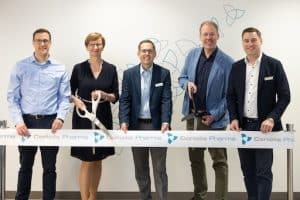
Coriolis Pharma opens new US headquarter and laboratory
Coriolis Pharma has opened a new US headquarter and laboratory at the Alexandria Center for …

Abselion establishes a US subsidiary in Massachusetts
Abselion has established a US subsidiary at The Engine in Cambridge, Massachusetts in the US. …

ESTEVE CDMO commences $15.5m expansion of US facility
ESTEVE CDMO, a global Contract Development and Manufacturing Organization (CDMO) specialising in small molecule active pharmaceutical …