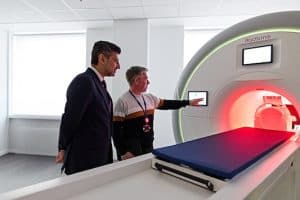
Pharma pools trial data for brain disorder research
pharmafile | June 14, 2010 | News story | Research and Development | Alzheimer's, Huntington's, Parkinson's, clinical trials, partnerships
Leading pharma companies have come together for a major new research collaboration aimed at improving clinical trials for Alzheimer’s, Parkinson’s, Huntington’s and other neuro-degenerative diseases.
The unique public-private partnership is the first database of combined clinical trials to be openly shared by the industry and made available to qualified researchers around the world.
The companies will share information on patients enrolled in clinical trials to more accurately predict the true course of long-term brain disorders.
“This unprecedented data sharing is game-changing for companies that are developing new therapies for neuro-degenerative diseases,” said Raymond Woosley, president and chief executive of the Critical Path Institute, the non-profit organisation that will lead and manage the new database.
“Scientists around the world will be able to analyse this new combined data from pharmaceutical companies, add their own data, and consequently better understand the course of these diseases.”
Pharma partners in the US-based Coalition Against Major Diseases (CAMD) collaboration include Abbott, AstraZeneca, Bristol-Myers Squibb, Lilly, Roche-Genentech, GlaxoSmithKline, Johnson & Johnson, Novartis, Pfizer, and Sanofi-Aventis.
The CAMD also includes research foundations and patient advocacy/voluntary health associations, along with advisors from government research and regulatory agencies including the FDA and the EMA.
In the first stage of the new collaboration, the companies have placed data on 4,000 patients in 11 different existing trials into a common, open database. Data from additional drug makers and the National Institutes of Health will be added in future stages.
Frank Casty, VP of technical evaluations at AstraZeneca and co-director of CAMD, said: “A healthier world must come from collaboration, in making better, deeper connections with all our stakeholders, and sharing skills and ideas to meet a common goal – improved health.”
The CAMD database will allow researchers to design more efficient clinical trials that have the maximum chance of demonstrating if a new treatment is truly safe and effective. In addition, the coalition is identifying biomarkers that identify patients in the very early stages of Alzheimer’s and Parkinson’s disease.
Commercially sensitive information will be withheld from the database but companies will exchange information on patients in the placebo arm of on-going trials to minimise the duplication of effort.
There is more information on CAMD and the database at www.c-path.org/CAMD.
Ben Adams
Related Content

Vesper Bio reports positive topline results for dementia candidate
Vesper Bio, a clinical-stage biotech developing novel oral therapies for neurodegenerative and neuropsychiatric disorders, has …

Von Willebrand disease – increasing awareness and access to vital care
Pharmafile talks to Anthea Cherednichenko, Vice President Franchise Head Haematology and Transplant at Takeda about …

Rethinking oncology trial endpoints with generalised pairwise comparisons
For decades, oncology trials have been anchored to a familiar set of endpoints. Overall survival …