Pharma companies share $400m US biosecurity contract
pharmafile | June 26, 2012 | News story | Manufacturing and Production | Emergent BioSolutions, GSK, Novartis, manufacturing
GlaxoSmithKline, Novartis and Emergent BioSolutions will share a $400 million contract from the US government to provide vaccine manufacturing capacity that can be called upon in the event of a pandemic or bioterrorism.
The three companies will help provide infrastructure – either new or retrofitted facilities – that can be used to provide a rapid response to emerging biological threats.
Called the Centers for Innovation in Advanced Development and Manufacturing, each will take the form of a public-private partnership with the US government.
They will be run by a consortium that in turn will be led by an organisation “experienced in developing or manufacturing medical countermeasures”, according to US Department of Health and Human Services.
GSK is part of a consortium, led by Texas A&M University, that will receive up to $176 million over the first five years of the contract, with the overall budget set at $285.6, biological, radiological, and nuclear threats, as well as developing new biosecurity products million.
Other partners in the consortium include Lonza and Kalon Biotherapeutics. The aim of the project is to develop and make vaccines against pandemic influenza and provide medicines for chemical, biological, radiological, and nuclear threats.
The second-largest consortium is being led by Emergent BioSolutions – with an overall value of $220 million of which $163 million will come from the HHS over eight years. Here the aim is to identify a pandemic flu vaccine candidate, construct additional production facilities and obtain approval to manufacture pandemic flu vaccine at Emergent’s facility in Baltimore, Maryland.
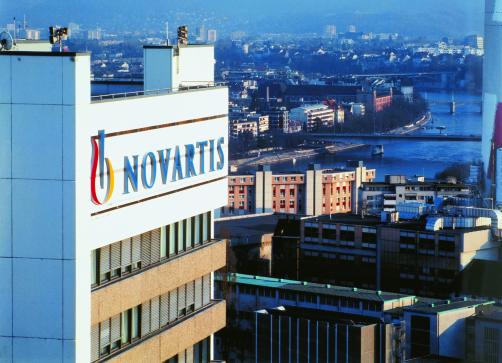
Meanwhile, Novartis’ share of the HHS funding – some $60 million over four years and shared with two academic partners – will support activities carried out at its vaccine manufacturing facility in Holly Springs, North Carolina, which specialises in the production of flu vaccines using cell culture systems.
The Holly Springs has already benefitted from several rounds of funding from the federal government under the HHS’ Biomedical Advanced Research and Development Authority (BARDA) scheme, and the new agreement will see the government stump up 40% of the cost of expanding the unit in exchange for rights to use the capacity to manufacture vaccines.
The private partners will provide approximately 35% of the cost of the initial building phase, while the HHS will support the cost of operation and maintenance of the centres, which are due to come operational in 2014-2015.
Phil Taylor
Related Content

BioDuro establishes joint manufacturing venture with Cenra
BioDuro, a Contract Research, Development and Manufacturing Organisation (CRDMO), has established a joint venture with …

GSK’s Exdensur receives MHRA approval for asthma and rhinosinusitis
GSK’s Exdensur (depemokimab), a twice-yearly biological medicine, has received approval from the UK Medicines and …

Novartis receives SMC approval for early breast cancer treatment
Novartis has announced that its treatment for early breast cancer, Kisqali (ribociclib), has received approval …