Over 3% of all drugs in Indian market not up to standard
pharmafile | July 24, 2017 | News story | Manufacturing and Production, Sales and Marketing | India, biotech, drugs, pharma, pharmaceutical
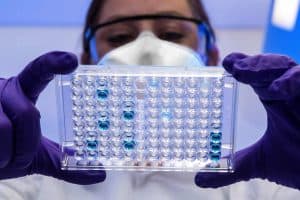
The Central Drugs Standard Control Organisation (CDSCO) tested drugs to determine whether they were of standard quality but found that 946 of the medicines across 66 companies failed the test. One of the companies responsible for a surprising number of these was Pfizer, having 25 medicines that were not of quality.
The survey is part of an overall push to bring down levels of its substandard drugs to under 2% over the next three years in order to meet global standards. The study tested 47,954 drug samples with 23 different dosage forms drawn from 654 districts of 36 states across India, with CDSCO reporting that 3.16% were not of the required quality.
The thorough geographic scope of the survey was undermined somewhat by Pfizer’s response to its company being named as one of the highest offenders. It was quoted in India’s Business Standard as responding: “We are unable to confirm the authenticity of the products picked or confirm evidence of the alleged deficiencies as the due process of providing a sealed market sample was not followed. Upon testing of control samples at independent FDA approved laboratories, our products were found to be fully compliant with all required specifications. This was duly communicated to the regulatory authorities and no further action was recommended”.
It could be argued that any company, especially one as large as Pfizer, facing such bad PR would mount a counter-attack but the allegation that due process was not followed is particularly damaging to the authority of the CDSCO.
Despite this, the failings of the companies does not boost confidence in a market that has been dogged with warning letters from the FDA regarding manufacturing practices.
The remit for failing the quality control test is relatively broad, including false labelling, wrong quantity of ingredients, discolouration, moisture formation, failing dissolution test and failing disintegration test. The report did not specify particularly which drugs had failed, only the number.
The biggest offender on the list was Unicure India Ltd that had 61 not of standard quality (NSQs) discovered, whilst other high-profile offenders were Dr Reddy, with 9, and Cipla, with 7. Those companies that had five failings or fewer were not contained on the list.
Ben Hargreaves
Related Content

Arkin Capital closes $100m fund for pre-clinical and early clinical-stage biotech
Arkin Capital has announced the closing of Arkin Bio Ventures III, a $100m fund designed …

Cellbyte raises $2.75m to fund pharma drug launch platform
Cellbyte has announced that it has raised $2.75m in seed funding for the streamlining of …

Lilly opens fourth US Gateway Labs site
Eli Lilly has opened its newest Lilly Gateway Labs (LGL) site in San Diego, California, …