Novartis and charity team up on AMD campaign
pharmafile | February 18, 2009 | News story | Medical Communications, Sales and Marketing | AMD, ophthalmology
Novartis has teamed up with blindness charity the RNIB on a new campaign to promote awareness of age-related macular degeneration (AMD).
The condition is the leading cause of blindness in people aged over 55, affecting 26,000 people in the UK, but is not commonly known by the general public.
Adverts are now running in newspapers, women’s glossies and medical magazines, with TV ads expected to hit screens in the next few months.
Symptoms of AMD include blurring in the centre of vision and distortion of straight lines, and this loss of vision can be severely debilitating.
“AMD has a serious impact on the quality of people’s lives,” says RNIB optometrist Sonal Rughani.
“We hope the be AMD aware campaign helps more people realise they need to look after their eye health, have regular eye checks and be vigilant to the symptoms of AMD, to catch it early.”
The new campaign is backed by a website, www.beamdaware.com which includes the tagline ‘Don’t turn a blind eye to AMD’.
The website urges any visitors with concerns to talk to their GP or an optician with whom regular eye checks are recommended.
Novartis markets Lucentis, one of two drugs which treats ‘wet AMD’ a subtype, which accounts for just 10-15% of all cases but is responsible for 80% of the patients with the most severe AMD-associated vision loss.
Novartis clearly hopes the campaign will increase the number of patients seeking medical attention, but as with all UK disease awareness campaigns, no mention of a company’s products are permitted.
The campaign also includes a website for healthcare professionals which contains updates on signs and symptoms, including those that warrant urgent referral, and explanations of the vision loss associated with AMD.
There are also five short video lectures from eye experts and downloadable materials for practices, including information on organisations that they or patients can contact. Information packs are available to GPs and optometrists.
A spokesman for Novartis’ communications agency said TV ads were still to be confirmed, but other elements would be added to the campaign over the next few months.
AMD facts
Over 55s are more likely to get AMD, and smoking is strongly associated with an increased risk of developing advanced AMD
A poor diet and having a close family member with AMD also increases the chances of you developing AMD
There are two types of the condition: dry and wet AMD.
Dry AMD accounts for 80-90% of all cases, vision impairment is gradual, and early cases often have few symptoms although advanced cases show marked central vision loss.
Wet AMD is far less common but can, if left untreated, result in severe loss of vision in as little as three months. It is responsible for around 80% of severe AMD-associated vision loss.
The wet AMD treatments
Novartis’ Lucentis and Pfizer’s Macugen are the rival treatments in the AMD market, and are both in the VEGF class of biological drugs. Macugen was first to market in 2006 and was the first VEGF treatment in ophthalmology to reach the market.
Anti-VEGF drugs work by targeting a protein that helps the formation of new blood vessels, inhibiting the growth of unstable vessels which can exacerbate the disease.
Trials show that Macugen stabilises sight in 70% of cases and improves sight in 20% of patients who have been diagnosed early, but with Lucentis the figures are 90% and 40%.
Both drugs also have NICE approval, but Novartis had to resort to a cost-sharing programme which effectively drops the price to get its brand to a greater number of patients.
Lucentis is expensive, costing around £10,000 for each eye.
NICE had originally ruled it should only be given to patients once both eyes were affected, after which it could be used to treat the healthier one, a decision which effectively cut out 80% of potential patients.
Under a deal agreed last year, patients with one affected eye can now have a maximum 14 injections of Lucentis per eye, with Novartis covering the remaining cost.
The RNIB says that eye specialists have also been using Roche’s bowel cancer drug Avastin as a treatment, despite the fact that it is not licensed for AMD.
Links
Related Content
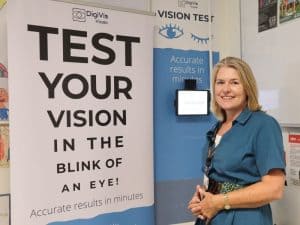
Addenbrooke’s hospital offers first self-service digital eye test
Addenbrooke’s Hospital, Cambridge, has become the first in the UK to deploy a digital self-testing …

Merck to acquire EyeBio for an upfront $1.3bn
Merck, known as MSD outside of the US and Canada, and EyeBiotech Limited, have announced …

Astellas announces FDA approval for Izervay for GA treatment
Astellas Pharma has announced that the US Food and Drug Administration (FDA) has approved Izervay …