Novartis’ Afinitor wins landmark US approval
pharmafile | May 6, 2011 | News story | Sales and Marketing | Afinitor, Novartis
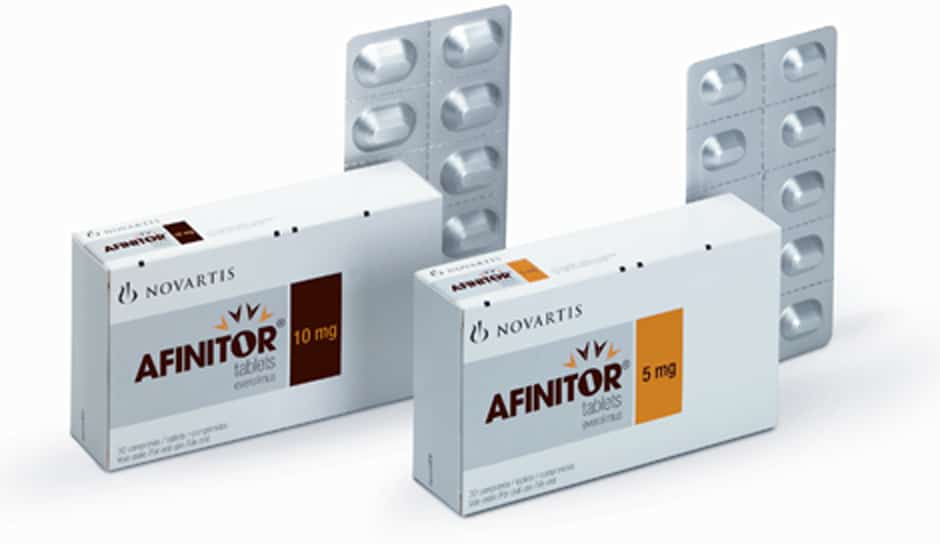
Novartis’ Afinitor has been approved in the US for the treatment of progressive neuroendocrine tumours of pancreatic origin (PNET) in patients with unresectable, locally advanced or metastatic disease.
This marks the first approval of a treatment for this patient population in the US in nearly 30 years.
The approval helps Afinitor (everolimus) establish a unique niche for itself in the cancer market. It already competes in the renal cell carcinoma market, but is a second line option if patients fail to respond to VEGF drugs such as Pfizer’s Sutent and Bayer’s Nexavar.
The new approval was based on phase III data from the RADIANT-3 trial showing treatment with Afinitor more than doubled the time without tumour growth (median 4.6 to 11.0 months) and reduced the risk of cancer progression by 65% when compared with placebo in patients with advanced pancreatic NET. A consistent improvement in progression-free survival was seen with Afinitor in all patient subgroups.
The FDA determined that the safety and effectiveness of Afinitor in the treatment of patients with carcinoid tumours – a related but distinct set of tumours – has not been established.
“The FDA approval of Afinitor represents an important step forward for patients with advanced pancreatic NET,” said James Yao, MD, Associate Professor of Medicine, The University of Texas MD Anderson Cancer Center, Houston, Texas. “Patients will now have access to a treatment that has been shown to significantly delay tumour growth and reduce the risk of disease progression.”
Approximately 60% of pancreatic NET patients are diagnosed with advanced disease. This means that the cancer has already spread to other parts of the body, and is considered aggressive and difficult to treat. The five-year survival rate for these patients is 27%
“With this approval, US physicians can now offer their patients with progressive pancreatic NET a new treatment helping to fulfil a critical unmet need,” said Hervé Hoppenot, president, Novartis Oncology.
“This is the third indication for Afinitor in the US in just over two years, providing further evidence that inhibiting mTOR plays an important role in treating multiple tumour types.”
Afinitor targets mTOR, a protein that acts as an important regulator of tumour cell division, blood vessel growth and cell metabolism. Preclinical and clinical data have established the role of mTOR in the development and progression of several types of tumours, including advanced pancreatic NET.
Novartis has submitted Afinitor for patients with advanced NET of gastrointestinal, lung or pancreatic origin to the European Medicines Agency (EMA) and the Swiss Agency for Therapeutic Products (Swissmedic), and additional regulatory submissions are being reviewed by health authorities worldwide.
Neuroendocrine tumors arise from cells that can produce and secrete a variety of hormones that regulate bodily functions. These tumours can occur anywhere in the body; however, most are found in the pancreas (pancreatic NET), gastrointestinal tract or lungs (carcinoid tumours). Pancreatic NET, also known as islet cell tumors, is a rare type of cancer different from pancreatic exocrine cancer, which is generally referred to as pancreatic cancer,. There have been limited treatment options for patients with pancreatic NET.
Afinitor is also approved in the US to treat patients with subependymal giant cell astrocytoma (SEGA) associated with tuberous sclerosis who require therapeutic intervention but are not candidates for curative surgical resection. The effectiveness of Afinitor is based on an analysis of change in SEGA volume. Clinical benefit such as improvement in disease-related symptoms or increase in overall survival has not been shown. Novartis has submitted marketing applications for Afinitor for this use to the European Medicines Agency (EMA) and the Swiss Agency for Therapeutic Products (Swissmedic), and additional regulatory submissions are under way worldwide.
Afinitor can cause serious side effects including lung or breathing problems, infections, and renal failure which can lead to death. Mouth ulcers and mouth sores are common side effects.
Andrew McConaghie
Related Content

Novartis receives SMC approval for early breast cancer treatment
Novartis has announced that its treatment for early breast cancer, Kisqali (ribociclib), has received approval …

Novartis candidate for Sjögren’s disease presents positive results
Novartis has reported positive results from two phase 3 clinical trials – NEPTUNUS-1 and NEPTUNUS-2 …

First malaria medicine for infants under 4.5kg receives approval
Coartem (artemether-lumefantrine) Baby, or Riamet, has been approved by Swissmedic as the first malaria medicine …