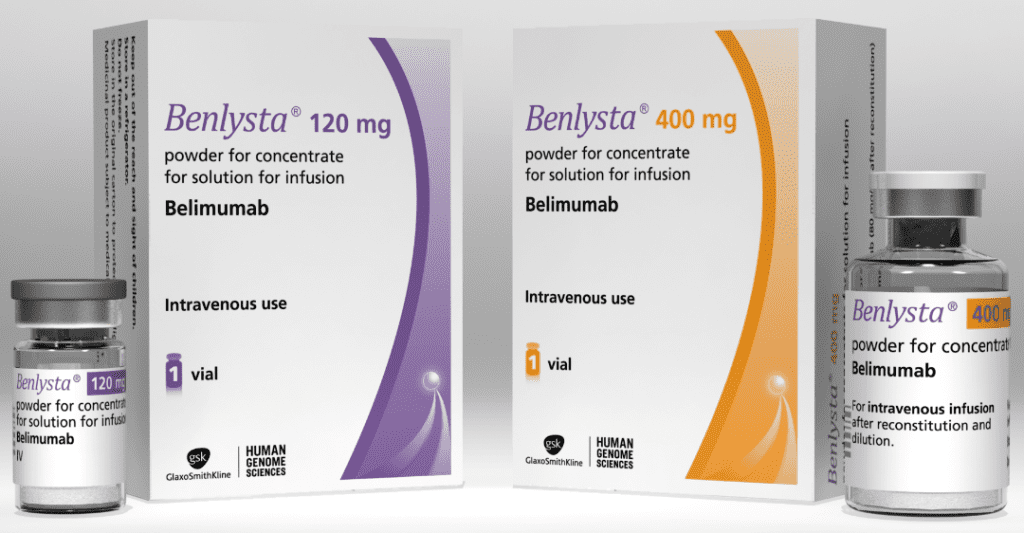
NICE no to GSK’s lupus drug Benlysta
pharmafile | April 27, 2012 | News story | Sales and Marketing | Andrew Dillon, Benlysta, GSK, Lupus, NICE
NICE is still not recommending GlaxoSmithKline’s lupus drug Benlysta, as it believes the treatment is too costly.
In its final draft guidance the watchdog said it was minded not to recommend Benlysta (belimumab) as an add-on therapy in patients with active autoantibody-positive systemic lupus erythematosus, who have a high degree of disease activity, despite the individual receiving standard therapy.
This comes notwithstanding GSK offering a patient access scheme for the drug, which gives an undisclosed discount on Benlysta’s cost.
Sir Andrew Dillon, NICE chief executive said: “The Committee concluded that compared with standard care, there was some evidence of the clinical effectiveness of belimumab.
“However, the evidence considered did not persuade the Committee that belimumab provided enough health benefit for patients in view of how much the NHS would need to pay for it compared to standard care, as the cost of the drug in relation to how well it works is very high.”
Sir Andrew said that some patients currently receive Roche’s autoimmune drug MabThera (rituximab) to treat their lupus, and NICE said they considered it appropriate to compare Benlysta with Roche’s drug, even although it isn’t licensed for this use.
But Sir Andrew said there was no reliable data to compare the drugs, and ‘no sound case’ could be made to show that Benlysta was more cost-effective than MabThera in this setting.
“Whilst recognising the severity of the disease, the Committee concluded that based on this evidence, belimumab could not be considered a good use of NHS resources compared with current clinical practice,” he concluded.
GSK criticises decision
Simon Jose, general manager of GSK in the UK, said: “These are devastating decisions for patients with lupus whose disease is currently uncontrolled by existing therapies.
“By denying access to belimumab, which is the first treatment specifically developed and licensed for lupus in over 50 years, UK patients are being left behind those in other countries including the US, Germany and Spain who already have access to this medicine.
“With finite resources, we recognise difficult funding decisions have to be made, but evaluating an innovative medicine in a framework that compares it to a standard of care consisting of inexpensive generics, fails to recognise the benefit of this clinically proven medicine.”
Jose, also the outgoing president of the ABPI, went further, and said that the failure to recognise and adopt innovative new medicines “continues to be a systemic problem in the UK”.
He said that last year’s Nicholson Review, which encourages greater uptake of innovation and new medicines in the NHS was a ‘positive measure’, but that this hasn’t addressed the problem with NICE.
“The appraisal system itself, and its failure to recognise innovation, remains a fundamental problem,” he said, adding: “The UK is a world leader in the research, development and manufacture of medicines, but is one of the slowest to enable patients to have access to innovative new treatments.
“This is a situation that must be addressed,” he concluded.
Ben Adams
Related Content

NICE recommends sotatercept for pulmonary arterial hypertension
The National Institute for Health and Care Excellence (NICE) has recommended Winrevair (sotatercept) as a …

Digital mental health technologies – a valuable tool in supporting people with depression and anxiety
The potential benefits of digital mental health technology for managing depression, anxiety and stress, together …

GSK’s Exdensur receives MHRA approval for asthma and rhinosinusitis
GSK’s Exdensur (depemokimab), a twice-yearly biological medicine, has received approval from the UK Medicines and …