NICE issues guidance for two prostate cancer drugs
pharmafile | June 5, 2015 | News story | Sales and Marketing | Bayer, Ferring, NICE, firmagon, xofigo
NICE has published draft guidance for two prostate cancer drugs, recommending a Bayer medicine but rejecting one from Ferring Pharmaceuticals.
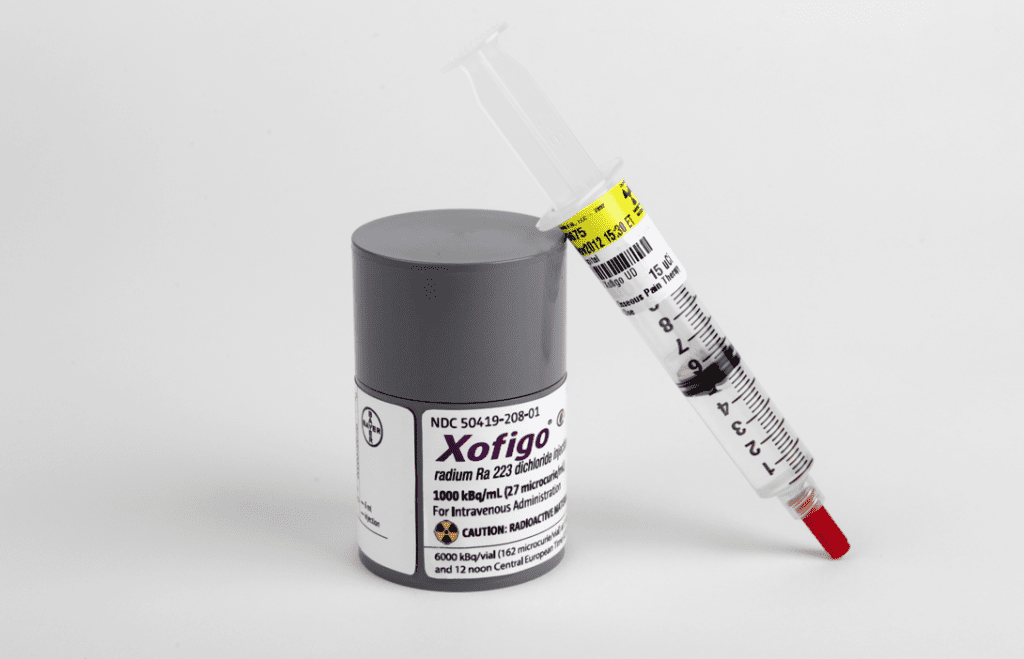
Bayer’s Xofigo (radium-223 dichloride) is now recommended as a treatment for patients whose prostate cancer has stopped responding to hormone therapy and has spread to the bone. The watchdog notes that the drug appears to particularly effective for patients who have already been treated with docetaxel chemotherapy.
It was initially rejected by NICE last year because Bayer did not provide adequate information to show its effectiveness compared to other treatments and justify its ‘considerable’ cost. As a result this new draft guidance says Xofigo should only be prescribed if Bayer offers it at a discounted rate.
“We are pleased that the evidence for Xofigo was strong enough to issue a provisional recommendation,” says Carole Longson, director of the NICE Health Technology Evaluation Centre.
“The information provided by Bayer suggests that radium-223 is effective in delaying the progression of prostate cancer and can prolong survival. The evidence also suggests that Xofigo has similar effectiveness to Zytiga (abiraterone) [manufactured by Janssen].”
However, NICE has also issued draft guidance that did not recommend Ferring’s Firmagon (degarelix depot) for the treatment of advanced, hormone dependant prostate cancer. It notes that the drug is not cost-effective compared with the current standard treatment – LHRH agonists – and there is also no way of identifying the people who would benefit the most from it.
“Clinical experts highlighted that degarelix depot could be particularly beneficial to people whose prostate cancer had spread to their spine and who might develop spinal cord compression,” adds Longson.
“The committee discussed if it could be possible to reliably identify people with spinal metastases who have a higher risk of spinal cord compression. Unfortunately, based on the evidence and inputs from the experts, it concluded that it was not possible to identify the people who may develop spinal cord compression beyond those people with spinal metastases.
“The committee could therefore not recommend the drug.”
Takeda’s ulcerative colitis drug Entyvio (vedolizumab) has also been given final approval, providing an alternative option when conventional therapy or TNF-alpha inhibitors are inadequate.
NICE had previously been wary of Entyvio’s price, and this is approval was granted on the basis of Takeda providing the drug to the NHS at a discount.
Meanwhile, Novartis’ Certican (everolimus) – currently available for cancer under the brand name Afintor – has not been recommended for preventing organ rejection in liver transplant patients. This follows an earlier preliminary decision in February where NICE said that although the drug may offer some benefit in preserving kidney function, it costs too much compared to current treatments.
George Underwood
Related Content

Digital mental health technologies – a valuable tool in supporting people with depression and anxiety
The potential benefits of digital mental health technology for managing depression, anxiety and stress, together …

Evotec and Bayer announce new kidney disease study
Evotec and Bayer have announced the initiation of a phase 2 clinical study in kidney …

Combination treatments: Takeda’s Implementation Framework and the broader landscape
Pharmafile talks to Emma Roffe, Oncology Country Head (UK & Ireland) about the combination treatment …