Newly merged Bayer Schering launched in the UK
pharmafile | July 17, 2007 | News story | Sales and Marketing |
Bayer has officially launched its new UK pharmaceutical division, following last year's acquisition of Schering Health Care.
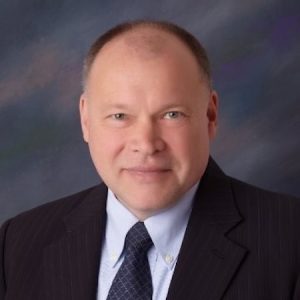
Called Bayer Schering Pharma, the combined company ranks 12th in the UK, where it will be led by country division head Sergio Liberatore.
Mr Liberatore told Pharmafocus the organisation he joins is in good shape.
"We have excellent people, good products, a strong pipeline and the integration process has given us the opportunity to blend the best processes to give us a good platform for future growth.
"So my main challenge is to continue to build on that; we don't need revolutionary change, we have spent quite a few months getting ourselves in shape and now we are very ready to focus externally on meeting our customers' needs."
Mr Liberatore moved to the UK earlier this year from Italy, where he previously headed up Schering's presence as chief executive.
Trained as a medic, the former associate professor of medicine began his pharmaceutical career in the mid-1980s in R&D before moving to marketing and then senior management.
He first worked for Bristol-Myers Squibb as R&D director before becoming medical and regulatory director and then later moving to the US to take up the post of senior global marketing director in cardiovascular and CNS.
He left BMS to join Schering's Italian operations in 2001 and has spent the last four years holding the dual roles of chief executive and president of Theramex SpA, a specialist pharma joint venture between Schering and Merck KGaA. He has also served as vice president of Italian industry association Farmindustria.
The company he now leads will rank 12th in the market, after making total UK sales of more than £200 million in 2006.
The company is now entering its final phase of integrating the two UK businesses under the Bayer Schering Pharma banner.
"We obviously have to continue to establish ourselves as one company with our customers, but we don't have any major integration steps left to complete," commented Mr Liberatore. "We can really celebrate the completion of a successful launch."
Bayer Schering Pharma's UK head office is in Newbury in Berkshire and it is the base for the majority of the company's 330 employees in the UK.
Almost 60% of the former Schering employees have now transferred to Bayer Schering Pharma leading to the creation of 78 more jobs at the Newbury site. However, as part of the integration of the two companies, the former Schering head office at Burgess Hill in West Sussex is closing and there will be some redundancies.
The new company will be strong in andrology with the products Testogel and Nebido, women's health with Yasmin and Mirena and oncology with Mabcampath and Nexavar.
Kidney cancer drug Nexavar was approved last year and has recently been submitted to European regulators for a licence extension to treat liver cancer. This was backed up by data showing that it extends overall survival by 44% in patients with advanced hepatocellular carcinoma – the most common form of liver cancer.
"The submission of the dossier to the European authorities is a major milestone for Bayer Healthcare and for clinicians and patients with liver cancer. There are currently no licensed therapies in the UK or Europe that significantly improve survival for the thousands of patients with HCC," commented Philip Ashman, Business Unit Head, Oncology, Bayer Healthcare.
The drug works by blocking signals in kidney cancel cells that lead to the tumour growing, spreading and developing a blood supply and currently has a second-line licence for advanced kidney cancer.
Neither Nexavar nor its rival treatment, Pfizer's Sutent, have yet been reviewed by NICE, but the institute has now scheduled a review for both products. Originally, NICE had overlooked Sutent in its appraisal programme, but it has now added it to its schedule, reviewing it seperately to iNexavar.
NICE approval is vital for both companies, but the companies and patient group Kidney Cancer UK fear the drug will be rejected by NICE as were other new and innovative cancer drugs in recent months.
Both Nexavar and its rival are expensive, at £3,000 – £3,500 per patient per month.
Studies show that the new drugs resulted in tumour shrinkage in about 75% of patients and also doubled, or more than doubled, progression-free survival time. in patients.
Both drugs are also more easily tolerated by patients than current standard treatment with interferon-alpha generating less serious side-effects, but they do not offer a cure for the disease.
While patients in some arees of England are understood to have access to the drug, others do not, while rationing bodies in Wales and Scotland have both rejected the use of Nexavar in most cases.
Scotland's SMC made its decision on the drug in November last year, while Wales AWMSG ruled out its use in June.
NICE has not yet published a projected date for its ruling, but patients are likely to wait well into 2008 before a final decision is reached.