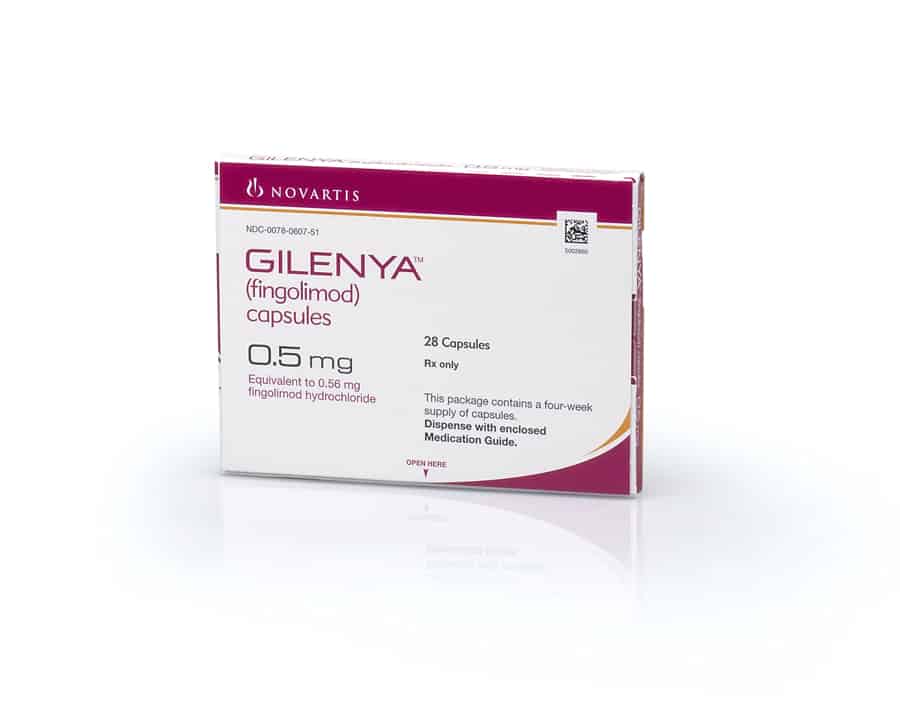
New safety warnings recommended for Gilenya
pharmafile | April 20, 2012 | News story | Medical Communications, Sales and Marketing | EMA, Novartis, gilenya
A safety review of Novartis’ MS treatment Gilenya has concluded the drug should stay on the market, but that patients should receive closer monitoring of heart function and blood pressure.
The recommendations are likely to be confirmed by the European Union, and are good news for Novartis, as they are not overly restrictive for patients or doctors.
Nevertheless, the new warnings will further limit Gilenya’s commercial potential, which analysts have already downgraded against a background of concerns about potential heart problems, and one patient developing a rare brain disease.
The risk of bradycardia (slowing heart rate) after the first dose of Gilenya was known when it was approved in March 2011, and its product information already includes recommendations to observe patients for signs and symptoms related to this side effect for at least six hours after the first dose.
The European Medicines Agency’s Committee for Medicinal Products for Human Use (CHMP) launched its safety review in January after numerous reports of heart problems in patients, including the death of one patient 24 hours after first receiving the drug.
The FDA also launched its own safety review following the death, but has not disclosed any further details as yet.
The CHMP now says patients should have ECG before and six hours after the first-dose, with hourly blood pressure and heart rate measures. Continuous ECG is also recommended, as is caution regarding patients who may be less tolerant of or are more likely to develop significantly slowed or abnormal heart rate.
“We believe that Gilenya is a valuable treatment option for many patients with relapsing remitting MS, and we welcome the confirmation of the positive benefit-risk profile of the drug which also supports our continued belief of the blockbuster potential of Gilenya,” said David Epstein, head of Novartis’ pharmaceuticals division.
“MS is a devastating chronic disease that affects more than 2.1 million people worldwide, and patients need effective treatment options.”
Novartis stressed that the extensive data from clinical trials and in the ‘real world’ setting, with a total of 36,000 patients having been treated with fingolimod in clinical trials and in the post-marketing setting.
Gilenya is approved for people with highly active relapsing-remitting MS despite treatment with beta interferon, or in patients with rapidly evolving severe relapsing-remitting MS.
The CHMP labelling recommendations will be reviewed by the European Commission with a final decision expected in June. Novartis will inform doctors in the Europe of the changes in the product information in the EU via a Direct Healthcare Provider Communication (DHPC) by the end of this month.
Novartis underlines benefits
Novartis will hope that Gilenya’s benefits over existing treatments will help it continue its sales growth.
Trials have shown Gilenya to be superior compared to commonly prescribed Avonex (interferon-beta-1a IM) in cutting the number of relapses in the disease in reducing in the rate of brain atrophy.
The company will also take heart from the experience of one of its main rivals – Biogen Idec and Elan’s Tysabri (natalizumab) which is still on the market despite more than 200 cases of patients who have developed a potentially fatal side effect.
Progressive multifocal leukoencephalopathy (PML) is a viral infection of the brain that usually leads to death or severe disability. Cases of PML emerged soon after launch in 2006, but close monitoring and risk assessment of patients has allowed the drug to stay on the market, helped also by its efficacy in treating MS after patients stop responding to beta interferon.
Andrew McConaghie
Related Content

Novartis receives SMC approval for early breast cancer treatment
Novartis has announced that its treatment for early breast cancer, Kisqali (ribociclib), has received approval …

Rethinking oncology trial endpoints with generalised pairwise comparisons
For decades, oncology trials have been anchored to a familiar set of endpoints. Overall survival …

Novartis candidate for Sjögren’s disease presents positive results
Novartis has reported positive results from two phase 3 clinical trials – NEPTUNUS-1 and NEPTUNUS-2 …