New research unlocks the key to slowing cancer metastasis
pharmafile | June 22, 2017 | News story | Research and Development | Cancer, metastasis
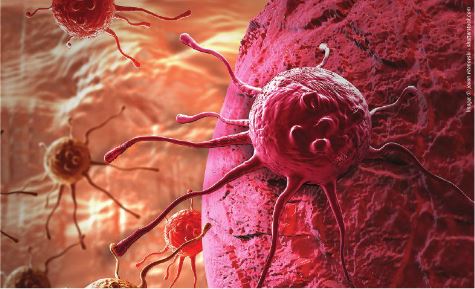
Stemming from a theory she developed as a sophomore at John Hopkins University in Maryland, Hasini Jayatilaka and a team of researchers say they have uncovered the biochemical mechanism which drives cancer cells to break away from a primary tumour and travel to other parts of the body.
This process, known as cancer metastasis, is responsible for 90% of all cancer-related deaths. Current standard of care focuses on attempting to reduce the size of the primary tumour, though the team asserts that by instead focusing on the metastatic process instead, survival rates could be greatly improved.
“A female patient with breast cancer doesn’t succumb to the disease just because she has a mass on her breast; she succumbs to the disease because [when] it spreads either to the lungs, the liver, the brain, it becomes untreatable,” explained Jayatilaka. “There are really no therapeutics out there right now that directly target the spread of cancer. So what we came up with through our studies was this drug cocktail that could potentially inhibit the spread of cancer.”
Jayatilaka’s research began by examining cancer cells in three-dimensional human tissue models, rather than in a petri dish. This method provided insight not previously seen, as she discovered that metastasis triggered when a tumour reached a certain density, not a certain size, as is generally thought. Once this density is reached, cancer cells detect the crowded presence of other cancer cells and begin to release Interleukin proteins 6 and 8, initiating metastasis.
Through their research, the team discovered that two FDA-approved drugs can work to slow down the process considerably in mice models: rheumatoid arthritis treatment Tocilizumab and Reparixin, a cancer therapy. The drugs worked in tandem on the Interleukin receptors, blocking the signals prompting metastasis, slowing the process.
The mice survived the cocktail with minimal side-effects, unlike the often serious effects associated with chemotherapy such as hair loss and nausea. It is thought that, with the addition of another drug, the metastatic process could be halted in its entirety.
“This paper gives you a very specific target to design drugs against,” remarked Anirban Maitra, Co-Director of a pancreatic cancer research centre at the MD Anderson Cancer Center at the University of Texas. “That’s really quite spectacular from the point of view of drug design and creating therapies. This really brings cancer and engineering together in a very unique way, and it really takes an approach that is quantitative and rigorous,” he said. “We have to think of cancer as a complex system, not just a disease.”
Senior author Denis Wirtz, Johns Hopkins’ Vice Provost for research and Director of its Physical Sciences-Oncology Center, added: “We’re not going to cure cancer with one therapy or even two therapies; it’s going to be drug cocktails. That’s what saved the day with HIV/AIDS.”
“In research, we’re sometimes incentivised to look at one pathway at a time, one type of cancer at a time. I think oncology has started realizing we’re going to need more than one approach,” he continued.
The team now plans to test the effectiveness of their findings in human trials.
Matt Fellows
Related Content

Central nervous system cancer metastases – the evolution of diagnostics and treatment
The current forms of immunotherapy, how T cell therapy works and what the future holds
BioMed X and Servier launch Europe’s first XSeed Labs to advance AI-powered antibody design
BioMed X and Servier have announced the launch of Europe’s first XSeed Labs research project, …
T-cell therapy – the evolution of cancer treatments
The current forms of immunotherapy, how T cell therapy works and what the future holds