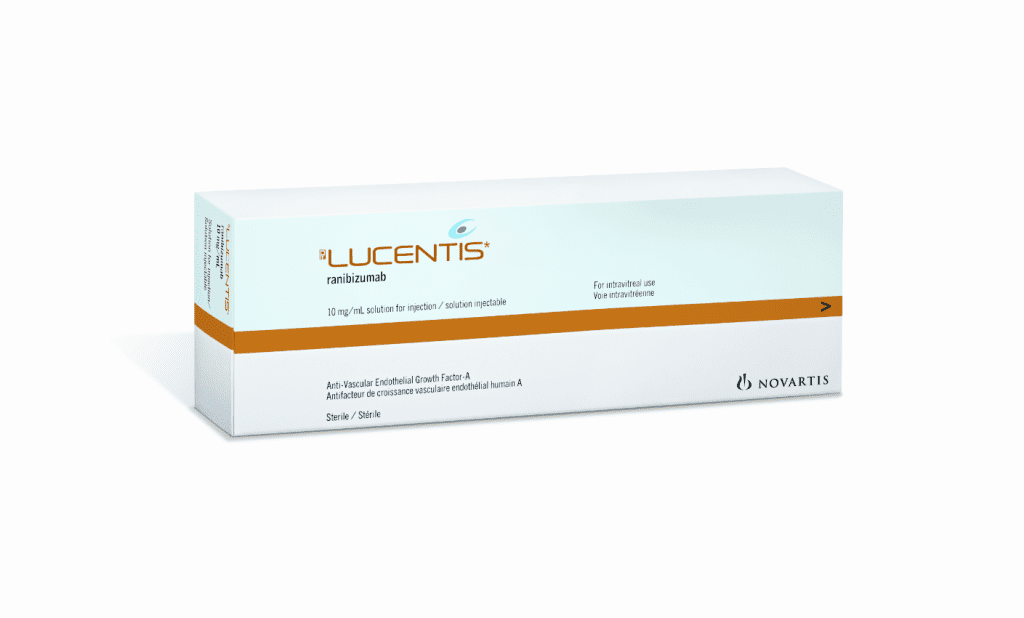
New price and data changes NICE view on Lucentis
pharmafile | January 4, 2013 | News story | Sales and Marketing | Bayer, Eylea, Lucentis, NICE, Novartis
A new lower price and new data analysis has persuaded NICE to recommend Lucentis for patients with diabetic macular oedema (DMO).
Novartis’ Lucentis (ranibizumab) is best known as a treatment for wet-related AMD, but was approved for DMO in January in 2011 in Europe.
Lucentis’ high cost has been the cause of controversy in both indications, but sustained pressure from the NHS – and a new competitor in the shape of Bayer’s Eylea (aflibercept) – means Novartis has lowered its price for the drug.
NICE ruled in November 2011 that Lucentis should not be used in DMO patients, saying its cost and clinical effectiveness did not merit use on the NHS.
Novartis responded by recently revising its Patient Access Scheme, and presented updated analyses showing Lucentis to produce a superior relative effect among a sub-group of people with DMO.
This has now persuaded NICE to recommend the drug as an option for treating visual impairment due to diabetic macular oedema if:
• the eye has a central retinal thickness of 400 micrometres or more at the start of treatment and
• the manufacturer provides ranibizumab with the discount agreed in the patient access scheme (as revised in 2012).
Price cut
The extent of the price cut in Lucentis is unknown, as it is covered by a confidentiality agreement between pharma companies and the government. But Roche has confirmed that a new lower price will apply to the drug in both wet AMD and DMO.
Novartis welcomed NICE’s decision and said its new price cut would mean “the NHS will benefit from immediate and significant savings in drug cost across all current and future licensed indications for ranibizumab, including wet AMD and visual impairment due to macular oedema secondary to retinal vein occlusion.”
Novartis says the decision means that Lucentis will allow patients with DMO not only to preserve but improve vision, compared with laser therapy, which is the current standard of care.
Professor Carole Longson, Health Technology Evaluation Centre Director at NICE said: “NICE is pleased to recommend ranibizumab as a treatment option for some people with visual impairment caused by diabetic macular oedema in new draft guidance. In November 2011, NICE published guidance which did not recommend the drug as an effective use of NHS resources. However, following the submission of a revised patient access scheme, we have conducted a rapid review of the original guidance. The manufacturer also included updated analyses showing that ranibizumab could be expected to have a superior relative effect among people with central retinal thickness greater than 400 micrometres.”
NICE has not yet issued final guidance to the NHS, and registered stakeholders can appeal against the draft recommendations. Final guidance is expected to be published in February 2013.
Eylea and off-label Avastin
Competition from Bayer’s Eylea and off-label use of Roche’s Avastin has spurred Novartis to lower its price.
NICE is currently reviewing Lucentis’ new rival Bayer’s Eylea for the first-line treatment of wet age-related macular degeneration. The drug was launched in the UK in December, and NICE’s guidance is expected in August this year.
Lucentis’ list price is £742.17 for a single dose, but the new Patient Access Scheme means the health service is being routinely offered a much lower price.
Meanwhile, Bayer’s Eylea has a list price of £816, but this would work out as significantly cheaper than Lucentis, given that it is administered once every two months, rather than the standard monthly injections of Lucentis.
The use of off-label Avastin (bevacizumab) as a treatment for wet AMD has become commonplace in many markets around the world in recent years, as ophthalmologists have sought out cheaper alternatives to Lucentis. This practice has brought Novartis into direct conflict with healthcare payors, but numerous large-scale studies have confirmed the safety and efficacy of Avastin in this setting.
Novartis has challenged the legality of off-label Avastin use, and this combined with its move to lower Lucentis’ price has seen the practice decline in the UK.
It is yet to be seen how much of the market Eylea can snatch from Lucentis, but Bayer will probably have to wait for NICE appraisal later this year before it sees a significant uptake.
Andrew McConaghie
Related Content

Digital mental health technologies – a valuable tool in supporting people with depression and anxiety
The potential benefits of digital mental health technology for managing depression, anxiety and stress, together …

Evotec and Bayer announce new kidney disease study
Evotec and Bayer have announced the initiation of a phase 2 clinical study in kidney …

Novartis receives SMC approval for early breast cancer treatment
Novartis has announced that its treatment for early breast cancer, Kisqali (ribociclib), has received approval …