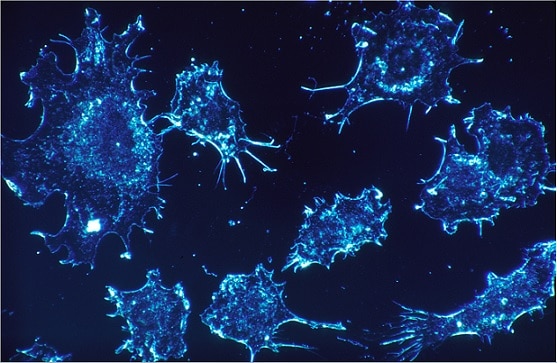
New 10-minute test will diagnose cancer at home
pharmafile | February 15, 2016 | News story | Manufacturing and Production, Research and Development, Sales and Marketing | Cancer
Scientists have developed a test for cancer that can diagnose the disease at home with the aid of just a drop of saliva.
The medical community has praised the £15 test developed at the University of California, Los Angeles, which could speed cancer detection and help improve survival rates. Current cancer diagnostic tests involve blood tests or intrusive biopsy.
David Wong, a professor of oncology at the university, says the ‘liquid biopsy’ method detects tumour DNA circulating in bodily fluids. “We need less than one drop of saliva and we can turn the test around in 10 minutes. It can be done in a doctor’s office while you wait,” he comments. “If there is circulating signature of a tumour in a person’s blood or saliva, this test will find it.”
Wong, whose team developed the test after finding saliva contains fragments of RNA molecule-linked to cancer, says early results from lung cancer patients suggest a “near-perfect” degree of accuracy. Thorough investigation of the efficacy is to be made in clinical trials beginning in China later this year, and the test could be available in the UK before the end of the decade.
Speaking at the annual meeting of the American Association for the Advancement of Science, the professor added that it could be used to diagnose a broad range of cancers.
‘The advantage of our technology is that it is non-invasive,” he adds. “If you have a credible early screening risk assessment technology that people can use on their own or at dentists’ office or pharmacists – that’s the key; early detection.”
Joel Levy
Related Content

Central nervous system cancer metastases – the evolution of diagnostics and treatment
The current forms of immunotherapy, how T cell therapy works and what the future holds
BioMed X and Servier launch Europe’s first XSeed Labs to advance AI-powered antibody design
BioMed X and Servier have announced the launch of Europe’s first XSeed Labs research project, …
T-cell therapy – the evolution of cancer treatments
The current forms of immunotherapy, how T cell therapy works and what the future holds