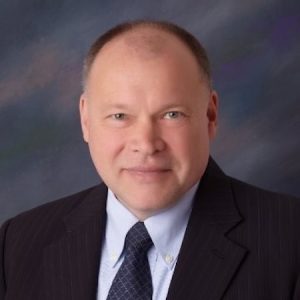
Moyes fires parting shots at government
pharmafile | January 18, 2010 | News story | | Monitor, NHS, foundation hospitals
The head of Monitor, the body charged with regulating the leading ‘foundation trust’ hospitals, has aired his views on the government and NHS before he steps down.
Bill Moyes was appointed the first chairman of Monitor when it was set up in 2004 to oversee foundation trusts, the best performing NHS acute trusts who have been rewarded with extra financial and operational autonomy.
In a wide-ranging interview with Health Policy Insight (www.healthpolicyinsight.com) Moyes looked back over the period, and outlined what he believes what further reforms the NHS requires.
Commenting on the Department of Health’s role, he said: “Quite a lot of people assume that the main purpose of the Department of Health (DH) is to support the NHS hospital sector. I think the DH should be the patients’ friend, ensuring that they get the best care clinically and financially – wherever it may be delivered.
So the DH should look after the interests of patients, rather than those of acute trusts. The two are not always the same.”
He indicated that the DH still needed to allow greater autonomy. “Part of improving productivity, ironically, is to let go,” he said. “The NHS will struggle to try raising productivity with tight control from the centre, assuming there’s only a small pool of people with good ideas”.
Moyes says that Alan Milburn, health secretary in 2004, created a clear policy framework for FTs, but that “The last three secretaries of state for health have been anxious about ‘losing control’.
He says these fears have meant too many NHS regulators. “We ended up with three economic regulators – us, Monitor, on market entry and failure; the Competition and Co-operation Panel (CCP) on competition; and the DH on pricing. And you don’t get a terribly coherent system out of that.”
Moyes was also certain about what changes in the day-to-day practices of NHS managers would help the service.
“The unmet need remains for strong commissioning, to give providers a strong sense of priorities and to channel patient demands in the right way,” he said, adding: “government needs to invest more time and energy getting commissioning right.”
Finally he said talk among politicians of cutting back the number of managers in the NHS was disingenuous.
“I question whether management costs are a problem in the NHS. I’d argue that for a system of this scale, healthcare in the UK is often quite under-managed.
“I think it’s a mistake for politicians to whip up a sense that the NHS is burdened down by a bloated bureaucracy and that this can be eliminated by mergers. In reality, the potential saving from mergers is modest and the cost often substantial.”
No successor to Moyes has yet been named, and the government has now been advised to wait until after the general election to appointed a new chairman.
This leaves two NHS regulators without a permanent chair as Baroness Young, the head of the Care Quality Commission steps down from 1 February.
Related Content
Under-Secretary of State for Health Innovation and Safety visits new building on University of Huddersfield’s NHIC
Dr Zubir Ahmed MP, the Under-Secretary of State for Health Innovation and Safety, has visited …

Digital mental health technologies – a valuable tool in supporting people with depression and anxiety
The potential benefits of digital mental health technology for managing depression, anxiety and stress, together …

A community-first future: which pathways will get us there?
In the final Gateway to Local Adoption article of 2025, Visions4Health caught up with Julian …