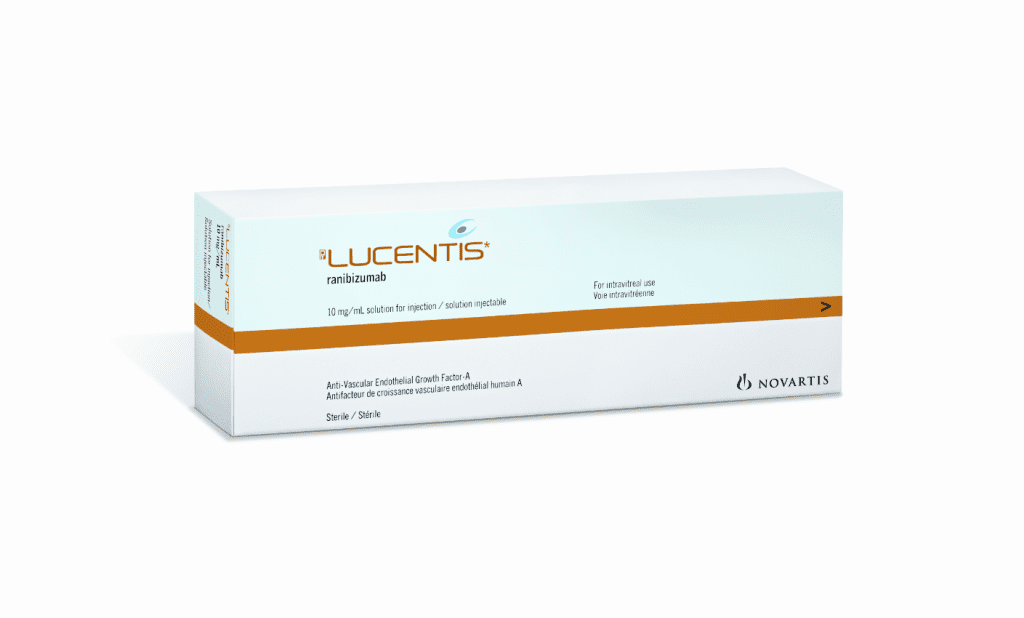
Lucentis not backed by NICE for new licence
pharmafile | November 24, 2011 | News story | Sales and Marketing | Lucentis, NICE, Novartis, Ozurdex
NICE has not recommended Novartis’ eye disease drug Lucentis due to ‘gaps and uncertainties’ in the manufacturer’s submission.
In draft guidance released today the watchdog said it could not recommend Novartis’ Lucentis (ranibizumab) for the treatment of visual impairment due to macular oedema secondary to retinal vein occlusion (RVO).
The drug has already been recommended by NICE for wet age-related macular oedema and is also undergoing a separate appraisal for use in patients with diabetic macular oedema.
NICE said that Lucentis could not be recommended because of gaps and uncertainties in the evidence on the effectiveness of the drug compared with other treatments currently used in the UK.
The watchdog also concluded that the analysis provided by Novartis was not a true reflection of clinical practice or the efficacy of Lucentis.
Dr Carole Longson, health technology evaluation centre director at NICE, said: “The independent appraisal committee recognises the profound effect that RVO can have on everyday life.
“NICE has recently recommended dexamethasone [Allergan’s Ozurdex] as a clinically and cost-effective treatment for this indication, but the evidence presented for Lucentis did not support a positive recommendation for this condition.”
Longson added that final guidance is likely to be published in March 2012.
Ozurdex
In its appraisal consultation document NICE said Lucentis would require a maximum of 12 injections over a two-year period, at a cost of £742.17 per vial, including a £151 follow up visit cost.
This brings the maximum total cost to £9,057.04 per patient, although Novartis has negotiated a confidential patient access scheme with NICE that could reduce the overall price.
But this is compared to the much lower cost of Allergan’s twice-yearly intravitreal implant Ozurdex (dexamethasone), which was recommended by NICE in July for macular oedema secondary to retinal vein occlusion.
An Ozurdex implant costs £870 with an administration fee of £295.25 – plus a follow up visit cost – bringing its two-year treatment cost to just £4,812.
Novartis did not supply any direct comparisons between its drug and Ozurdex, but NICE argued that it could give an indirect comparison to better reflect the cost-effectiveness of Lucentis compared to Allergan’s drug, which is now becoming more widely used.
RNIB speaks out
Clara Eaglen, RNIB eye health campaigns manager, said she was disappointed by the decision.
“Although NICE recently recommended Ozurdex as a clinically and cost-effective treatment for this indication, some patients are not able to benefit from this treatment – for example, those who also have advanced glaucoma which cannot be adequately controlled by medicinal products alone.
“Therefore, we hope PCTs will allow clinicians to use Lucentis in these patients, rather than let them lose their sight unnecessarily.”
Off-label use of Avastin
In its ACD the watchdog said that it considered off-label use of Roche’s cancer drug Avastin (bevacizumab) as the primary comparator to Lucentis, and had wanted Novartis to carry out comparator studies between the two drugs.
Novartis said it has not conducted any studies comparing its drug against Avastin, as it is not licensed for this indication, and therefore has not been deemed safe for use in this setting.
But NICE said that Avastin is being ‘reasonably widely used’ in the NHS as it only costs £50 per injection.
In addition, all the clinical specialists on NICE’s committee said they had used Avastin off-label for their patients, with many adding that they thought Lucentis was equal to Avastin for macular oedema and also for wet AMD.
Both drugs are chemically similar anti-VEGF drugs, but neither firm wants Avastin to gain the licences that Lucentis already has.
This is because Roche owns the rights to Lucentis in the US and would essentially be undercutting its own drug if Avastin gained regulatory approval for wet AMD or macular oedema.
But the use of Avastin off-label is becoming more widespread. Currently the UK and US governments are funding trials to assess the safety and efficacy of Avastin for wet AMD, and Novartis has already been forced into lowering its price of Lucentis by 30% in Switzerland in order to compete with Avastin.
Ben Adams
Related Content

Digital mental health technologies – a valuable tool in supporting people with depression and anxiety
The potential benefits of digital mental health technology for managing depression, anxiety and stress, together …

Novartis receives SMC approval for early breast cancer treatment
Novartis has announced that its treatment for early breast cancer, Kisqali (ribociclib), has received approval …

Combination treatments: Takeda’s Implementation Framework and the broader landscape
Pharmafile talks to Emma Roffe, Oncology Country Head (UK & Ireland) about the combination treatment …