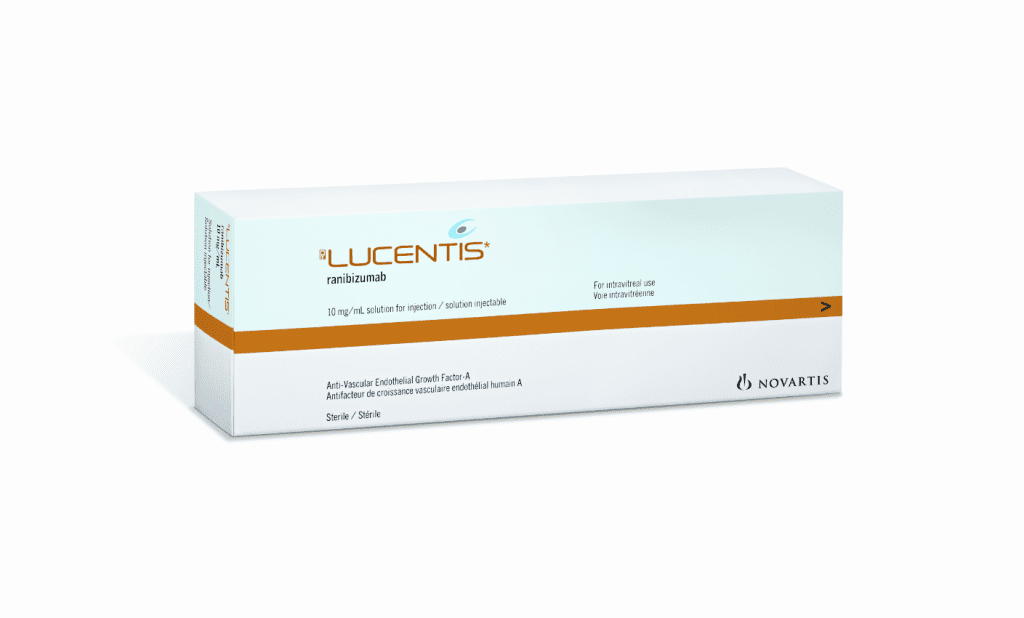
Lucentis and Avastin equal in efficacy
pharmafile | July 19, 2013 | News story | Research and Development, Sales and Marketing | Lucentis, Novartis, Roche, avastin
Latest results released this morning from a UK government trial show that off-label use of Roche’s Avastin is just as effective as Novartis’ Lucentis in treating the most common cause of blindness.
The trial, funded by the UK National Institute for Health Research Health Technology Assessment programme and published in the Lancet, found that Lucentis (ranibizumab) and Avastin (bevacizumab) ‘have similar efficacy’.
The study looked at best corrected distance visual acuity (BCVA) of at least 25 letters on an eye chart, and found that Avastin was neither non-inferior nor inferior to Lucentis.
Safety was also similar as the study found the frequency of arterial thrombotic events or hospital admission for heart failure, did not differ between the two groups.
The report’s authors commented that these findings: “Highlight that the choice of anti-VEGF treatment strategy is less straightforward than previously thought.”
Blockbuster drug Lucentis is licensed to treat wet age-related macular oedema, as well as other eye conditions, and alongside Bayer’s Eylea is one of only two drugs licensed for this condition.
But ophthalmologists have for a number of years been using Roche’s Avastin, a top-selling cancer medicine, for wet AMD off-label as it has a similar mode of action to Lucentis as an anti-VEGF drug, but is crucially much cheaper than Lucentis.
In an unprecedented move designed to help save money, both the UK and US governments have funded head-to-head trials to see if Avastin is safe and effective to use for wet AMD, even though Roche has said it does not want these studies to go ahead.
Today’s report in the Lancet is the conclusion of the two-year IVAN trial and follows alongside the bigger US CATT study, which reported similar two-year data results in May last year.
Losing the battle, winning the war
Whilst these data will be a blow to Novartis, the Swiss firm may have already won the war on off-label Avastin use.
Last year the firm began legal proceedings against a south coast NHS body, known then as the SHIP PCT Cluster, to force them to stop using Avastin for wet AMD.
In the end Novartis backed down after agreeing a confidential price cut for its drug, which the RNIB blindness charity say makes it similarly priced to Avastin. As a result of the discount, the SHIP Cluster revered its prescribing policy on Avastin and instead now recommends Lucentis.
New General Medical Council guidelines also went its way last year when the UK doctors’ regulator said that an unlicensed medicine: “should only be used when there is no licensed treatment available that would meet the needs of an individual patient”, meaning doctors must use either Eylea or Lucentis over Avastin.
But with budgets tight and NHS bodies able to save over £80 million a year from using Avastin, the temptation will still be high to use the off-label drug for many localities, and today’s data will only strengthen that feeling.
Novartis reacts
In a statement to Pharmafile, Novartis flatly denied the results from the Lancet. The firm acknowledges that the second year results of IVAN did show similar visual acuity gains for both treatments, but goes on to say that: “IVAN does not show that the efficacy of bevacizumab is equivalent to ranibizumab.”
This is at odds with the report, which directly states that the two treatments do in fact have similar efficacy.
Novartis remains concerned over the safety of Avastin given that the drug is not manufactured for wet AMD, and therefore ophthalmologists must use a larger vial than they need for each injection, leading to concerns over sterility problems and infections.
The Lancet’s authors say, however, that for the IVAN trial Avastin was sourced from a compounding pharmacy that adhered to protocols for tests of potency and sterility approved by the MHRA.
“Our findings should be generalised only to bevacizumab sourced from a manufacturing pharmacy that has quality-control processes to validate stability, potency, and sterility that have been approved by a drug regulatory agency,” it added.
Ben Adams
Related Content

Novartis receives SMC approval for early breast cancer treatment
Novartis has announced that its treatment for early breast cancer, Kisqali (ribociclib), has received approval …

Novartis candidate for Sjögren’s disease presents positive results
Novartis has reported positive results from two phase 3 clinical trials – NEPTUNUS-1 and NEPTUNUS-2 …

Roche receives CE Mark for blood test to help rule out Alzheimer’s
Roche has been granted CE Mark approval for its Elecsys pTau181 test, the first in …