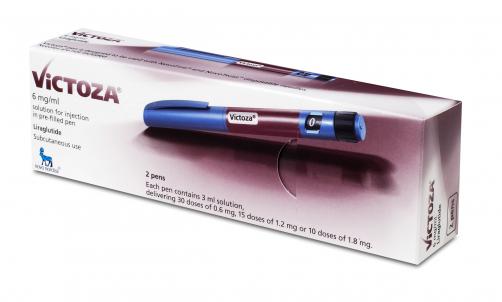
Low dose Victoza on track for NICE approval
pharmafile | September 10, 2010 | News story | Sales and Marketing | NICE, Novo Nordisk, Victoza
Novo Nordisk is on track to receive NICE approval for its type II diabetes drug Victoza, but will still have to settle on a lower dose.
NICE’s Final Appraisal Determination gives Victoza (liraglutide) a preliminary recommendation as part of a triple therapy regimen with oral therapies metformin and/or sulphonylurea, but only at a 1.2mg dose.
The UK drugs watchdog refused to pass the higher 1.8mg dose, stating the evidence did not suggest any “significant additional benefit”.
Launched in Europe last year, Victoza is a once-daily injectable glucagon-like peptide-1 agonist receptor analogue designed to lower glucose levels by stimulating the release of insulin when glucose levels become too high.
It also inhibits appetite and this ability to help patients lose weight could give it an edge over rivals. The recent LEAD-5 trial showed a statistically significantly greater reduction in weight loss for Victoza over Sanofi-Aventis’s insulin Lantus.
NICE said however that this trial used a relatively low dose of insulin in the comparator arm that may affect the “validity of the results relative to standard UK practice”.
Novo’s managing director Viggo Birch said: “40% of people in the UK with diabetes are at high risk of complications because their blood sugar is not being controlled as well as it needs to be. Diabetes and its complications cost the NHS around £9 billion each year.
“We believe liraglutide in combination with either one or two anti-diabetic tablets can have significant benefits for people living with type II diabetes, and are therefore delighted NICE has recognised this.”
NICE’s preliminary recommendation stipulates that patients must have a body mass index (BMI) of more than 35 and specific psychological or medical problems associated with high body weight.
Victoza is also recommended for patients with a BMI of less than 35 where insulin therapy would have significant occupational implications, or weight-loss would benefit other significant obesity-related co-morbidities.
In addition the preliminary guidance states that Victoza can be used if a person is intolerant of thiazolidinediones and DPP-4 inhibitors, such as AstraZeneca’s Onglyza, or when treatment with thiazolidinediones and DPP-4 inhibitors is contraindicated.
Victoza has stolen a march over Lilly/Amylin’s once-weekly injectable Byetta LAR that has yet to be appraised by NICE and is beset by manufacturing woes.
However Victoza may soon be in competition with Roche’s taspoglutide, also a glucagon-like peptide-1 drug, that has recently posted strong phase III trials results as a once-weekly injectable. This may be more appealing to diabetics as Victoza requires a daily injection.
The FDA approved Victoza in February but concerns were raised over high incidences of pancreatitis in clinical trials. The drug has also been licensed in Japan, and a phase I trial that could see the injectable Victoza turned into a pill began in January.
Final guidance from NICE on Victoza’s use by the NHS is expected to be published this October.
Ben Adams
Related Content

Digital mental health technologies – a valuable tool in supporting people with depression and anxiety
The potential benefits of digital mental health technology for managing depression, anxiety and stress, together …

Combination treatments: Takeda’s Implementation Framework and the broader landscape
Pharmafile talks to Emma Roffe, Oncology Country Head (UK & Ireland) about the combination treatment …

FDA approves Wegovy for treatment of MASH in adults with liver fibrosis
The US Food and Drug Administration (FDA) has granted accelerated approval for Wegovy (semaglutide) as …