High-dose Copaxone the right medicine for Teva
pharmafile | January 29, 2014 | News story | Research and Development, Sales and Marketing | Biogen, Copaxone, FDA, MS, Mylan, Teva
The FDA has approved a high-dose version of Teva’s multiple sclerosis drug Copaxone which will help the firm offset approaching generic erosion.
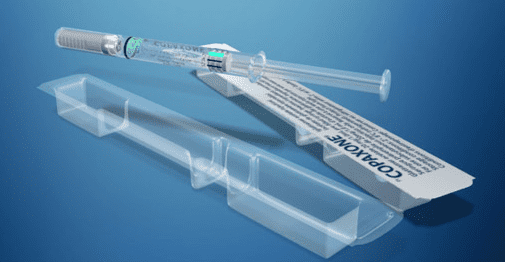
The US regulator has said yes to a 40mg version of Copaxone (Glatiramer acetate), meaning patients will be able to inject the drug just three times a week rather than every day as the 20mg version – first approved in 1996 – has them do.
The new higher-dosage drug will be available immediately for shipping to distribution outlets and patients should be able to get the therapy ‘within days’, Teva said in the statement.
This is a positive development for the firm given that the current 20mg formulation of its drug will go off-patent in the US this May, whereas Copaxone 40mg has a patent until 2030.
This will go some way to help shore up the $4 billion in sales the medicine brought in last year – sales that will be under threat when generic competition for the lower dose form kicks in.
Teva has already said that it expects to lose $550 million to copycat versions this year alone as patents start to slide. Its US rival Mylan has said its copy of Copaxone will be available for sale as soon as the drug’s patent ends in the summer.
There are also newer MS drugs by Biogen, and even pill versions from companies like Novartis that are looking to sweep in to the market, making it more competitive than ever before.
Copaxone crisis
The company has been in something of a crisis over what to do when Copaxone began losing sales. As a generics firm – the largest in the world – Copaxone was its only major patented medicine and responsible for much of its revenue.
In 2011 Teva decided against seeking approval for Nerventra (laquinimod), a next-generation version of Copaxone, as clinical trial data did not show it was good enough to be passed by the FDA.
Just last week the drug was knocked back by European regulators over safety concerns, throwing doubt upon whether it could ever be approved on the bigger markets.
In fact, the question over the company’s future strategy without Copaxone and a successor medicine cost its former chief executive Jeremy Levin his job late last year when he abruptly left the firm. He will be replaced by Erez Vigodman from 11 February.
In the past 12 months the company has sought to find $2.5 billion in a series of cost-saving measures, which has included cutting 5,000 jobs from across its business. This has all been aimed at helping offset the expected loss from Copaxone.
While the FDA’s decision will do much to help Teva this year, the company is still trying to find longer-term solutions to help shore up revenue, and must decide if it will expand its R&D budget and focus more on patented medicines – as well as generics – in the coming years.
Ben Adams
Related Content

EndoCyclic New Drug application approved by US FDA for endometriosis treatment
EndoCyclic Therapeutics’ Investigational New Drug (IND) application for its lead programme, ENDO-205, has been approved …

MRM Health’s ulcerative colitis treatment receives FDA Investigational New Drug clearance
Microbial Resource Management (MRM) Health has announced that its lead programme, MH002, has received Investigational …

Complement Therapeutics’ geographic atrophy treatment receives FDA Fast Track designation
Complement Therapeutics has announced that CTx001, its gene therapy treatment for geographic atrophy (GA) secondary …