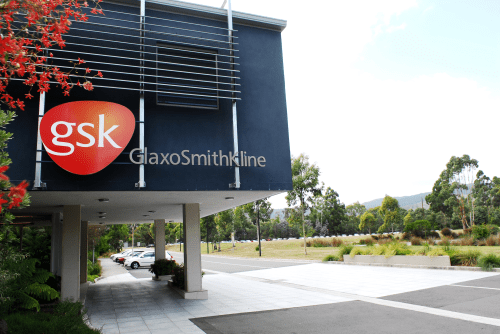
GSK plans greater use of biocatalysis, continuous processing
pharmafile | February 19, 2013 | News story | Manufacturing and Production | GSK, Witty, biocatalysis
GlaxoSmithKline says it is turning to technology to help improve the cost efficiency of its manufacturing operations, including greater use of continuous production techniques and enzymatic catalysis.
The company’s chief executive Sir James Witty said recently that the firm is applying these new systems to help provide ‘very significant reductions’ in process time and production costs, as well as improving the company’s carbon footprint.
GSK has been working on introducing continuous production and enzyme catalysis – or biocatalysis – for the last five to six years and are now ready to industrialise the systems, said Witty.
Using enzymes allows drugmakers to replace older catalysts – often based on heavy metals – can improve yields and reduce raw materials use and process waste, whilst also cutting energy costs.
“We began building the first facility in September of last year in Singapore where we are going to start deploying the enzymatic technologies,” he told investors on the company’s annual results call earlier this month.
The technology “has already been deployed in two of our pipeline assets, and will now be accelerated across the rest of the organisation”, Witty added, noting that it can reduce the size of the plant needed to make a chemical from around 900 sq. m. to just 11 sq. m., a “massive reduction in capital deployment and space occupancy”.
GSK says it has achieved 50% reductions in carbon footprint and solvent use, with up to a 50% reduction in cost as a result of the deployment, which should be applicable to somewhere between one-third and one-half of all the chemical syntheses carried out across its manufacturing network.
Meanwhile, Witty added that the shift to continuous processing has already started to be deployed for some pipeline assets, particularly in its rare disease drug category – although this is a little further behind than the biocatalysis implementation.
Continuous manufacturing relies on the adoption of techniques such as process analytical technologies (PAT) to monitor the conditions in reaction vessels in real-time. This allows raw materials to be fed into the front end of the system, with a series of synthesis and processing steps carried out to allow the product to be continually ‘harvested’ from the end.
The approach is very different from the current batch approach to production in which the ingredients are added in successive steps that are usually not integrated together.
“We’ve started to deploy the first production versions in UK factories,” Witty told investors.
Most firms are looking into continuous production technologies, but widespread adoption seems to be some way off. Novartis took a major step forward last year when it said it would construct a dedicated, commercial-scale continuous processing facility by 2015.
Phil Taylor
Related Content

GSK’s Exdensur receives MHRA approval for asthma and rhinosinusitis
GSK’s Exdensur (depemokimab), a twice-yearly biological medicine, has received approval from the UK Medicines and …

Multiple myeloma treatment approved in Japan
GSK’s Blenrep (belantamab mafodotin) combinations have been approved by Japan’s Ministry of Health, Labour and …

US FDA expands Jemperli (dostarlimab-gxly) plus chemotherapy approval to all adult patients with primary advanced or recurrent endometrial cancer as the first and only immuno-oncology-based treatment to show an overall survival benefit
PHILADELPHIA–GSK plc today announced the US Food and Drug Administration (FDA) has approved Jemperli (dostarlimab-gxly) in combination …