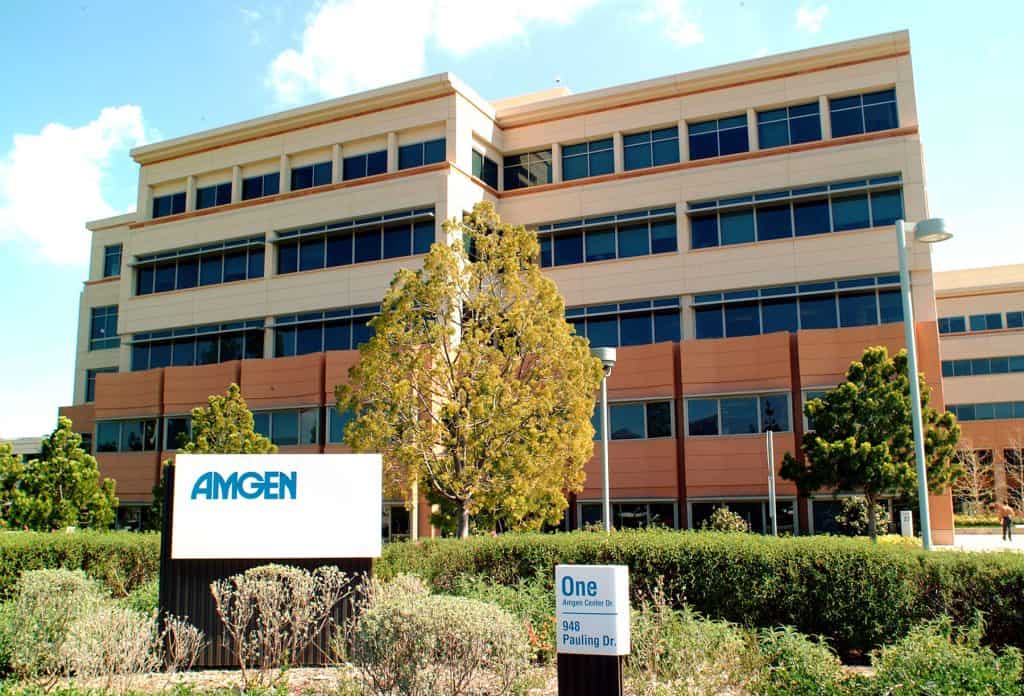
Glass flakes lead Amgen to order Epogen and Procrit recall
pharmafile | September 27, 2010 | News story | Manufacturing and Production | Amgen, Centocor Ortho Biotech, Epogen, Procrit, manufacturing compliance, recalls
Amgen has taken what it describes as a precautionary measure and recalled lots of two of its erythropoietin-based products Epogen and Procrit which may be contaminated with thin glass flakes.
Epogen and Procrit – which are both based on the active ingredient epoetin alfa – are used to boost red blood cell counts in anaemia caused by chronic renal failure, cancer chemotherapy and HIV treatment. Amgen makes both products, but licenses Procrit for sale by Johnson & Johnson’s Centocor Ortho Biotech subsidiary.
Amgen has not revealed how many individual products are affected by the recall, but J&J said that it applied to around 324,000 vials of Procrit.
The flakes – known as lamellae – are said to result from the interaction of the Epogen and Procrit formulations with the glass vials over the shelf-life of the product. The lots included in the recall have expiry dates ranging from September 2010 to June 2013.
According to a report in the Wall Street Journal, Amgen plans to reduce the shelf life of Epogen to 12 months from 36 months for single-dose vials, and 15 months for multiple-dose vials, to prevent a similar problem in the future.
The company is also planning to start sourcing vials from just one glassware supplier whose product does not seem to be affected by the problem within the shelf life. It currently uses multiple vial suppliers.
In a statement, Amgen said evaluations indicated there was “low potential” for the flakes to cause side effects among patients who may already have been treated with product from the affected products, adding there have been no adverse events reported to the company which could be linked to the glass lamellae.
It cautioned, however, that potentially serious adverse events can occur if a sterile injectable product is contaminated with particulate matter.
Potential sides effects include embolic, thrombotic and other vascular events, if the product is given intravenously, and foreign body granuloma, local injection site reactions and increased immunogenicity, if given by the subcutaneous route.
Epogen and Procrit are still widely-used products despite the availability of newer, longer-acting formulations of erythropoietin, bringing in $138 billion and $1.1 billion to Amgen and J&J respectively in the first six months of 2010.
Phil Taylor
Related Content

FDA approves Amgen’s Imdelltra for extensive-stage small cell lung cancer
Amgen has announced that the US Food and Drug Administration (FDA) has approved Imdelltra (tarlatamab-dlle) …

Amgen opens new biomanufacturing facility in Ohio, US
Amgen has announced that it has opened a new manufacturing site in Central Ohio, US. …

AstraZeneca and Amgen asthma drug shows positive results in Phase III trial
AstraZeneca and Amgen’s new tezepelumab drug for the treatment of severe asthma has shown superiority …