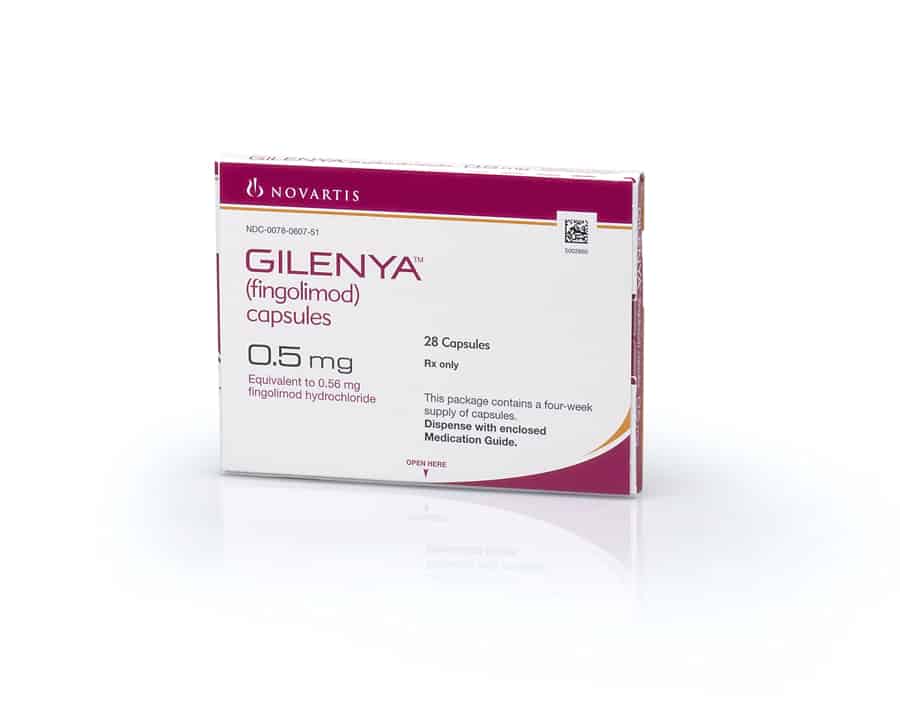
Gilenya rejected by NICE
pharmafile | August 5, 2011 | News story | Medical Communications, Sales and Marketing | MS, NICE, Novartis, gilenya
NICE has not recommended Novartis’ multiple sclerosis drug Gilenya because of its cost and ‘uncertainties over its clinical effectiveness’.
Gilenya (fingolimod) is the first oral treatment for MS, and is licensed for patients with active relapsing-remitting multiple sclerosis (RRMS) who experience at least one relapse in a year despite being treated with beta interferon injections Avonex or Rebif.
It is also licensed for adults with rapidly evolving severe RRMS who experience two or more disabling relapses regardless of their treatment.
This puts Gilenya in direct competition with Biogen’s injectable drug Tysabri (natalizumab), another high cost treatment.
In its first draft guidance, NICE says Novartis has not provided sufficient evidence to show how well its drug works against the current standard of care.
Novartis submitted trial data of Gilenya from one trial comparing it to placebo, and in another comparing it to Avonex (interferon beta-1a). NICE’s central problem with this evidence base was that it provided no comparisons with Tysabri, the drug which it is competing against.
NICE recommended Tysabri in 2007 at a cost of £14,730 per patient, per year. Costs of administration and observation were not included in this price.
NICE calculates that Gilenya would cost around £19,169 per person every year. Its oral formulation means administration costs are low, though the cost of a required initial six hour observation in hospital brings the total cost to £19,665.
In its submission, Novartis claims Tysabri’s administration increases its total cost to £21,257, but NICE concluded this estimate was inaccurate.
Professor Carole Longson, Director of the Health Technology Evaluation Centre at NICE, explained: “Unfortunately our independent committee wasn’t given sufficient evidence to show that [Gilenya] could reduce relapses considerably better than the other treatments currently being used.
“Based on the available clinical evidence and economic analysis, our independent committee concluded that [Gilenya] would not be effective good use of NHS resources.”
Response from MS Society
Novartis said it would petition NICE before the next appraisal meeting in October, ahead of the Institute’s final decision that is expected this December.
In a statement the firm said: “By denying patients access to this type of medical innovation, people with RRMS who are not responding to an injection and need an alternative treatment, will not have the opportunity of potentially benefiting from the first oral therapy.
“This is another example of how the UK lags behind other countries when it comes to access to new medicines.”
Simon Gillespie, chief executive of the MS Society, echoed this sentiment, saying: “This is disappointing news for people with MS and it will leave some people with no effective treatment option.
“We’re concerned at how this decision has been reached and now strongly encourage NICE and Novartis to work together to look at how the treatment can be better re-considered and evaluated.”
The drug was approved in Europe this March for patients who had failed on interferon treatments, and was approved in the US last September as a first line treatment.
The drug has been forecast as a future blockbuster, with predicted peak sales of over $2.5 billion a year.
Ben Adams
Related Content
Scotland starts newborn screening for SMA
As part of a two-year evaluation funded by the Scottish government and Novartis, Scotland will …

Digital mental health technologies – a valuable tool in supporting people with depression and anxiety
The potential benefits of digital mental health technology for managing depression, anxiety and stress, together …

Novartis receives SMC approval for early breast cancer treatment
Novartis has announced that its treatment for early breast cancer, Kisqali (ribociclib), has received approval …