Gilead’s blood cancer pill approved in Europe
pharmafile | September 22, 2014 | News story | Sales and Marketing | CLL, Gilead, blood cancer, fl, idelalisib, oncology, zydelig
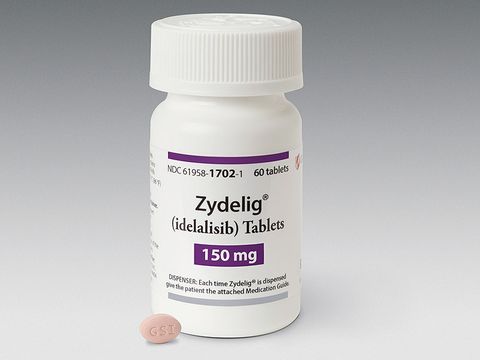
Gilead has gained European Commission approval for its new blood cancer pill Zydelig (idelalisib) as it looks to expand further into oncology.
Zydelig is a first-in-class oral treatment for two incurable blood cancers, namely: chronic lymphocytic leukaemia (CLL) and follicular lymphoma (FL).
For the treatment of CLL, Zydelig has been approved for use in combination with Roche’s arthritis and cancer drug MabThera (rituximab) for patients who have received at least one prior therapy.
It can also be used as first-line treatment in the presence of 17p deletion or TP53 mutation in patients unsuitable for chemo-immunotherapy. For the treatment of FL, Zydelig has been approved as a monotherapy in patients who are refractory to two prior lines of treatment.
Zydelig inhibits PI3K delta, a protein that is overexpressed in many B-cell malignancies and plays a role in the viability, proliferation and migration of these cancer cells.
CLL and FL are slow-growing incurable blood cancers that can lead to life-threatening complications such as anaemia, serious infection and bone marrow failure requiring treatment. The goal of therapy for patients with these cancers is to improve overall survival and quality of life.
“Although chemo-immunotherapy is initially used to treat both CLL and FL, relapse is common and many patients run out of treatment options to treat the disease as it progresses,” explains Peter Hillmen, Professor of experimental haematology and honorary consultant haematologist at Leeds Teaching Hospitals NHS Trust.
“Further, CLL patients with the 17p deletion or TP53 mutation are not suitable for chemo-immunotherapy, requiring alternative first-line treatment options. Thus, Zydelig is a welcomed treatment option that offers a new approach in the management of these cancers.”
Competition and costs
Gilead’s drug has already been approved in the US where its price is believed to be $7,200 (£4,400) per month, although this rises to around $12,000 when added to MabThera, which its licence warrants.
In the US Zydelig also comes with a black-box warning that highlights such side effects as colitis, lung inflammation and potential fatal liver problems, which may dampen its sales prospects.
And Gilead is not alone in this market as the firm faces competition in the form of Janssen’s Imbruvica (ibrutinib), a treatment that doesn’t have a black box in the US, but costs $8,200 per month.
The price of the drug in Europe has not yet been announced but MabThera’s price tag for CLL is £1,397 for the first cycle of treatment, and £1,746 for subsequent cycles on the NHS – and this was deemed cost-effective by England’s drug pricing watchdog NICE.
Zydelig will most likely be launched in the UK in the coming weeks and be appraised by NICE early next year, although it will be a tough ride for Gilead given NICE’s history in rejecting high-priced cancer medicines.
Blows and slow downs
Overall however, this approval will be good news for the firm as it looks to expand its portfolio outside of virology and into other areas like oncology.
But this month has seen mixed fortunes for the firm as its cancer pipeline took a blow last week, when a Phase II study showed its investigational treatment simtuzumab didn’t provide a clinical benefit in advanced pancreatic cancer patients.
There have been few advances in pancreatic cancer over the past decade so this was not too surprising for analysts, and Gilead also points out that it has ongoing clinical trials with the drug in colorectal cancer, myelofibrosis and serious fibrotic lung and liver diseases.
But the firm will still be disappointed that the medicine failed at a key point in its development, and would hope to gain entry into the potentially lucrative market for pancreatic cancer – given that it is an unmet medical need.
Zydelig is expected to bring in blockbuster sales of $1.2 billion a year by 2020, although this is much less than the exceptional sales seen by its lead drug Sovaldi (sofosbuvir).
The hep C treatment is on course to become the biggest-selling medicine in the world, making nearly $6 billion in its first two quarters this year.
But this trajectory is expected to slow down in the coming months as its competitors line up to launch their new hep C pills (that can also be used in conjunction with Sovaldi) to match or better the 90% success rate Gilead’s drug currently enjoys.
The competition may also lower their prices to better compete with Sovaldi, which costs $84,000 for a full course of treatment in the US.
Ben Adams
Related Content

Gilead’s HIV treatment meets primary trial endpoint
Gilead has announced positive topline results from its phase 3 ARTISTRY-2 trial, which evaluated a …

Gilead announces first shipments of HIV prevention drug to Eswatini and Zambia
Gilead has announced the first shipments of its HIV prevention drug lenacapavir to Eswatini and …

Rethinking oncology trial endpoints with generalised pairwise comparisons
For decades, oncology trials have been anchored to a familiar set of endpoints. Overall survival …